As Amazon Associates, we earn from qualifying purchases. This means we may receive a small commission at no extra cost to you if you click through and make a purchase.
Evaluating a workstation chair for content creation, audio recording, or video editing requires looking past marketing claims and focusing strictly on physical utility. If you are deciding whether the Amazon Basics Classic Puresoft Mid-Back Chair belongs in your workspace, the decision hinges on your daily schedule and ergonomic needs. This model functions as a straightforward mid-back desk chair featuring contoured padding, caster wheels, and basic tilt adjustment, making it suitable for moderate editing blocks, podcast control desks, and everyday office production. However, creators who need deep lumbar customization or multi-directional arm support will find it serves as a baseline utility piece rather than a fully customized task chair.
This breakdown examines the real-world utility of the seat cushion, the durability of its synthetic upholstery, the assembly sequence, and its technical specifications. We analyze how the 275-pound weight threshold stands up to intensive daily sessions, whether the fixed armrests work alongside studio desks, and how the metal base behaves under motion. By reviewing the physical dimensions and structural features detailed in the manufacturer listing, you can determine if this seating option matches your creative setup.

What You Get With the Amazon Basics Classic Puresoft Mid-Back Chair

The product arrives in a single compact package designed around space-saving storage, with several key components stored directly inside the zipper cavity of the back cushion. Inside the box, you receive the main structural components along with the necessary assembly hardware and documentation required for setup.
- Contoured mid-back backrest with internal storage cavity
- Padded seat cushion with fitted upholstery
- Pair of padded fixed armrests
- Sturdy knockdown metal base
- Smooth-rolling caster wheel set
- Under-seat pneumatic height and tilt control mechanism
- Hardware fastening kit containing bolts and assembly tool
- User manual with illustrated assembly instructions
Key Specifications
Reviewing the published technical specifications provides clear insight into whether the proportions, load handling, and mechanical adjustments match your workspace layout.
| Specification Attribute | Manufacturer Detail |
|---|---|
| Model Number | 51207 |
| Maximum Weight Capacity | 275 pounds |
| Overall Dimensions (W x D x H) | 23.75 x 26 x 38.25 – 42 inches |
| Seat Dimensions (W x D) | 19.5 x 17.75 inches |
| Armrest Height | 26.25 – 30 inches from the floor |
| Base Construction | Knockdown metal base with caster wheels |
| Upholstery Material | Puresoft polyurethane synthetic leather |
| Reclining Mechanism | 1 lockable reclining position with tilt control |
| Height Adjustment Type | Pneumatic cylinder |
| Recommended Environment | Indoor office and workspace |
Comfort and Ergonomics for Long Editing Sessions
For video editors, audio engineers, and digital artists, a desk chair must sustain proper posture across several hours of concentrated production. This model relies on contoured padding across the seat and backrest rather than an adjustable external lumbar mechanism. The seat measures 19.5 inches wide by 17.75 inches deep, giving moderate surface area that accommodates most adult frames without pressing aggressively against the hips. For users who prefer a structured mesh design with active tension, pairing this layout against the HON Ignition 2.0 mid-back ergonomic office chair illustrates the distinction between thick polyurethane cushioning and suspended mesh support.
The backrest rises to a mid-back level, ending below the shoulder blades for taller users and supporting the mid-thoracic zone. Because the curvature of the back is fixed into the internal frame, you cannot adjust the lumbar depth or height independently. Creators who sit upright while scrubbing timelines or mixing tracks will experience consistent contact against the padded back. However, if your posture shifts into a slouch or you need firm lower-back force, the built-in padding offers moderate resistance rather than targeted, rigid skeletal alignment.
The armrests are permanently secured to both the seat pan and the backrest, forming an integrated structural triangle. They feature padded tops that cushion the forearms during keyboard logging or tablet illustration. Because the armrests are fixed at a height between 26.25 and 30 inches depending on the pneumatic lift setting, they cannot be lowered to slide flush under low keyboard trays or tilted out of the way when holding an acoustic guitar or handling camera gear close to your torso.
Puresoft PU Durability and Studio Wear
Studio furniture encounters daily friction, friction from clothing, cable snags, and occasional liquid spills near editing consoles. The upholstery on this chair is Puresoft polyurethane, a smooth synthetic leather designed to emulate traditional hide while offering quick surface maintenance. Wiping down dust, studio debris, or coffee rings requires only a damp cloth, which keeps maintenance low compared to fabric seating that can absorb stray liquids.
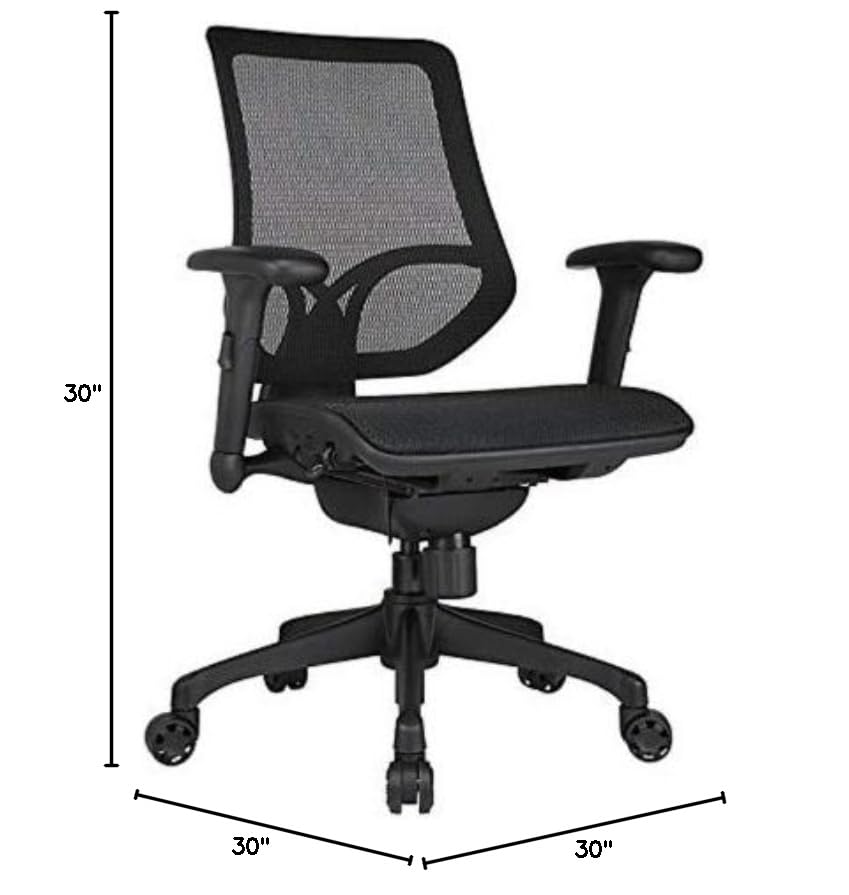
The trade-off with solid polyurethane materials is breathability. Unlike the open weave found on the WorkPro 1000 Series ergonomic mesh chair, non-porous synthetic upholstery restricts airflow between your body and the foam. In unconditioned editing bays or rooms crowded with heat-generating rendering towers and studio lights, the surface can trap warmth across prolonged sessions. Maintaining a cool room temperature helps keep the material comfortable when working on tight deadlines.
Long-term physical durability depends on how the chair is cleaned and handled. Synthetic leather finishes can degrade or peel over multiple years if exposed to harsh chemical cleaners or direct ultraviolet light from nearby windows. To preserve the material, use gentle cleaners and keep the chair positioned away from direct thermal vents or sustained sunlight inside your production room.
Base Stability and Real Weight Handling
Creative workstations often house heavy computing rigs, multiple monitors, and sensitive audio monitors where sudden wobbles or structural give are unacceptable. This chair utilizes a knockdown metal base that supports up to 275 pounds. The metal frame provides a rigid foundation that resists flex when leaning into the backrest, giving the base a secure, grounded profile on flat studio surfaces.
The included dual-wheel casters are built for smooth indoor rolling mobility, enabling fast glides between an editing desk, a side rack, and a vocal booth. On thin commercial carpets, the casters track smoothly without catching. If your studio features hardwood, laminate, or polished concrete, adding a floor mat prevents surface scuffs and reduces mechanical rolling rumble that sensitive condenser microphones might pick up during live streaming or voice tracking. For users seeking specialized multi-stage adjustments or different base layouts, comparing this platform with the Sihoo M18 ergonomic office chair helps highlight standard versus heavy-duty ergonomic configurations.
Vertical adjustments operate through an under-seat pneumatic cylinder, letting the total chair height shift between 38.25 and 42 inches. The tilt tension knob underneath the seat pan lets you calibrate the resistance required to rock back. The mechanism includes a single upright locking position, keeping the seat locked firmly at ninety degrees for typing and mixing, or unlocked to allow free rocking when reviewing footage.
Assembly Process and Workspace Setup
Setting up office furniture inside a functioning workspace can disrupt tight production schedules, making straightforward assembly essential. The manufacturer uses an efficient packaging method where the caster wheels, base legs, armrests, mechanical plate, and hardware pack are zipped inside the hollow cavity of the back cushion. When unpacking, locate the rear zipper on the cushion to retrieve the components before beginning assembly.
The hardware kit contains all necessary threaded bolts and an included wrench, so external power tools are not required. Assembling the knockdown metal base requires securing the legs together and pressing the casters firmly into their sockets. Threading the bolts through the armrests into both the seat base and back cushion requires patience, as aligning the pre-drilled holes through the thick padding requires steady hand pressure. Keep all bolts loose until every connection is threaded, then tighten them sequentially to maintain balance.
A single person can complete the assembly in roughly twenty to thirty minutes within a cleared area of the studio. If you are comparing installation simplicity across contemporary options, the 3D Ergonomics Chair by Inbox Zero presents a comparable modular setup process. Checking bolt tightness every few months ensures the armrests and base maintain their rigid connection under repeated daily movement.
Check Amazon Basics Classic Puresoft Mid-Back Chair on Amazon
Is the Amazon Basics Classic Puresoft Mid-Back Chair Worth It
Determining whether this mid-back chair suits your creative space depends on the duration of your work blocks and the complexity of your desk environment. For creators who spend two to four continuous hours editing video clips, managing online streams, or recording podcasts, the thick contoured padding and straightforward tilt features deliver reliable functional support. Its clean profile integrates easily into home offices without demanding excess floor space.
Full-time production specialists who work eight to ten hours every day across audio mixing consoles or complex multi-display rigs may run into the limits of fixed armrests and single-position reclining. The inability to raise or lower the armrests can create ergonomic friction with specific desk elevations, and the synthetic leather upholstery lacks the thermal regulation needed for unventilated spaces. If your work habits require micro-adjustments for lumbar depth, seat tilt, and head support, an advanced task chair is a better fit.
For secondary creator stations, podcast guest seating, or home office video editing desks with standard 30-inch clearances, this chair delivers dependable structural utility. It handles everyday office tasks, supports up to 275 pounds on a metal base, and provides a comfortable seating surface without unnecessary mechanical complexity.
FAQ
What is the maximum weight limit of the Amazon Basics Classic Puresoft Mid-Back Chair?
The chair has a tested maximum weight capacity of 275 pounds, supported by a knockdown metal base and an indoor pneumatic lift cylinder.
Can the armrests be adjusted or removed during daily use?
The armrests are fixed and do not offer height, width, or angle adjustments. Because they bolt directly into both the seat cushion and the backrest to provide structural rigidity, they must remain installed for the chair to function safely.
How many reclining angles does the tilt mechanism provide?
The chair features tilt control with one upright locking position. You can leave the mechanism unlocked to rock freely with adjustable tension, or lock it into the upright configuration for focused work.
Are the assembly parts shipped in separate boxes?
The entire chair ships in one box. The smaller components, including the caster wheels, base legs, armrests, hardware pack, and tilt mechanism, are packed directly inside the backrest cushion cavity behind a zipper.
How do you clean and maintain the Puresoft PU upholstery?
Wipe the surface with a soft cloth lightly dampened with water or a mild soap solution. Avoid using abrasive sponges, harsh chemical detergents, or solvent-based cleaners to protect the synthetic polyurethane coating from premature wear.