As Amazon Associates, we earn from qualifying purchases. This means we may receive a small commission at no extra cost to you if you click through and make a purchase.
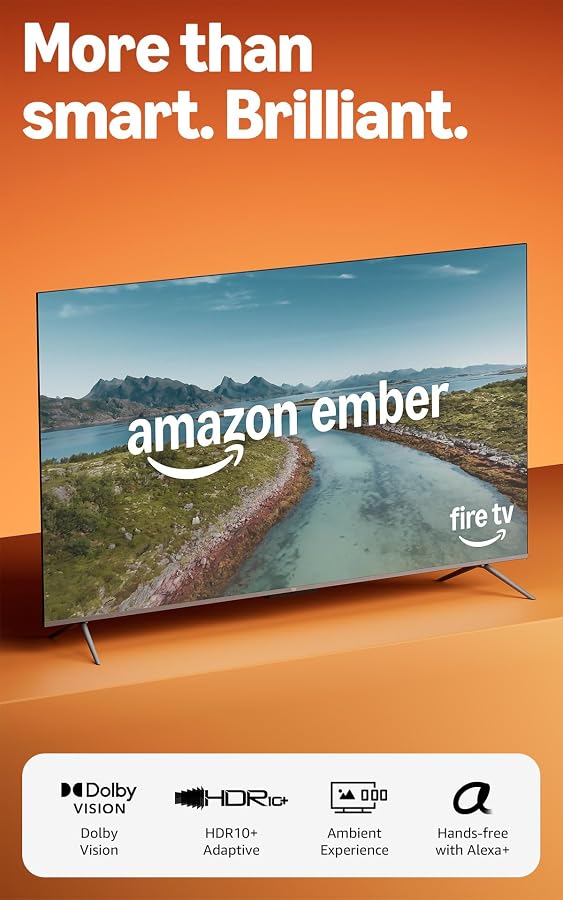
Evaluating whether the Amazon Ember 65-Inch QLED TV belongs in a creative studio, home office, or client review bay comes down to how well its visual engine handles critical display passes alongside everyday workspace tasks. As modern content creation increasingly bridges the gap between desk-bound desktop grading monitors and living room playback validation, having an expansive 65-inch canvas provides immediate context on color rendering, motion coherence, and consumer viewing conditions. This model introduces full-array local dimming paired with quantum dot color science, aiming to serve creators, hobbyists, and vloggers who need high dynamic range support without adding enterprise display infrastructure to their editing suite.
In this amazon ember 65 smart tv review, we break down what this display delivers in terms of visual precision, ambient utility, and casting reliability. Rather than treating it merely as an entertainment hub, we examine how the display performs during wireless proofing sessions, how the built-in sensor suite integrates into an active production environment, and where its technical boundaries lie. Below, we cover panel characteristics, hardware specifications, studio workflow utility, physical input configurations, and whether this screen meets the demands of creative professionals.
What You Get With the Amazon Ember 65-Inch QLED TV

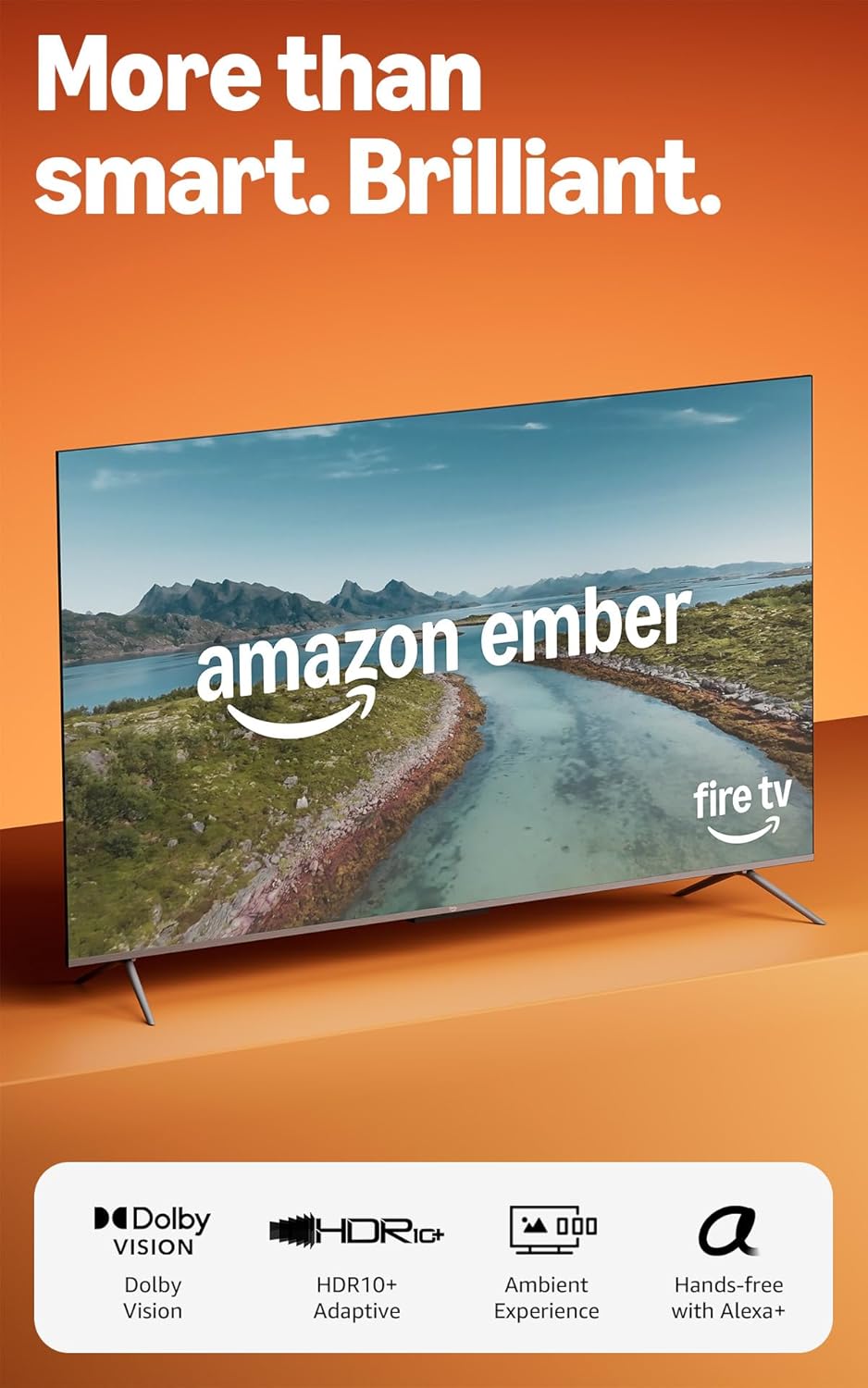
The retail listing details a high-performance feature set tailored toward streaming speed, ambient room sensing, and comprehensive dynamic range support for modern media environments:
- 4K QLED panel combining quantum dot color reproduction with Ultra HD resolution
- Full-array local dimming engineered for enhanced contrast depth and highlight separation
- Dolby Vision and HDR10+ Adaptive dynamic metadata support for balanced ambient viewing
- Quad-core processor paired with Wi-Fi 6 wireless architecture for low-latency streaming
- Omnisense ambient technology equipped with motion sensors for automated wake and art display
- Voice control integration featuring Alexa+ and hands-free interaction with an electronic microphone disconnect switch
- Native cloud gaming support through Amazon Luna and Xbox Game Pass without dedicated console hardware
- Four HDMI inputs alongside Apple AirPlay integration for casting from compatible mobile and desktop devices
Key Specifications
| Attribute | Detail |
|---|---|
| Display Technology | 4K QLED (Quantum Dot) |
| Screen Size | 65-inch class |
| High Dynamic Range Formats | Dolby Vision, HDR10+ Adaptive |
| Backlight Architecture | Full-array local dimming |
| Internal Processor | Quad-core processor |
| Wireless Connectivity | Wi-Fi 6 |
| Operating System | Fire TV experience (2026 update) with Alexa+ |
| Audio Processing | Dolby Audio |
| Physical Video Inputs | 4 HDMI inputs (listing does not specify revision standards) |
| Screen Mirroring | Apple AirPlay support |
| Hardware Privacy Controls | Electronic microphone disconnect switch |
Color Accuracy and Dynamic Range for Content Proofing
For video editors, colorists, and digital photographers, consumer display validation is a vital milestone before project sign-off. The amazon ember tv color accuracy relies on a quantum dot film that enriches color saturation and widens the visible gamut well beyond standard edge-lit LCD panels. By filtering light through nanocrystals, the QLED layer produces pure greens and vibrant reds that help creators verify how cinematic grades translate to living room environments. While a consumer television does not replace a dedicated reference monitor equipped with custom 3D look-up tables, having a large display capable of presenting rich saturation gives video editors a dependable platform for final client previews.
Contrast handling is anchored by the amazon ember 65-inch local dimming system, which actively modulates illumination across distinct zones behind the panel. In creative workflows, backlight control is essential for preventing black letterbox bars from glowing gray during widescreen video monitoring. The full-array backlight isolates bright highlights, such as practical light fixtures or specular glints, against dark backgrounds without washing out subtle shadow details. While the listing does not specify the exact local dimming zone count, the presence of a full-array layout provides a substantial upgrade over basic frame-dimming solutions, yielding tighter control over blooming when inspecting high-contrast footage. If you have previously looked at displays like the tcl 65 inch 4k roku tv 6 series 2022, you know that full-array dimming is pivotal for achieving deep black levels in ambient studio spaces.
High dynamic range management on this display is bolstered by amazon ember qled dolby vision and HDR10+ Adaptive compatibility. In a creative workspace where studio lighting changes throughout the day, static HDR formats often look overly dark or blow out subtle highlights. HDR10+ Adaptive uses ambient light telemetry to dynamically scale tone curves, ensuring that middle-gray skin tones and delicate midtone grades stay legible regardless of whether overhead studio lamps are active or dimmed. Because Dolby Vision processes frame-by-frame metadata, video creators targeting commercial streaming platforms can inspect dynamic tone mapping in real time, catching clipping artifacts or tone shifts before distributing exports to clients.
AirPlay Casting and Studio Production Workflow
Integrating a large consumer screen into a busy production suite requires seamless casting capabilities. The amazon ember qled airplay workflow enables creators using macOS or iOS to beam raw rushes, camera playback, and timeline exports directly onto the 65-inch screen without running lengthy display cables across the room. Reviewing edits on an iPad Pro while mirroring the image to the wall-mounted screen facilitates collaborative review sessions, allowing directors, audio designers, and clients to give immediate feedback on visual pacing and shot composition.
Underlying this wireless performance is an upgraded network pipeline driven by Wi-Fi 6 and a new quad-core processor. In video environments where high-bitrate video clips and compressed proxies cause traditional Wi-Fi networks to buffer or drop frames, Wi-Fi 6 provides the sustained bandwidth needed for smooth wireless scrubbing. High-throughput wireless routing minimizes input lag when casting from an editing laptop, reducing audio-sync drift during timeline scrubbing. For professionals balancing studio spaces with secondary monitors such as the samsung qn90f 43-inch neo qled 4k (2025), having rock-solid casting on a primary 65-inch screen transforms the room into an agile client presentation suite.
Software efficiency on the Fire TV 2026 platform further streamlines everyday studio operations. The quad-core chip ensures that jumping between video playback apps, native cloud storage utilities, and casting feeds occurs without sluggish menu transitions. When time is critical between client calls, being able to quickly pin production-oriented streaming channels or review apps directly to the home screen reduces downtime. The voice-driven Alexa+ system also simplifies hands-free timeline queries, letting you set production timers, adjust connected studio lighting, or search for visual references while keeping your hands on the keyboard or color surface.
Omnisense Ambient Utility in a Creator Workspace
A major hurdle when placing a large 65-inch display in a creative office or production studio is preventing the panel from dominating the room as a giant, reflective black void when not in active use. The amazon ember omnisense display solves this problem by using custom integrated presence sensors to manage screen wake states automatically. When you walk into your workspace to prep gear or ingest camera media, the Omnisense engine senses your presence and wakes the screen to show selected artwork, mood boards, or visual inspiration without requiring a remote click.
For vloggers, interview hosts, and set designers, this ambient capability doubles as a dynamic video backdrop. By using the ambient art feature, creators can establish distinct visual atmospheres for recorded video podcasts, livestream sets, or YouTube background visuals. The screen functions as an aesthetic accent that aligns with the lighting style of your studio set, moving far beyond traditional television functionality. When the studio empties out at the end of a shoot, the presence sensors detect the lack of activity and transition the screen back to sleep, curbing power draw and panel wear automatically.
Privacy is an equally critical consideration for production environments handling unreleased client content and private consultations. The Amazon Ember integrates a physical switch that electronically disconnects the built-in microphones. This hardware-level interruption guarantees that studio brainstorming, client briefings, and voiceover recording sessions remain entirely private without ambient microphone monitoring. Creators who demand strict confidentiality can flip the switch to ensure acoustic isolation, retaining full manual control over when voice systems are engaged.
Hardware Connectivity and Port Limitations
Hardware inputs dictate how effectively a television functions as the nerve center of a hybrid workstation. The amazon ember qled connectivity ports feature four HDMI inputs, allowing creators to maintain permanent connections for multiple machines simultaneously. A typical studio routing setup might include an edit bay desktop, a secondary laptop dock, a camera monitor feed via an HDMI breakout box, and an external soundbar or audio receiver. Having four dedicated inputs eliminates the frustrating need to unplug and reroute HDMI cables between production phases.
However, serious technical caveats exist regarding the amazon ember qled 65-inch specs. While the listing confirms four HDMI ports, it does not specify which revision standard those ports adhere to, nor does it list specific HDMI 2.1 bandwidth capabilities or native panel refresh rates. Creators working in high-frame-rate video production (such as 4K at 120 frames per second) or those wanting to connect cutting-edge gaming development rigs should note that the listing does not verify variable refresh rate or 120Hz native panel operation. If your creative pipeline requires verified high-refresh rendering or specific gaming monitor handshakes, comparing port specifications against known standards like those found on the tcl 5 series 65 inch 4k tv is a smart editorial practice.
On the audio side, the unit incorporates Dolby Audio processing for balanced everyday playback. While the internal speakers provide clear voice dialogue for editing tutorials, podcasts, and casual monitoring, audio engineers and mixing artists will still require dedicated studio monitors or an external audio interface for accurate sound design. For downtime entertainment, the platform supports console-free gaming through Amazon Luna and Xbox Game Pass, using phones as controllers or standard wireless gamepads, allowing creators to unwind without cluttering their desk space with extra hardware consoles.
Check Amazon Ember 65-Inch QLED TV on Amazon
Is the Amazon Ember 65-Inch QLED TV Worth It
Deciding if this television belongs in your setup requires balancing its consumer-focused convenience against the demands of high-end visual production. The amazon ember qled for creators makes tremendous sense if you need an expansive, color-rich secondary display for client reviews, rough-cut screenings, and Apple AirPlay mirroring. Its combination of full-array local dimming, quantum dot color reproduction, and dynamic metadata support via Dolby Vision delivers a punchy, true-to-life presentation that closely models how viewers will experience content in real homes.
On the other hand, dedicated mastering colorists who require strict hardware calibration, custom 3D LUT importing, or guaranteed 100 percent DCI-P3 coverage should not purchase this display as a primary grading tool. The lack of detailed specifications regarding panel refresh rate and specific HDMI bandwidth limits its viability as a primary PC mastering display or esports monitor. However, for hybrid creators who balance video editing, content planning, livestream backgrounds, and casual cloud gaming in a shared creative office, the package offers immense utility.
Ultimately, answering is amazon ember qled worth it depends on the role it plays within your physical space. As a central studio monitor for collaborative review sessions, smart home control, and ambient background aesthetics, it bridges the gap between functional production tool and smart room centerpiece. Its Wi-Fi 6 connectivity, ambient sensor array, and microphone privacy switch provide thoughtful touches that enhance everyday studio life without complicating your setup.
FAQ
Does the Amazon Ember 65-Inch QLED TV support wireless screen mirroring from Apple devices?
Yes, the listing confirms built-in Apple AirPlay support. This allows you to wirelessly stream video, cast presentation slides, or mirror timeline exports directly from compatible iPhone, iPad, and Mac hardware without external adapters.
How does full-array local dimming improve picture quality for video editing?
Full-array local dimming utilizes multiple backlight zones positioned directly behind the quantum dot layer. By selectively dimming dark areas while driving brightness in highlighted sections, it delivers deeper black levels and prevents widescreen letterbox bars from glowing, providing a more accurate simulation of cinematic contrast.
Can the built-in microphones be disabled for studio privacy?
Yes, the television includes a physical switch that electronically disconnects the microphones. This ensures that client meetings, voiceover recording sessions, and private workspace discussions remain confidential without software-level interference.
What gaming features are built into the television without a console?
The screen provides native cloud gaming access through Amazon Luna and Xbox Game Pass. Users can stream supported video game titles directly through the internet and use smartphones or compatible wireless controllers without purchasing a dedicated console.
Does the manufacturer listing specify HDMI 2.1 bandwidth or 120Hz refresh rates?
No, the listing does not specify the exact HDMI revision, individual port bandwidth, or native panel refresh rates. It confirms four HDMI inputs and a quad-core processor, but creators requiring verified 4K at 120Hz display modes should take note of this omission.


