As Amazon Associates, we earn from qualifying purchases. This means we may receive a small commission at no extra cost to you if you click through and make a purchase.
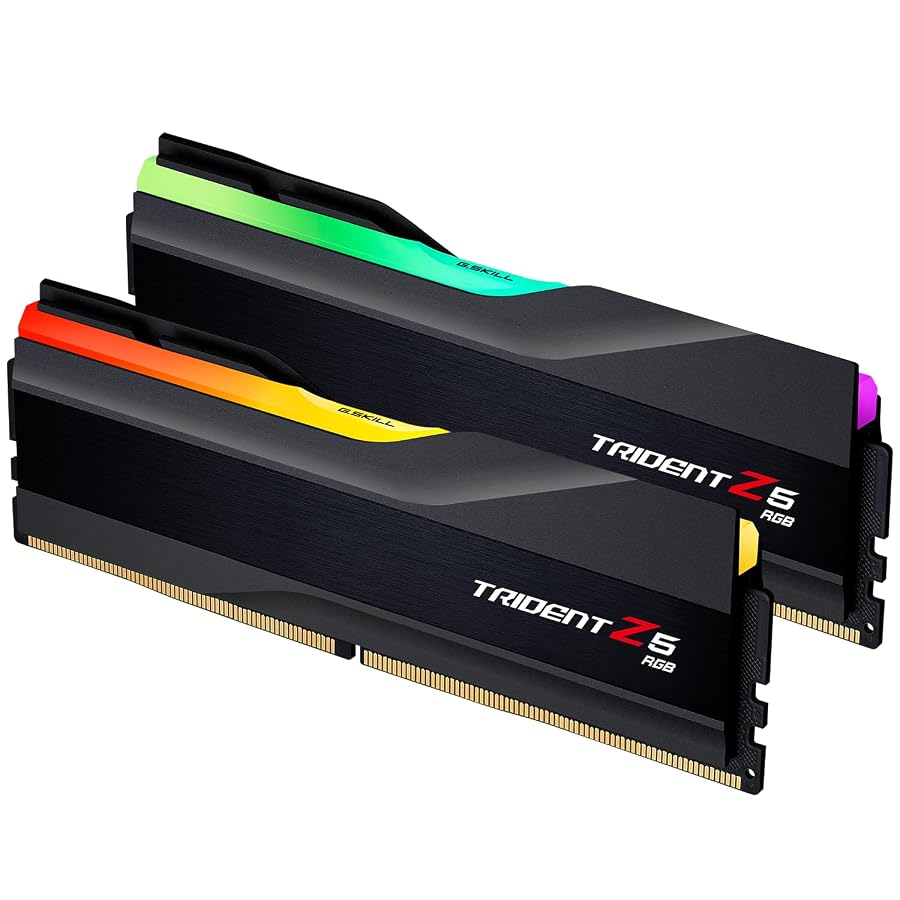
Finding balanced system memory for creative tasks requires evaluating both raw bandwidth and day-to-day system stability. The G.Skill Trident Z5 RGB DDR5 memory kit provides a dependable option for video editors, digital artists, and PC builders assembling modern desktop workstations. Operating at up to 6000 MT/s with CL36-36-36-96 timings at 1.35V, this 32GB dual-channel kit ensures that creative software receives rapid data flow without requiring complex manual timing adjustments. If you need responsive timeline scrubbing and efficient multitasking, this hardware package delivers solid capabilities right out of the box.
In this g skill trident z5 rgb review, we examine how this memory kit functions across modern creator workloads and software suites. We cover dual-profile BIOS configuration on Intel and AMD chipsets, real-world bandwidth during video rendering, long-term operational stability, and heatsink thermal performance. This analysis will help you determine whether this kit fits your hardware setup and daily production goals.

What You Get With the G.Skill Trident Z5 RGB DDR5
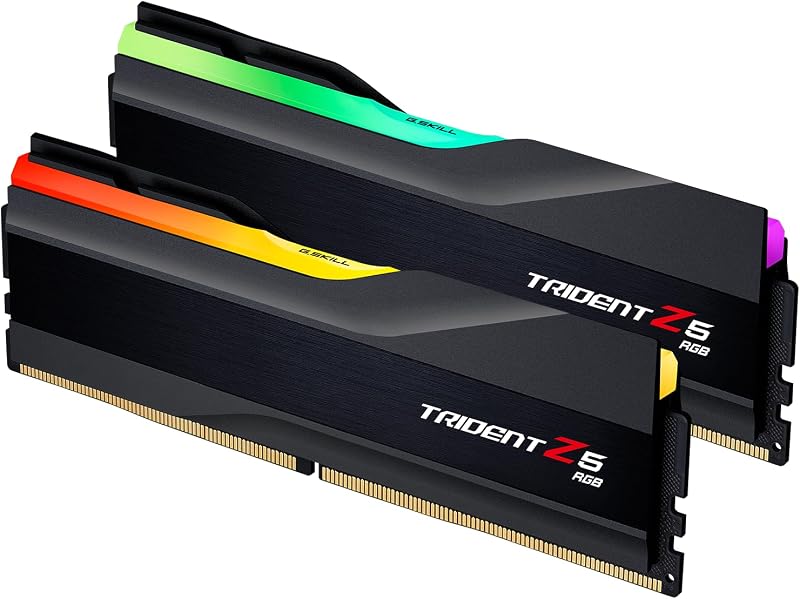
The G.Skill Trident Z5 RGB DDR5 arrives as a factory-paired desktop package engineered to deliver reliable dual-channel performance.
- Two 16GB DDR5 U-DIMM modules forming a matched 32GB kit (Model: F5-6000J3636F16GA2-TZ5RK).
- Pre-programmed dual overclocking profiles supporting both Intel XMP 3.0 and AMD EXPO standards.
- Default JEDEC SPD profile to ensure baseline boot stability prior to activating overclock profiles.
- Matte black aluminum heatspreaders featuring an integrated, customizable translucent RGB light bar.
- Standard 288-pin desktop form factor engineered for non-ECC computing platforms.
- Reference details directing users to the online G.SKILL memory QVL and RAM Configurator tool.
- Documentation regarding warranty terms available on the official G.SKILL warranty policy webpage.
Key Specifications
| Specification Attribute | Hardware Detail |
|---|---|
| Model Number | F5-6000J3636F16GA2-TZ5RK |
| Total Memory Capacity | 32GB (2 x 16GB Kit) |
| Memory Generation & Form Factor | DDR5 U-DIMM (288-Pin, Non-ECC) |
| Data Transfer Rate | Up to 6000 MT/s (6000 megabits per second) |
| CAS Latency & Timings | CL36 (CL36-36-36-96) |
| Tested Operating Voltage | 1.35V |
| Overclock Profile Support | Dual Profiles: Intel XMP 3.0 & AMD EXPO |
| Default Boot Standard | JEDEC SPD Default Boot Speed |
| Module Finish | Matte Black with Integrated RGB |
| Total Item Weight | 0.17 kg |
Dual Overclocking Profiles and BIOS Setup Stability
A primary advantage found within the g skill trident z5 ddr5 specs is the integration of both Intel XMP 3.0 and AMD EXPO overclocking profiles on a single hardware kit. Builders no longer need to worry about purchasing platform-exclusive memory sticks when designing their rigs. Whether you are assembling an Intel build or setting up an AMD AM5 system, the trident z5 ddr5 amd expo intel xmp profile options allow you to load pre-tested operating parameters with a simple BIOS toggle. When powering high-performance hardware such as an intel i9 14900k workstation, having both profiles pre-loaded eliminates tedious manual voltage and timing adjustments.
Achieving sustained trident z5 ddr5 stability requires understanding how high-speed DDR5 modules boot. According to the manufacturer listing, these modules initially boot at JEDEC default SPD speeds when installed into compatible motherboards. This baseline ensures that your system starts up cleanly and lets you access the UEFI interface without boot loops. Reaching the rated 6000 MT/s speed requires manual BIOS activation of either the XMP or EXPO profile. Maximum operational frequency depends heavily on your specific motherboard and processor memory controller.
Operating memory outside of validated specifications can create serious issues during intensive production work. The listing explicitly states that usage inconsistent with manufacturer specifications, warnings, or designs will result in lower speeds, system instability, or hardware damage. Content creators must consult the G.SKILL QVL list or RAM Configurator tool to ensure their motherboard supports this specific memory kit. Using verified firmware settings guarantees that timings and voltages remain completely stable during critical video rendering tasks.
Memory Bandwidth and Latency for Video Editing Workflows
Utilizing the g skill trident z5 ddr5 for video editing provides significant throughput benefits when managing high-resolution timelines and multi-layered visual assets. Applications such as DaVinci Resolve and Adobe Premiere Pro place heavy continuous demands on system RAM to buffer raw clips and generate instant previews. Operating at a data rate of 6000 megabits per second, this g skill trident z5 ddr5 6000mhz configuration moves high-bitrate media into active memory rapidly, reducing playback stutters during timeline scrubbing.
Memory timings play a crucial role in overall responsiveness. This g skill trident z5 32gb cl36 configuration operates with tested timings of CL36-36-36-96 at 1.35V. While lower latencies exist, CL36 offers an excellent compromise between snappy responsiveness and manageable power requirements for production machines. For creators upgrading from prebuilt rigs like the cyberpowerpc gamer master gaming desktop, amd ryzen 5 8400f, nvidia geforce rtx 5060 8gb, 16gb ddr5, setup, doubling the memory capacity while increasing operational speed provides noticeably smoother transitions between resource-heavy applications.
Video rendering and file exporting also gain measurable efficiency from higher memory bandwidth. When rendering complex video sequences with color grading, noise reduction, and layered titles, your processor and graphics card constantly exchange texture frames across system RAM. High data throughput prevents bandwidth bottlenecks between your processing components, allowing your editing software to encode files at maximum speed without unexpected stalling or timeline latency.
Platform Compatibility and Matched Kit Architecture
Proper hardware matching is essential for stable creator rigs. The Trident Z5 RGB kit provides broad platform validation across multiple generations of modern hardware. On Intel systems, it is compatible with Intel Z890, Z790, Z690, B860, B760, and B660 chipsets. On AMD platforms, it supports X870, X670, B850, B840, B650, and A620 boards. Whether you are assembling a mainstream office build featuring an intel core i5-14500 vpro processor or an enthusiast-class editing machine, cross-referencing your motherboard with G.SKILL’s QVL ensures trouble-free profile recognition.
A crucial manufacturer guideline is to avoid mixing memory kits. This 32GB package comes as a factory-tested matched pair of two 16GB modules designed specifically to run together. Many builders attempt to expand memory capacity later by adding a second separate kit of the same model, but G.SKILL warns that mixing memory kits causes instability or boot failure. DDR5 frequencies operate with tight electrical tolerances that require matched silicon batches for proper synchronization.
Using only the matched modules in your memory channels maintains proper signal integrity across motherboard traces. When modules from separate kits are combined, minor discrepancies in sub-timings and internal power management can prevent the system from training at full speed. For content creators who cannot afford unexpected system freezes during overnight renders, maintaining an isolated, validated matched kit ensures the highest degree of operational reliability.
Thermal Design and Content Creation Multitasking
Intensive g skill trident z5 ddr5 content creation workflows subject system components to prolonged electrical and thermal stress. Running 3D rendering engines, compiling video effects, or managing massive photo catalogs forces memory modules to operate under continuous load. Unlike older DDR4 memory, DDR5 modules integrate the Power Management Integrated Circuit (PMIC) directly onto the module PCB. This makes efficient heat dissipation vital to prevent thermal throttling or voltage fluctuations during heavy workstation sessions.
The Trident Z5 RGB addresses heat management through its matte black aluminum heatspreaders. Weighing 0.17 kg as a combined package, the modules efficiently pull heat away from the memory dies and onboard power circuits. The top of each module features an integrated RGB light bar that provides customizable aesthetics without impeding cooling performance. For users upgrading prebuilt workstations like the yeyian phoenix mesh gaming pc – intel core ultra 5 225f, geforce rtx 5060, 32gb ddr5, 1tb ssd – al-r, reliable heatsink cooling prevents thermal build-up inside compact cases during marathon editing sessions.
Multitasking workflows also benefit from having 32GB of rapid dual-channel memory available. Creators frequently run multiple heavy programs simultaneously, such as editing software, audio mastering tools, web browsers with extensive research tabs, and asset libraries. High data transfer rates allow the operating system to swap between background and foreground tasks instantly without freezing. Keeping active project assets stored within fast system memory avoids slow disk caching and maintains an efficient, responsive editing experience.
Check G.Skill Trident Z5 RGB DDR5 on Amazon
Is the G.Skill Trident Z5 RGB DDR5 Worth It
Deciding whether the g skill trident z5 ddr5 is worth it depends on your specific workflow needs and hardware platform. For video editors, streamers, and creative professionals seeking dependable desktop performance, this 32GB kit offers a compelling combination of speed, broad platform compatibility, and straightforward setup. The dual Intel XMP 3.0 and AMD EXPO profiles ensure that setting the advertised 6000 MT/s speed requires only a simple BIOS toggle on qualified motherboards.
The 32GB capacity strikes a practical balance for most modern creative workflows, easily handling 4K video editing, digital audio production, and intensive graphic design multitasking. The matte black aluminum heatspreaders keep operating temperatures under control during continuous rendering, while the integrated RGB light bar enhances the visual appeal of modern workstation builds. The versatility of dual platform profiles also ensures your investment remains useful should you switch processor ecosystems in future build revisions.
However, users needing memory for enterprise-level servers or scientific computing should remember that this kit features non-ECC UDIMMs and is not intended for mission-critical server environments. Additionally, creators regularly working with uncompressed 8K raw cinema footage may find 32GB limiting and should purchase a higher-capacity matched kit from the start. For mainstream content creators, digital artists, and demanding PC enthusiasts, the G.Skill Trident Z5 RGB DDR5 represents a reliable and high-performing desktop memory choice.
FAQ
Does the G.Skill Trident Z5 RGB DDR5 support both AMD and Intel platforms?
Yes. The kit includes dual overclocking profiles with support for both Intel XMP 3.0 and AMD EXPO. It is compatible with Intel Z890, Z790, Z690, B860, B760, and B660 motherboards, as well as AMD X870, X670, B850, B840, B650, and A620 platforms. You should verify your specific motherboard model on the G.SKILL memory QVL or RAM Configurator tool.
Will this RAM run at 6000 MT/s automatically upon installation?
No. By default, the memory will boot at JEDEC default SPD speeds to guarantee basic system compatibility. Achieving the rated 6000 MT/s transfer speed requires entering your motherboard BIOS and enabling the Intel XMP 3.0 or AMD EXPO overclocking profile. Final performance depends on your motherboard and CPU memory controller.
Can I combine two of these 32GB kits to reach 64GB?
The manufacturer strongly advises against mixing memory kits. Memory modules are sold in matched pairs that are factory-tested to function together. Combining two separate kits—even of the identical model—frequently results in system instability, failure to boot, or inability to achieve rated profile speeds.
Is 32GB of DDR5 memory adequate for 4K video editing?
Yes, 32GB is generally well-suited for editing 4K video timelines in popular creative applications like DaVinci Resolve and Adobe Premiere Pro. It provides sufficient memory headroom for smooth preview playback and standard multitasking, though creators working with uncompressed 8K footage may require larger capacities.
What does Non-ECC memory mean for workstation stability?
Non-ECC indicates that the modules do not contain side-band Error-Correcting Code hardware typically used in enterprise servers. While DDR5 features internal on-die ECC for chip-level data integrity, non-ECC UDIMMs remain the standard format for consumer desktops and creator workstations, offering high speed and broad hardware compatibility.


