As Amazon Associates, we earn from qualifying purchases. This means we may receive a small commission at no extra cost to you if you click through and make a purchase.
As an Amazon Associate we earn from qualifying purchases. Links on this page are affiliate links.
This JUKI vs SINGER sewing machine comparison looks at two distinct approaches to home sewing. The JUKI TL-2010Q is a single-needle lockstitch machine built for quilting and tailor work, featuring an automatic thread trimmer. The SINGER 4552 offers 32 built-in stitches and a metal frame for general construction. Both include automatic needle threaders. You need to decide between specialized quilting efficiency and versatile multi-stitch capability based on your primary projects.
Intended Use
Quilting and tailor work
Garment construction, home décor, and creative projects
Stitch Count
Not listed
32 built-in stitches
Thread Trimming
Automatic thread trimmer
Not listed
Max Sewing Speed
Not listed
1,000 stitches per minute
Frame Construction
Not listed
Full metal interior frame
Weight
38 pounds
17.2 pounds
Choose the first if
- You primarily quilt and need an automatic thread trimmer to save time
- You require a knee lifter lever to handle heavy materials without using your hands
- You want a machine designed specifically for single-needle lockstitch operations
Choose the second if
- You need 32 built-in stitches for diverse garment and home décor projects
- You prefer a lighter, more portable machine at 17.2 pounds
- You want speed control and a full metal frame for stability during tough projects
Verdict
Choose the JUKI if your focus is serious quilting or tailoring where an automatic thread trimmer and knee lifter are essential. Select the SINGER if you need versatility with 32 stitches, a lighter weight, and a metal frame for general sewing tasks. The right choice depends entirely on whether you prioritize specialized speed or stitch variety.
JUKI vs SINGER: Key Differences
intended use
Edge: Tie
The JUKI TL-2010Q is designed specifically for quilting and tailor work. It is a single-needle lockstitch machine built for high-performance sewing tasks. The SINGER 4552 is a general-purpose heavy duty machine. It handles everyday sewing, garment construction, stretch work, and home décor projects. The JUKI focuses on precision for heavy materials. The SINGER covers a wider range of creative and repair tasks. You should choose the JUKI if you quilt often. Pick the SINGER for varied household sewing needs.
stitch count
Edge: Singer Heavy Duty Sewing Machine with Speed Control
The SINGER 4552 includes 32 built-in stitches. These offer 110 stitch applications for utility, stretch, and decorative needs. The JUKI TL-2010Q is a single-needle lockstitch machine. It does not list a specific stitch count in its data. It focuses on a single versatile lockstitch pattern. The SINGER provides more variety for different fabric types and techniques. The JUKI relies on its mechanical precision for consistent seams. If you need multiple stitch types, the SINGER is the better choice. The JUKI is ideal for standard straight stitching.
thread management
Edge: JUKI Single-Needle Quilting Machine
The JUKI TL-2010Q features an automatic thread trimmer. You can trim both needle and bobbin threads by pressing a button. This saves time and ensures clean ends. It also has an automatic needle threader to reduce eye strain. The SINGER 4552 has an integrated needle threader. It does not list an automatic thread trimmer. You must cut threads manually on the SINGER. The JUKI offers more convenience for finishing seams quickly. The SINGER requires manual intervention for thread management. The JUKI is superior for automated thread handling.
build quality
Edge: Tie
The SINGER 4552 has a full metal interior frame. This adds durability and stability for tough projects. It helps the machine stay steady across various fabrics. The JUKI TL-2010Q is described as lightweight and portable. Its weight is 38 pounds, while the SINGER weighs 17.2 pounds. The JUKI is heavier, likely due to its robust construction for heavy materials. The SINGER uses a metal frame for strength but is lighter overall. The JUKI feels more substantial. The SINGER offers a durable metal frame in a lighter package.
speed control
Edge: Singer Heavy Duty Sewing Machine with Speed Control
The SINGER 4552 has a speed control feature. You can set the maximum sewing speed for better precision. This helps with curves, corners, and detailed sections. It sews up to 1,000 stitches per minute. The JUKI TL-2010Q does not list a max speed or speed control in its data. It focuses on high-performance handling of materials. The SINGER gives you more control over sewing pace. The JUKI relies on foot pedal control alone. For beginners or detailed work, the SINGER speed control is a clear advantage.
accessories
Edge: Singer Heavy Duty Sewing Machine with Speed Control
The SINGER 4552 includes bonus presser feet, needles, Class 15 bobbins, spool caps, a guide, and a seam ripper with lint brush. It also has a stainless steel bedplate for smooth fabric glide. The JUKI TL-2010Q comes with a knee lifter lever. This allows you to raise the presser foot without using your hands. It lifts up to 12mm for heavy materials. The SINGER offers more included tools for immediate use. The JUKI provides a specialized knee lifter for convenience. The SINGER has better accessory variety.
Which Juki or Singer is best
Quilters needing fast thread trimming
Our pick: JUKI Single-Needle Quilting Machine
The JUKI TL-2010Q features an automatic thread trimmer. You press a button to cut both needle and bobbin threads simultaneously. This saves time during complex quilting projects. The machine also includes an automatic needle threader. This helps you start sewing quickly without eye strain. The knee lifter raises the presser foot up to 12mm. You can handle light to heavyweight materials easily.
Sewers needing versatile stitch options
Our pick: Singer Heavy Duty Sewing Machine with Speed Control
The SINGER 4552 offers 32 built-in stitches. These cover utility, stretch, and decorative needs for garments and home décor. You get 110 stitch applications for various projects. The machine includes a one-step buttonhole for consistent results. Adjustable stitch length and width let you customize settings. This versatility supports everyday sewing, repairs, and creative work with different fabrics and techniques.
Users wanting speed control and portability
Our pick: Singer Heavy Duty Sewing Machine with Speed Control
The SINGER 4552 reaches up to 1,000 stitches per minute. Speed control lets you set a maximum limit for precision on curves and corners. It weighs only 17.2 pounds. This makes it much lighter and easier to transport than the JUKI. The metal frame adds stability. A stainless steel bedplate helps fabric glide smoothly. You get better control during detailed sections and smaller projects.
JUKI Single-Needle Quilting Machine
Best for: portable quilting and tailoring work
- Needle Threader
- Automatic
- Intended Use
- Quilting
- Dimensions
- 25.7 × 14 × 18 inches
- Weight
- 38 pounds
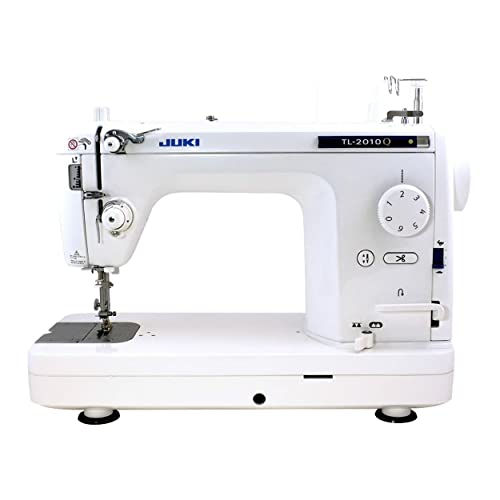
The JUKI TL-2010Q is a portable, lightweight lockstitch machine designed for quilting and tailoring. It features an automatic thread trimmer and an automatic needle threader to speed up your workflow. The knee lifter lever raises the presser foot up to 12mm, allowing you to handle light to heavyweight materials easily. Weighing 38 pounds, it balances portability with stability for your sewing projects.
- Automatic thread trimmer cuts needle and bobbin threads with a button press
- Automatic needle threader eliminates eyestrain and speeds up setup
- Knee lifter lever raises the presser foot up to 12mm for thick fabrics
- Lightweight and portable design at 38 pounds for easy transport
- Weighs 38 pounds, which is heavier than the SINGER 4552 Next Evolution
- Fixed red color limits aesthetic customization options
- You need a portable machine for quilting or tailoring tasks
- You want to use a knee lifter for hands-free presser foot control
- You prefer automatic thread trimming to save time between seams
- You require a machine with a different color scheme than red
- You need a significantly lighter unit for frequent travel
- You are looking for a multi-needle or industrial-only setup
Verdict: JUKI TL-2010Q Portable Sewing Machine suits quilters who value the convenience of automatic thread trimming and knee lift operation. Its portable 38-pound build makes it a solid choice for those who move their sewing station regularly.

Singer Heavy Duty Sewing Machine with Speed Control
Best for: Durable sewing on thick or stretch fabrics
- Built-In Stitches
- 32
- Max Sewing Speed
- 1,000 stitches per minute
- Bobbin System
- Top drop-in
- Needle Threader
- Integrated
- Features
- Metal Frame, 1-Step Buttonhole
- Stitch Count
- 32 Stitches
This Singer Heavy Duty 4552 machine features a metal frame and a DC motor for consistent stitching on thick or stretch fabrics. It offers 32 built-in stitches and reaches a maximum speed of 1,000 stitches per minute. The top drop-in bobbin and integrated needle threader simplify setup. It suits sewers who need durable construction and adjustable speed control for precise work on varied materials.
- Full metal interior frame provides stability during heavy sewing.
- Maximum sewing speed reaches 1,000 stitches per minute.
- 32 built-in stitches cover utility, stretch, and decorative needs.
- Integrated needle threader reduces setup time.
- Speed control allows precise handling of curves and corners.
- Weighs 17.2 pounds, making it heavier than the Juki TL-2010Q.
- Offers 32 built-in stitches, fewer than the Juki TL-2010Q.
- Uses a top drop-in bobbin system instead of a front-loading hook.
- You sew thick, layered, or stretch fabrics regularly.
- You need adjustable speed control for detailed sections.
- You prefer a metal frame for added durability.
- You require more than 32 built-in stitch options.
- You prioritize a lighter machine for easy portability.
- You prefer a front-loading bobbin system for easier access.
Verdict: Singer Heavy Duty 4552 Sewing Machine fits sewers who need a sturdy, metal-framed machine with adjustable speed for thick fabrics. It is a solid choice for those who value durability over a high stitch count.
Specifications side by side
| Spec | JUKI Single-Needle Quilting Machine | Singer Heavy Duty Sewing Machine with Speed Control |
|---|---|---|
| Built-In Stitches | – | 32 |
| Max Sewing Speed | – | 1,000 stitches per minute |
| Bobbin System | – | Top drop-in |
| Needle Threader | Automatic | Integrated |
| Intended Use | Quilting | – |
| Features | – | Metal Frame, 1-Step Buttonhole |
| Stitch Count | – | 32 Stitches |
| Dimensions | 25.7 × 14 × 18 inches | 6.25 × 15.5 × 12 inches |
| Weight | 38 pounds | 17.2 pounds |
| Color | red | Charcoal |
| Model | MO-735 | HD4552 |
| Size | – | One-Size |
Frequently asked questions
Is JUKI better for quilting than SINGER?
JUKI is the better choice for dedicated quilting. The JUKI TL-2010Q is designed specifically for quilting and tailor work. It features an automatic thread trimmer to save time. The SINGER 4552 is a general-purpose machine. It focuses on durability and thick fabrics rather than quilting-specific features.
Which machine is lighter and easier to move?
The SINGER 4552 is lighter and more portable. It weighs only 17.2 pounds. The JUKI TL-2010Q is heavier at 38 pounds. Although the JUKI is portable, its weight makes it less convenient for frequent moving. You should choose the SINGER if you need to transport your machine often.
Does SINGER offer more stitch options than JUKI?
Yes, the SINGER 4552 offers more variety. It includes 32 built-in stitches. The JUKI TL-2010Q is a single-needle lockstitch machine. It does not list a high stitch count in its specifications. If you need diverse stitch patterns, the SINGER model provides more options for different sewing projects.
Which machine is better for thick fabrics?
The SINGER 4552 is built for heavy-duty tasks. It features a sturdy metal frame designed for thick or stretch fabrics. The JUKI TL-2010Q is optimized for quilting and tailoring. It is not described as a heavy-duty machine for thick materials. You should select the SINGER for robust fabric handling.
What are the dimensions of these sewing machines?
The SINGER 4552 measures 15.5 inches wide, 12 inches high, and 6.25 inches long. The JUKI TL-2010Q is larger, measuring 14 inches wide, 18 inches high, and 25.7 inches long. The JUKI model requires more workspace due to its greater height and length. Consider your available table space when deciding.
Does JUKI have an automatic thread trimmer?
Yes, the JUKI TL-2010Q includes an automatic thread trimmer. This feature allows you to cut both needle and bobbin threads with a button press. The SINGER 4552 specifications do not mention this feature. If automatic trimming is important for your workflow, the JUKI model provides this convenience.
Which machine has a metal frame?
The SINGER 4552 features a metal frame. This construction adds durability and stability for heavy sewing tasks. The JUKI TL-2010Q is described as a portable machine but does not list a metal frame in its specs. The SINGER design prioritizes structural strength for demanding fabric types.