As Amazon Associates, we earn from qualifying purchases. This means we may receive a small commission at no extra cost to you if you click through and make a purchase.
As an Amazon Associate we earn from qualifying purchases. Links on this page are affiliate links.
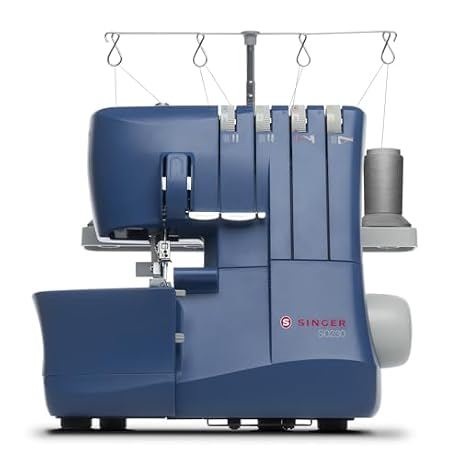
When comparing a SINGER vs MILLEPUNTI serger, you look at two metal-frame machines built for overlock stitching. Both models include differential feed to manage fabric stretch and prevent puckering. The main difference lies in their stitch options and speed. The SINGER offers 13 stitches with 4/3/2-thread capability and a heavy-duty motor. The MILLEPUNTI provides 7 stitches at 1,250 SPM with 3/4-thread options. You choose based on your need for versatility versus simplicity.
Stitch Count
13
7
Thread Capability
4/3/2 thread
3/4 thread
Sewing Speed
not listed
1,250 stitches per minute
Frame Material
Metal frame
Metal frame
Included Accessories
2-thread converter, oil, spare blade, dust cover
4 spools of thread, allen wrench, accessory storage
Choose the first if
- You need 13 stitch options for rolled hems and decorative edges.
- You frequently sew heavy fabrics and require a heavy-duty motor.
- You want a 2-thread converter and spare cutter blade included.
Choose the second if
- You are a beginner seeking a straightforward 7-stitch setup.
- You want a faster sewing speed of 1,250 SPM.
- You prefer included thread spools and built-in accessory storage.
Verdict
The SINGER suits users who need versatile stitching for varied fabrics and heavier materials. The MILLEPUNTI is better for beginners who prioritize speed and simplicity. Both machines offer durable metal frames and differential feed.
SINGER vs MILLEPUNTI Serger Specs
Stitch versatility
Edge: SINGER Heavy Duty Overlock Serger
The SINGER Heavy Duty Overlock Serger provides 13 stitch options, supporting 2, 3, and 4-thread configurations. This range allows for overlocking, flatlocking, and rolled hems, giving you flexibility for various fabric types and decorative edges. In contrast, the MILLEPUNTI Metal Frame 3/4 Thread Serger offers only 7 stitches. It focuses on essential 3/4 thread capabilities, making it a simpler choice for basic overlocking tasks. If you need diverse stitch patterns for complex projects, the SINGER model covers more ground with its wider selection of functional stitches.
Sewing speed
Edge: MILLEPUNTI Metal Frame 3/4 Thread Serger
Speed is a key factor for efficiency in serging projects. The MILLEPUNTI machine is rated for up to 1,250 stitches per minute. This high speed helps you complete everyday tasks like finishing T-shirt seams or hemming sleeves quickly while maintaining consistent quality. The SINGER product data does not list a specific maximum stitches per minute rating. Without this figure, you cannot confirm if the SINGER matches or exceeds the MILLEPUNTI’s velocity. For users who prioritize rapid production and fast turnaround on basic seams, the stated speed of the MILLEPUNTI is a clear advantage.
Build and durability
Edge: Tie
Both machines feature a metal frame, which provides a stable and durable foundation for serging heavier fabrics or multiple layers. The SINGER model explicitly highlights a heavy-duty motor alongside its metal interior frame, suggesting robust performance for thick materials and consistent piercing power. The MILLEPUNTI also uses a metal frame but does not specify motor strength in the provided data. While both offer solid construction, the SINGER’s emphasis on a heavy-duty motor and large cutting blade may better suit users who frequently work with denim or upholstery fabrics that require extra power.
Included accessories
Edge: SINGER Heavy Duty Overlock Serger
The accessory packages differ between the two models. The SINGER includes a soft dust cover, sewing machine oil, a lint brush, a spare lower-cutter knife blade, a 2-thread converter, and a pack of needles. These items support long-term maintenance and threading flexibility. The MILLEPUNTI comes with four spools of thread, four spool holders, an allen wrench, a cleaning brush, and a manual. While the MILLEPUNTI provides thread for immediate use, the SINGER offers more maintenance tools and a spare blade, which can be useful for keeping the machine running smoothly over time.
Size and footprint
Edge: SINGER Heavy Duty Overlock Serger
Physical dimensions affect where you can place your serger. The SINGER measures 11.3 inches in length, 12.2 inches in height, and 10.9 inches in width. The MILLEPUNTI is slightly taller at 13.8 inches, with a length of 11.2 inches and a width of 11 inches. The SINGER is more compact in height, which might fit better under standard sewing tables. The MILLEPUNTI is heavier at 18 pounds, providing stability but requiring more effort to move. If space under a cabinet is limited, the lower profile of the SINGER may be the more practical choice for your workspace.
Which SINGER or MILLEPUNTI serger fits you
You need versatile stitch options for varied projects
Our pick: SINGER Heavy Duty Overlock Serger
The SINGER offers 13 stitch options with 2, 3, and 4-thread capabilities. This range supports overlocking, flatlocking, and rolled hems. You get flexibility for decorative edges and clean finishes. The large cutting blade handles thicker layers well. The metal frame provides stable support for diverse fabric types, from lightweight knits to heavier garments.
You want fast stitching for everyday durable seams
Our pick: MILLEPUNTI Metal Frame 3/4 Thread Serger
The MILLEPUNTI sews at up to 1,250 stitches per minute. This speed helps you complete tasks efficiently while maintaining consistent quality. It features 7 built-in stitches with 3 or 4-thread options. The differential feed prevents puckering on stretch fabrics. The free arm allows better control for cuffs and armholes, making it practical for regular home sewing projects.
You are a beginner building serger skills step by step
Our pick: MILLEPUNTI Metal Frame 3/4 Thread Serger
The MILLEPUNTI is designed as an entry-level option for new users. It focuses on essential stitching to help you build confidence from your first projects. The included accessory package provides necessary tools like needles and threads. The metal frame ensures durability without complexity. This model simplifies handling everyday tasks like finishing T-shirt seams and hemming sleeves for casual wear.

SINGER Heavy Duty Overlock Serger
Best for: stable serging with versatile stitch options
- Thread Capability
- 4/3/2 thread
- Stitch Count
- 13
- Threading System
- Color-coded threading
- Differential Feed
- Differential feed
- Frame Material
- Metal frame
- Features
- Metal Frame, LED Light, Differential Feed
The Singer Heavy Duty 0420 is a serger with a metal frame and heavy-duty motor. It offers 13 stitches and supports 4, 3, or 2 thread setups. The differential feed helps manage fabric tension. This machine suits users who need stable construction for varied projects. It includes color-coded threading for easier setup. The build focuses on durability for consistent performance across different fabric weights.
- 13 stitch options for versatile overlocking and finishing
- Full metal interior frame for stable operation
- Heavy-duty motor handles thicker layers effectively
- Differential feed control reduces puckering on knits
- 13 stitches is fewer than the 7-stitch MILLEPUNTI MLD41
- 1250 SPM speed is lower than the MILLEPUNTI MLD41
- Beige color option may not suit all decor styles
- You need a metal frame for stability
- You want color-coded threading for setup
- You sew varied fabric weights regularly
- You require the highest possible sewing speed
- You prefer a metal frame serger with higher stitch count
- You need a machine with more than 13 stitch options
Verdict: Singer Heavy Duty 0420 Serger fits users prioritizing a metal frame and versatile stitch options over maximum speed. It is a solid choice for those who value durable construction and clear threading guides for consistent results.

MILLEPUNTI Metal Frame 3/4 Thread Serger
Best for: beginners needing stable metal frame construction
- Thread Capability
- 3/4 thread
- Sewing Speed
- 1,250 stitches per minute
- Stitch Count
- 7
- Differential Feed
- Adjustable
- Frame Material
- Metal
- Features
- Metal Frame, Differential Feed
The MILLEPUNTI MLD41 is a metal frame serger designed for beginners. It offers 7 stitches and 3/4 thread capability for essential overlock finishes. You can sew at speeds up to 1,250 stitches per minute. Differential feed helps prevent puckering on stretch fabrics. The medium-sized unit weighs 18 pounds. It includes a basic accessory kit for immediate use.
- Metal frame construction for stability
- 1,250 stitches per minute sewing speed
- 7 built-in stitch options
- Differential feed for stretch fabrics
- Includes 4 spools of thread
- Lower sewing speed than the 13,000 SPM SINGER model
- Heavier build at 18 pounds
- Limited to 3/4 thread configurations
- You are a beginner looking for essential overlock stitches
- You need differential feed for stretch fabrics
- You prefer a metal frame for stability
- You require high-speed production over 1,250 SPM
- You need 4/5 thread versatility
- You want a lightweight portable unit
Verdict: MILLEPUNTI Metal Frame Serger fits beginners who value stability and essential stitches over high-speed production. It suits those who need differential feed for stretch materials.
Specifications side by side
| Spec | SINGER Heavy Duty Overlock Serger | MILLEPUNTI Metal Frame 3/4 Thread Serger |
|---|---|---|
| Thread Capability | 4/3/2 thread | 3/4 thread |
| Sewing Speed | – | 1,250 stitches per minute |
| Stitch Count | 13 | 7 |
| Threading System | Color-coded threading | – |
| Differential Feed | Differential feed | Adjustable |
| Frame Material | Metal frame | Metal |
| Features | Metal Frame, LED Light, Differential Feed | Metal Frame, Differential Feed |
| Dimensions | 11.3 × 10.9 × 12.2 inches | 11.2 × 11 × 13.8 inches |
| Weight | – | 18 pounds |
| Size | 11.3" x 12.2" x 10.9" | Medium |
| Color | Beige | White |
| Model | HD0420 | MLD41 |
Frequently asked questions
Which serger is better for beginners?
The MILLEPUNTI Metal Frame 3/4 Thread Serger fits beginners who value stability and essential stitches over high-speed production. It suits those who need differential feed for stretch materials. This model provides a solid foundation for learning overlock techniques without overwhelming complexity.
Does the SINGER serger have a metal frame?
Yes, the SINGER Heavy Duty Overlock Serger features a metal frame. This construction supports users prioritizing durable build quality and consistent performance. The metal frame helps reduce vibration during operation, which contributes to cleaner stitching results on various fabric weights.
How do the dimensions compare between the two machines?
The SINGER model measures 11.3 inches in length, 12.2 inches in height, and 10.9 inches in width. The MILLEPUNTI machine is slightly taller at 13.8 inches but has a similar footprint with 11.2 inches in length and 11 inches in width. Both fit standard workspaces.
Is threading easy on these sergers?
The SINGER Heavy Duty Overlock Serger includes color-coded threading guides to assist with setup. Clear guides help you thread the machine accurately for consistent results. The MILLEPUNTI model does not list specific threading aids in its published specifications, so you may need to rely on standard threading practices.
Which machine is heavier?
The MILLEPUNTI Metal Frame Serger weighs 18 pounds. The SINGER model does not list a specific weight in its data. Heavier machines often provide more stability during high-speed serging, which can help prevent movement while you work on larger projects or thick fabrics.
Do both sergers include differential feed?
Yes, both the SINGER and MILLEPUNTI models include differential feed. This feature allows you to manage fabric stretch and prevent puckering. It is essential for working with knit fabrics and ensuring even seam allowances across different material types.
What light source is included on the SINGER serger?
The SINGER Heavy Duty Overlock Serger is equipped with an LED light. This illumination helps you see the needle area and thread path clearly. Good lighting is important for accurate threading and monitoring your stitch quality while you sew.