
As Amazon Associates, we earn from qualifying purchases. This means we may receive a small commission at no extra cost to you if you click through and make a purchase.
If you have been tracking rumors regarding a potential ace pro 3 release, you might be wondering whether to delay your purchase or pick up the currently available Insta360 Ace Pro 2. As of now, manufacturer announcements focus entirely on the second-generation platform, meaning any hypothetical successor remains speculative rather than an immediate retail option. For creators, vloggers, and adventure athletes who need a reliable imaging tool right away, the current flagship delivers substantial hardware upgrades over earlier action cameras, including dual-processor computation and improved optical design co-engineered with Leica. Instead of waiting for an unconfirmed future release cycle, evaluating the current model against your production needs will help you determine if its real-world recording capabilities align with your workflow.
Choosing an action camera today comes down to how well its imaging hardware, software features, and day-to-day usability support your specific filming environments. In this guide, we break down what you can expect from daily use, including how high-bitrate files behave in post-production. While creators who read our previous insta360 ace pro 2 workflow tests know its core strengths, this analysis examines the official hardware specifications, included accessories in the Dual Battery Bundle, low-light processing limits, and physical ergonomics so you can make an informed buying decision based on verified technical data.
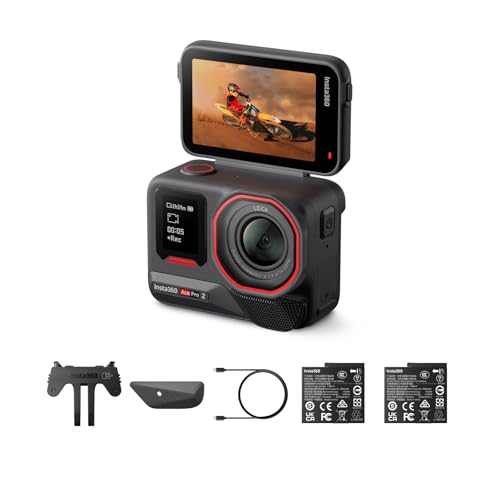
What You Get With the Insta360 Ace Pro 2

The Dual Battery Bundle package provides essential accessories designed to get creators shooting out of the box without immediate third-party purchases. The manufacturer listing confirms the exact contents and primary hardware features included in this retail package:
- Insta360 Ace Pro 2 Camera Body: Features the 1/1.3-inch 8K imaging sensor paired with Leica Summarit optical engineering and dual-chip processing architecture.
- Two Rechargeable Batteries: The bundle ships with two dedicated batteries, allowing extended shooting sessions without stopping to recharge a single cell.
- Pre-Installed Wind Guard: A custom snap-on wind guard designed to shield internal microphones and reduce atmospheric turbulence during high-velocity activities.
- Standard Quick-Release Mount: A versatile magnetic mounting base that locks securely onto standard action camera mounting points and accessories.
- Protective Mic Cap: A dedicated audio port cover to protect connection terminals against dust, splashes, and debris.
- USB-C to USB-C Cable: A high-speed interface cable for recharging the batteries internally and offloading media directly to compatible workstations.
- Leica Color Profiles: Built-in optical and color processing profiles developed in collaboration with Leica for distinct visual aesthetics.
- Batch Appearance Advisory: Official documentation notes that cosmetic variations may exist across production batches, though functional capabilities remain identical.
Key Specifications
| Hardware Attribute | Specification Detail |
|---|---|
| Imaging Sensor Size | 1/1.3-inch sensor with 2.4μm equivalent pixel size (listing also references 1/2.8-inch CCD format) |
| Maximum Video Resolution | 8K at 30 frames per second |
| High Dynamic Range Video | 4K Active HDR up to 60 frames per second (13.5 stops dynamic range) |
| Processing Architecture | Dual AI Chip (Dedicated Pro Imaging Chip plus 5nm AI Chip) |
| Low-Light Shooting Mode | PureVideo mode up to 4K at 60 frames per second |
| Lens and Optics | Leica Summarit Prime Lens, f/2.6 maximum aperture, 157-degree field of view |
| Display Screen | 2.5-inch flip touchscreen with 70% increased pixel density and 6% increased brightness |
| Waterproof and Environmental Rating | Waterproof down to 39 feet (12 meters), operational down to -4 degrees Fahrenheit (-20 degrees Celsius) |
| Image Stabilization | FlowState Stabilization with MegaView field of view support |
| Connectivity and Storage | Bluetooth, Wi-Fi, USB-C, and Micro SD flash memory slot |
Dual AI Processing and Low-Light PureVideo Performance
The processing architecture inside the camera represents a major technical evolution for compact action cameras. Rather than routing all computational tasks through a single system-on-a-chip, the insta360 ace pro 2 dual ai chip configuration divides workloads between a dedicated Pro Imaging Chip and an advanced 5nm AI Chip. The Pro Imaging Chip focuses strictly on complex noise reduction and early-stage image processing pipelines, while the secondary 5nm chip handles system performance, computational features, and sensor data throughput. According to manufacturer benchmarks, this dual-processor design delivers 100 percent more computing power than the original generation Ace Pro, enabling intensive real-time frame calculations without thermal throttling or dropped frames.
The practical benefit of this dual-chip architecture is most noticeable when activating the insta360 ace pro 2 low light purevideo mode. Traditional compact cameras struggle significantly in dim environments because their physical sensors must amplify signal gain, generating aggressive digital chroma noise and muddy shadow detail. PureVideo mode tackles this challenge by running specialized AI noise reduction algorithms directly on raw frames, supporting resolutions up to 4K at 60 frames per second. The onboard chips analyze temporal noise patterns across consecutive frames, suppressing sensor grain while enhancing shadow brightness and preserving high-contrast edge definitions.
For night runs, dimly lit concert venues, twilight city tours, or backcountry camping, this processing pipeline produces usable, clean footage that would otherwise require supplementary lights. While specialized night-sky equipment like the see star telescope handles deep celestial astrophotography, having dependable low-light capability in an ultra-compact action body allows videographers to capture spontaneous evening adventures without packing bulky external lighting gear.
8K Video Capture and Leica Color Profiles for Creators
High-resolution recording is another core strength of the imaging platform. Utilizing the 1/1.3-inch sensor, the insta360 ace pro 2 8k video mode records at 30 frames per second, delivering exceptional fine detail across complex textures like foliage, water spray, and architectural lines. The sensor architecture incorporates a 2.4-micrometer equivalent pixel size and delivers 13.5 stops of dynamic range. For professional editors, shooting in 8K provides valuable flexibility in post-production, enabling digital reframing, artificial pans, and punch-in cropping while maintaining pristine 4K mastering output.
Dynamic range handling is enhanced further during daytime action through 4K60fps Active HDR video. When filming fast-moving sports like downhill mountain biking or skiing, lighting conditions fluctuate rapidly between bright sunlit clearings and dense shade beneath trees. The insta360 ace pro 2 dynamic range processing preserves detail in both blown-out skies and dark undergrowth, preventing the harsh clipping common in conventional action footage. Furthermore, exclusive color profiles developed alongside Leica infuse footage with refined tonal balance, rich contrast, and natural skin tones straight out of the camera.
Capturing high-bitrate 8K footage naturally places demands on your editing workstation. Scrubbing through dense video files, rendering multiple color grades, and managing high-resolution timelines is considerably smoother on an optimized editing system like the mac studio m3. For mobile creators who prefer in-camera adjustments, the 4K Clarity Zoom feature allows you to zoom into distant subjects without compromising ultra-high-definition output standards.
Flip Screen Ergonomics and Vlogging Usability
Framing accuracy is essential for content creators, and the insta360 ace pro 2 flip screen directly addresses the challenges of solo video production. The 2.5-inch flip touchscreen articulates upward 180 degrees, allowing vloggers to check framing, eye line, and exposure levels while facing the lens. Compared to earlier models, this updated display features a 70 percent increase in pixel density for sharper image preview, a 6 percent brightness boost for direct sunlight visibility, and a 100 percent increase in hinge durability to withstand aggressive daily adjustments.
When deploying the insta360 ace pro 2 for vlogging, the physical screen design works alongside intuitive capture utilities. Built-in Gesture Control allows creators to start video recording or snap high-resolution photos using simple hand gestures, eliminating the need to reach for the physical shutter button when the camera is mounted on an extended selfie stick. Additionally, features like Pre-Recording capture crucial seconds before you press record, ensuring you never miss sudden, unscripted moments during travel vlogs.
Field of view selection also impacts vlogging aesthetics. The optical assembly provides an ultra-wide 157-degree perspective, ideal for capturing sprawling landscape vistas. However, when speaking directly to the camera, extreme wide angles can cause noticeable perspective distortion around facial features. The integrated MegaView field of view corrects barrel distortion and straightens vertical lines, delivering a natural, professional perspective that keeps the presenter properly proportioned against their background.
Audio Wind Guard Performance and Action Durability
Outdoor audio clarity has long been a notorious weakness for action cameras, but the insta360 ace pro 2 audio wind guard addresses wind turbulence at the hardware level. The bundle includes a custom-engineered wind guard that snaps directly over the microphone housing, acting as a physical acoustic baffle. Paired with updated internal audio algorithms, this system actively filters out high-velocity wind buffeting during motorcycling, skiing, or running along windy coastal tracks, ensuring spoken dialogue remains intelligible without an external microphone setup.
In terms of rugged reliability, the camera body is built to survive harsh outdoor environments. The enclosure is waterproof down to 39 feet (12 meters) right out of the box, removing the necessity of purchasing an external dive case for snorkeling, surfing, or shallow recreational diving. For winter sports enthusiasts and mountaineers, the internal circuitry is rated to operate in sub-zero temperatures as low as -4 degrees Fahrenheit (-20 degrees Celsius), ensuring consistent battery delivery and system responsiveness on icy slopes.
Stabilization and mounting mechanisms round out the hardware package. Insta360’s proprietary FlowState Stabilization keeps footage rock-steady over rugged trails, while Horizon Lock maintains a level perspective through aggressive banking turns. The magnetic mounting base allows creators to snap the camera off a chest mount and onto a handlebar bracket in seconds, while onboard firmware supports telemetry overlays from Garmin devices and Apple Watches to display live speed, route, and elevation stats directly on your video.
Check Insta360 Ace Pro 2 on Amazon
Is the Insta360 Ace Pro 2 Worth It
Determining if the insta360 ace pro 2 worth it comes down to how well its feature set solves your specific filming limitations. If you frequently record in low-light environments, the combination of dual AI chips and 4K60fps PureVideo mode produces significantly cleaner, brighter footage than conventional action cameras can manage. Solo vloggers, travel videographers, and creators who prioritize handheld framing will find the 2.5-inch flip touchscreen far more practical than fixed dual-screen setups, while the included second battery ensures all-day shooting capability.
For adventure athletes who engage in water sports, high-speed cycling, or winter recreation, the out-of-the-box 39-foot water resistance, cold-weather rating, and physical wind guard provide tangible advantages without requiring extra add-ons. While some shoppers may remain curious about a hypothetical ace pro 3 release, waiting for an unannounced camera means missing out on mature, dependable 8K and Active HDR imaging tools that are fully realized and available today.
If you already own a capable recent action camera and only record simple daytime clips in bright sunlight, upgrading to an 8K workflow might represent more computing overhead than your current editing routine requires. However, for creators seeking superior low-light fidelity, advanced dynamic range, Leica color processing, and an ergonomic flip-up interface, this dual-battery action package represents a complete and capable production asset.
FAQ
Is there an official ace pro 3 release date announced?
No, the listing does not specify any details regarding an upcoming ace pro 3 release. The current generation model actively supported and sold by the manufacturer is the Insta360 Ace Pro 2, which features dual AI processing and 8K video capture.
What are the primary insta360 ace pro 2 specs for video recording?
The official insta360 ace pro 2 specs include 8K video at 30 frames per second, 4K Active HDR up to 60 frames per second, 13.5 stops of dynamic range, and dedicated PureVideo low-light recording up to 4K at 60fps driven by a 1/1.3-inch sensor and Leica optics.
How does the insta360 ace pro 2 flip screen benefit vlogging?
The 2.5-inch touchscreen articulates upward 180 degrees so you can monitor your framing and exposure in real time while facing the camera. It offers a 70 percent increase in pixel density, a 6 percent brightness increase for sunlight visibility, and twice the hinge durability of earlier designs.
Does the audio wind guard come pre-installed in the bundle?
Yes, according to the official product bundle specifications, the snap-on wind guard is pre-installed on the camera body by default, alongside a standard mount, protective mic cap, two batteries, and a USB-C charging cable.
How deep can the camera dive without an external waterproof housing?
The camera is natively waterproof to a depth of 39 feet (12 meters) without requiring an auxiliary protective dive housing, and it is rated to operate in freezing temperatures down to -4 degrees Fahrenheit (-20 degrees Celsius).


