As Amazon Associates, we earn from qualifying purchases. This means we may receive a small commission at no extra cost to you if you click through and make a purchase.
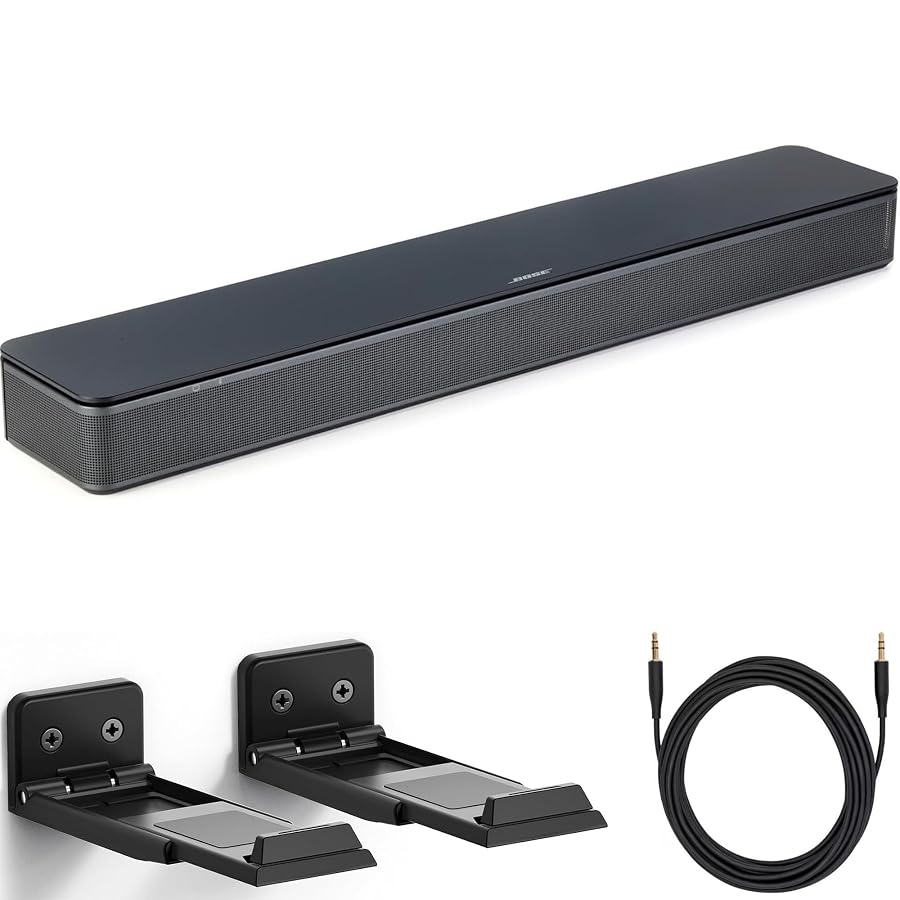
When setting up a secondary editing station, podcast review desk, or compact video workspace, choosing audio playback hardware often involves balancing vocal intelligibility against physical desktop real estate. The Bose TV Speaker addresses this challenge directly by functioning as an all-in-one stereo soundbar geared toward speech clarity and low-friction connectivity. If your primary goal is to hear spoken dialogue, cut voiceover tracks cleanly, and reference stereo mixes without cluttering your studio desk with bulky audio-video receivers or oversized desktop monitors, this compact speaker offers a straightforward solution. It bypasses complicated multichannel surround configurations in favor of an accessible two-channel design equipped with a dedicated center tweeter and angled drivers.
Finding an audio unit that seamlessly toggles between video playback, secondary editing monitors, and wireless mobile audio can dramatically simplify your daily production workflow. Throughout this guide, we evaluate the real-world utility of this compact unit for creator desks, home studios, and small entertainment setups. We examine its physical footprint, physical inputs, Bluetooth pairing capabilities, vocal enhancement modes, and bass response so you know exactly what to expect before integrating it into your workstation.
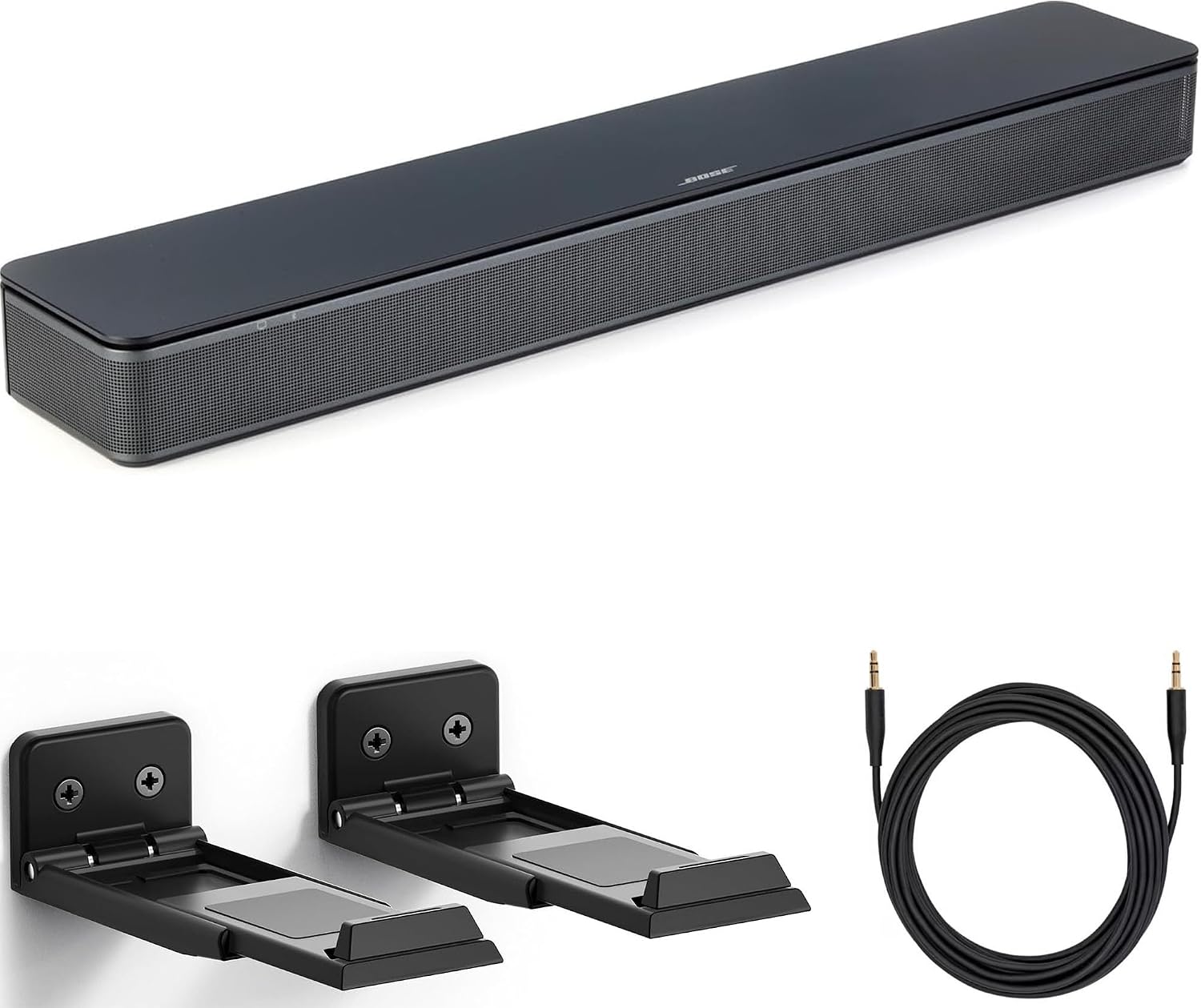
What You Get With the Bose TV Speaker
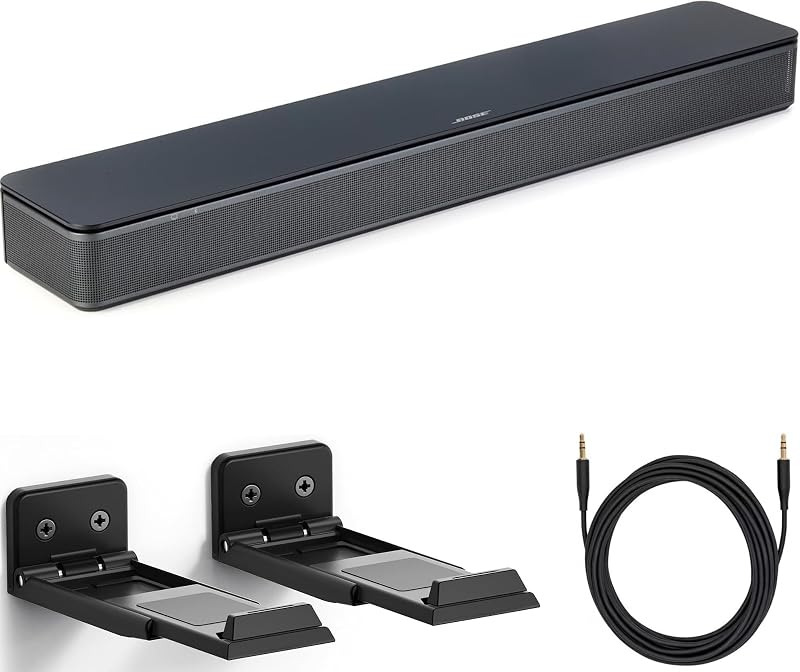
The product package delivers the essential components needed to establish a functional audio monitoring station directly on a desktop surface or media console without complicated installation steps.
- Bose TV Speaker all-in-one compact soundbar unit
- Compact handheld remote control with included battery
- Five-foot AC power cord
- Optical digital audio cable
- Auxiliary 3.5 mm audio connection cable
- Built-in media warranty documentation covering one year from the manufacturer
- Dual angled full-range audio drivers paired with a centered high-frequency tweeter
- Built-in Dolby decoding architecture with front-facing visual LED indicators
Key Specifications
| Specification | Detail |
|---|---|
| Brand and Model Name | Bose TVspeakerAux |
| Audio Output Mode | Stereo |
| Maximum Speaker Output Power | 20 watts |
| Acoustic Driver Array | 2 angled full-range drivers with 1 center tweeter |
| Unit Dimensions | 2.21 inches H x 23.38 inches W x 4.02 inches D |
| Speaker Unit Weight | 3.7 pounds |
| Physical Audio Inputs | HDMI-ARC, Optical digital in, 3.5 mm AUX in |
| Wireless Connectivity | Bluetooth and Wi-Fi |
| Included Cables | 5-foot power cable, optical digital cable, auxiliary cable |
| Expansion Capabilities | Compatible with Bose Bass Module 500 or 700 (cable sold separately) |
Dialogue Clarity and Vocal Monitoring Performance
For video editors, vloggers, and content creators, mid-range vocal accuracy is frequently the deciding factor when reviewing audio. Built-in display speakers often muddle consonant articulation, burying speech beneath harsh high frequencies or hollow resonance. The core acoustic architecture of this soundbar relies on two angled full-range drivers paired with a dedicated center tweeter engineered specifically to elevate vocal pronunciation. By isolating dialogue frequencies in the middle channel while dispersing background ambiance outward, the unit ensures spoken words remain crisp and audible even during chaotic audio sequences.
Engaging the built-in dialogue enhancement feature further optimizes spoken tracks. By pressing the dialogue button on the included remote, the speaker analyzes incoming audio signals to isolate human voices and elevate their presence relative to background music and sound effects. This feature makes checking dialogue edits, podcast drafts, and voiceover pacing significantly more dependable than relying on standard television or monitor speakers. While expansive setups like the bose ultra soundbar with subwoofer aim for cinematic spatial dynamics, this soundbar keeps the focus squarely on clean speech reproduction and balanced stereo sound quality.
The speaker also integrates onboard Dolby decoding, which preserves multi-channel audio information and translates it down to a coherent stereo soundstage. The angled orientation of the two full-range transducers widens the perceived audio horizon, making audio tracks sound broader than the speaker’s compact 23-inch frame might suggest. For content creators working on video timing, this delivers clear spatial separation between left and right channels without introducing synthetic surround phase distortion that could misrepresent your mix.
Setup and Connectivity Across Studio Devices
Workflow convenience is critical when managing multiple audio sources across a busy workstation. The soundbar provides three primary wired connection ports on its rear interface: HDMI-ARC, optical digital, and a standard 3.5 mm auxiliary jack. Setup is fundamentally plug-and-play, requiring only a single audio connection to your monitor, television, or audio interface. If you utilize the HDMI-ARC connection, the speaker coordinates directly with your connected display, allowing automated power cycling and volume adjustments from your host display controls.
The unit can manage up to three physical inputs simultaneously across its HDMI, optical, and auxiliary ports, using an automated priority system where the first powered-on device establishes the active connection. This setup is convenient for multi-monitor creator desks where an editing computer connects via AUX or optical, while a secondary preview monitor or television utilizes the HDMI port. Switching between an active timeline playback on your PC and full-screen reference footage on an auxiliary display requires zero cable swapping.
Wireless convenience is supplemented by straightforward Bluetooth pairing for smartphones, tablets, and portable editing laptops. Pressing the Bluetooth button on the remote switches the unit into pairing mode, enabling quick audio streaming for checking rough cuts, streaming podcasts, or monitoring reference tracks. While dedicated desktop solutions like the harman kardon soundsticks 5 focus on wired analog desk presence, the inclusion of Bluetooth pairing gives this unit versatile utility for creators who regularly bounce between mobile devices and stationary workstations.
Desktop Ergonomics and Display Integration
Space management is often an uphill battle on creator desks crowded with boom arms, control surfaces, and secondary reference screens. Standing at just 2.21 inches tall, 23.38 inches wide, and 4.02 inches deep, this compact soundbar slides beneath the lower bezel of most computer monitors and small television screens without obstructing display visibility. Weighing only 3.7 pounds, the lightweight tabletop enclosure is easy to position, reposition, or mount to an adjacent wall using optional brackets that are sold separately.
Its slim profile makes it an attractive alternative to traditional studio monitor pairs when desk space is strictly limited. Left and right bookshelf speakers demand substantial lateral clearance and dedicated desk stands to prevent acoustic reflections, whereas this all-in-one unit rests cleanly on the desk surface directly centered beneath your primary editing display. Small LED lights on the front panel provide subtle visual feedback by changing color or illuminating when settings like dialogue mode, Bluetooth pairing, or volume adjustments are triggered.
When compared against entry-level stereo soundbars such as the sony – hts100f 2.0 channel soundbar with bass reflex speaker – black, the low-profile enclosure of this unit offers a more tailored fit for tight monitor risers. The rounded matte finish avoids distracting screen reflections during late-night editing sessions, ensuring that your reference audio solution stays visually unobtrusive while you focus on color grading or timeline editing.
Bass Performance and System Expansion Limitations
Assessing the low-frequency output of a small speaker is essential for setting realistic expectations in creative production. Operating at 20 watts of maximum output power, this soundbar focuses primarily on articulate mid-range and clear upper frequencies rather than room-shaking sub-bass. For spoken word editing, interview transcription, and standard YouTube video monitoring, the low-end performance provides sufficient warmth to keep vocal registers sounding full and natural without muddying speech.
To provide extra weight when listening to music or reviewing sound design, the included remote features a dedicated bass boost button. Engaging this mode enhances low-frequency presence, giving kick drums and ambient sound effects more body. However, because this is an all-in-one compact cabinet without an internal subwoofer cavity, heavy electronic music and intense cinematic bass drops will demonstrate natural acoustic limits. Creators seeking visceral, sub-bass monitoring for film scoring or commercial audio mastering will find the low end polite rather than authoritative.
Fortunately, the unit features built-in expansion capabilities via a dedicated bass output port on the rear panel. If your production demands require deeper low-frequency extension, the soundbar can connect directly to a Bose Bass Module 500 or 700. Adding an external subwoofer requires a standard 3.5 mm audio cord or the proprietary Bose connection cable, both sold separately. This upgrade pathway allows creators to start with a minimal desk footprint and introduce dedicated low-end monitoring later as production needs evolve.
Check Bose TV Speaker on Amazon
Is the Bose TV Speaker Worth It
Determining whether this soundbar represents the right investment comes down to your primary listening tasks and workspace constraints. If you spend significant time cutting dialogue, reviewing interview footage, listening to voice-heavy podcasts, or searching for a low-profile audio companion for your secondary workstation monitor, the system delivers immense utility. Its specialized center tweeter, straightforward remote controls, and compact vertical profile solve the exact problems associated with muffled monitor speakers without demanding complicated configuration.
Conversely, creators seeking a primary reference monitor for professional audio mastering or high-SPL music mixing may find the 20-watt stereo output and compact driver configuration limiting. Because it functions as a consumer stereo soundbar rather than an uncolored flat-response studio monitor, it is best utilized as an everyday reference tool for consumer-grade audio checks rather than primary equalization balancing. For creators who also prioritize portability around the house or between shoots, a standalone mobile speaker like the bose revolve speaker might offer greater physical mobility, whereas this soundbar excels when anchored at a desk or media station.
Ultimately, this unit fills a unique niche for hobbyists, vloggers, and desk-bound professionals who need clear speech reproduction, multiple wired connection options, and wireless Bluetooth flexibility. If you want a dependable audio upgrade that enhances vocal articulation immediately upon plugging it in, this compact soundbar is a well-engineered tool that handles daily playback demands with minimal friction.
FAQ
Does the Bose TV Speaker come with an HDMI cable in the box?
No. While the soundbar features an HDMI-ARC port on the rear connection panel, the listing specifies that an HDMI cable is sold separately. The package includes an optical digital audio cable and a 3.5 mm auxiliary cable to handle wired connections out of the box.
How does dialogue mode function on the Bose TV Speaker?
Dialogue mode is activated using a dedicated button on the included remote control. When engaged, the soundbar’s internal processing analyzes the incoming audio stream to elevate vocal pronunciation and clarify speech frequencies, making it easier to hear dialogue over loud background music and sound effects.
Can you connect multiple input sources simultaneously?
Yes. The soundbar allows you to connect up to three physical audio sources across its HDMI-ARC, optical, and auxiliary ports. The internal system prioritizes the first powered-on device, routing audio automatically without requiring manual input toggling on the rear panel.
Can the Bose TV Speaker connect to an external subwoofer?
Yes. The speaker includes an expansion port designed for connection to either the Bose Bass Module 500 or the Bose Bass Module 700. Connecting a subwoofer requires either a standard 3.5 mm audio connection cable or the dedicated Bose Bass Module connection cable, both of which are sold separately.
Can the Bose TV Speaker be wall mounted under a studio screen?
Yes. The soundbar supports wall mounting beneath a display or monitor, although the required mounting brackets are sold separately. With a total height of just 2.21 inches and a weight of 3.7 pounds, it is lightweight and compact enough for secure wall placement using compatible brackets.


