As Amazon Associates, we earn from qualifying purchases. This means we may receive a small commission at no extra cost to you if you click through and make a purchase.
Shooting with vintage box-type or folding cameras requires fresh chemistry that honors original hardware while delivering consistent analog results. If you dusted off an antique chassis found in an attic or picked up a classic folding shooter, buying Polaroid Color 600 Film is the definitive way to get it running again. This fresh production cartridge provides the built-in battery power and chemical pods necessary to cycle the mechanical rollers of classic gear, making it the standard choice for anyone searching for old polaroid camera film 600. While modern manufacturing produces distinct color shifts and demands specific handling habits compared to twentieth-century originals, it remains the direct lifeline for keeping historic instant cameras fully operational.
In this workflow evaluation, we break down the practical handling, chemical traits, and technical parameters of modern color emulsions. We examine the critical polaroid 600 film specs, demonstrate how the integrated power supply drives mechanical camera bodies, and detail the shielding discipline required to safeguard your frames against ambient light. You will also discover the best storage routines to preserve dye stability, how lighting dictates your hit rate, and whether picking up a multi-pack format fits your ongoing creative projects.

What You Get With the Polaroid Color 600 Film
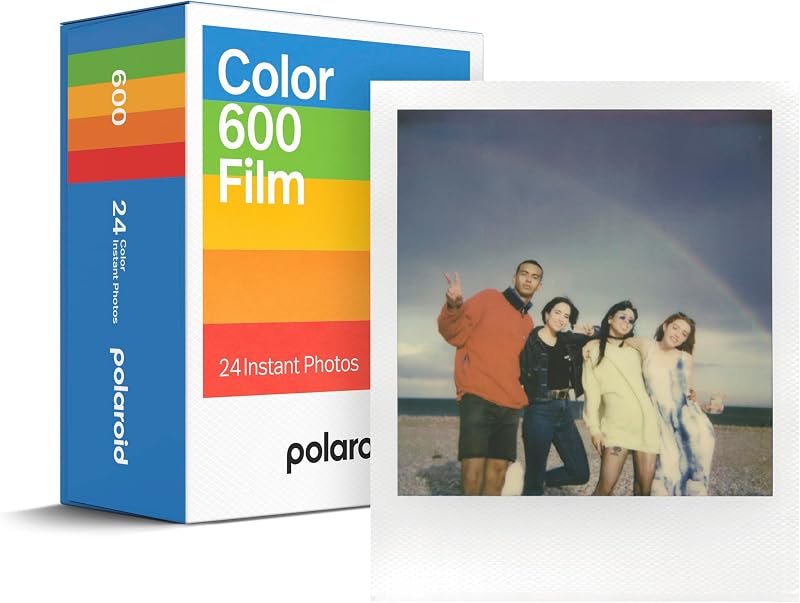
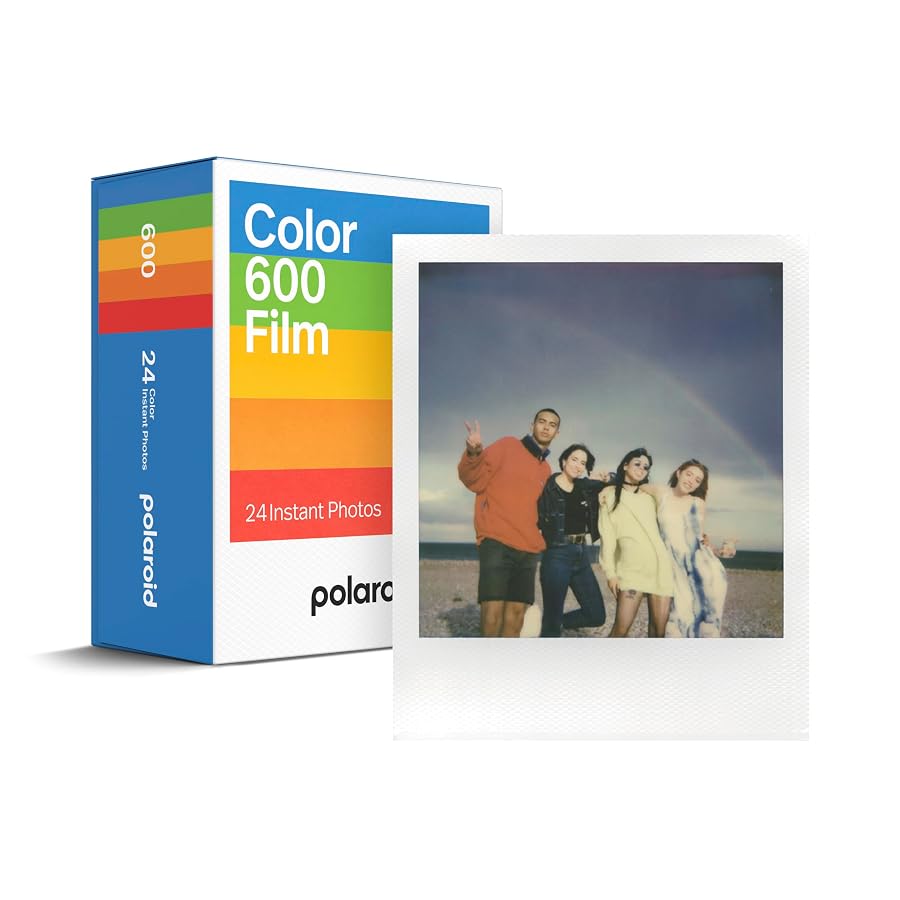
The Polaroid Color 600 Film Triple Pack arrives in a single retail package containing three individually wrapped, foil-sealed film cartridges designed to protect the sensitive chemical pods from humidity and environmental degradation before loading.
- Three individually foil-sealed cartridges containing eight instant exposures each for a total yield of twenty-four photos.
- An integrated zinc-carbon battery enclosed in each cassette base to supply electrical power for camera mechanics, shutters, and built-in flash units.
- Factory-fresh color emulsion pods formulated to produce dreamlike, nostalgic textures and unpredictable analog color tones.
- An opaque protective darkslide pre-installed on top of each pack to prevent exposure to ambient light before the pack is seated inside the camera film door.
- A 90-day limited warranty from Polaroid covering manufacturer defects and component failures.
Key Specifications
| Attribute | Detail |
|---|---|
| Brand | Polaroid |
| Model Name | 600 Film Triple Pack |
| Model Number / MPN | 6273 |
| Film Color | Colored |
| Film Format | 600 color |
| Total Exposures | 24 (3 packs of 8 exposures) |
| ISO Equivalent | 100 |
| Lighting Requirement | Daylight / Camera Flash |
| Development Process | Instant (develops within 15 minutes) |
| Item Weight | 300 g |
| Compatible Devices | Polaroid 600 cameras, Polaroid Now, Polaroid Now+, Polaroid Lab |
| Storage Requirement | Store chilled in fridge, do not freeze |
| Warranty | 90 Days |
Vintage Polaroid Film Compatibility and Power Delivery
The primary engineering hurdle when shooting vintage instant cameras is the complete absence of an internal camera battery compartment. Classic 600-series models rely entirely on the flat battery embedded directly beneath the spring plate of each film cassette. When you slide a fresh cassette of polaroid 600 film for vintage cameras into the film door, that integrated battery immediately connects with the camera terminal pins. It energizes the internal light meter, primes the electronic flash capacitor, and provides the rotational torque necessary for the motor to drive the film transport gears. Without a battery-equipped pack, these vintage cameras remain completely dormant.
Modern Polaroid cameras take a split approach to power management. Contemporary releases like the Polaroid Now and Polaroid Now+ feature rechargeable internal lithium-ion cells that run on batteryless packs. While those modern bodies are built primarily for Polaroid I-Type film, the listing confirms that this 600 cartridge is fully backward and forward compatible. You can load these battery-equipped packs directly into modern i-Type cameras or the Polaroid Lab printer without issue. The camera simply ignores the cartridge battery and draws power from its internal cell. However, placing batteryless film into an original vintage 600 body will leave you with an unresponsive shutter button and an unpowered motor drive.
Ensuring vintage polaroid film compatibility also means understanding mechanical health. When you slide a fresh pack into an older camera, the very first action is the automatic ejection of the black cardboard darkslide. If an older camera struggles to spit out the darkslide, the internal gear train or rubber rollers might have dried out, or the contacts may need light cleaning. Because each fresh triple pack provides a brand-new battery in every single cassette, you never have to worry about cycling degraded power cells through a shoot, ensuring consistent motor ejection speeds across all twenty-four frames.
Managing Polaroid 600 Development Time and Shielding
Modern Polaroid chemistry operates under different chemical constraints than long-discontinued original production runs. As indicated in the official product instructions, all photos appear blank at first ejection. The active dyes and developing agents are trapped inside three fragile pods at the base of the white frame. As the camera motor pushes the exposed sheet through the high-pressure steel rollers, those pods rupture and spread a reagent paste across the image area. It takes several minutes for initial shadows and highlights to become discernible, with the polaroid 600 development time reaching full maturation within 15 minutes.
The most critical handling habit during the workflow occurs in the first five to ten seconds after the frame clears the ejection slot. The opacification layer—the chemical mask intended to shield the light-sensitive silver halides while they process—is far more vulnerable in modern chemistry than in legacy film. The listing explicitly instructs photographers to shield photos from the light and place them face down as they develop. Allowing direct sunlight or harsh ambient artificial lighting to strike the blank surface immediately out of the camera can desaturate the dyes, cause washed-out highlights, or introduce noticeable blue-tinted flare across your frame.
Experienced instant shooters adopt strict physical shielding habits to protect the chemistry. If your vintage camera does not have an installed black plastic frog tongue shield that covers the emerging photo, you must hold a dark card, envelope, or your hand directly over the exit slot as the frame ejects. Quickly transfer the print into a dark pocket, a protective storage box, or flat on a table face down for the duration of the 15-minute chemical cycle. Resisting the urge to inspect the blank photo during those opening minutes yields richer contrast, deeper black levels, and better color saturation across your final capture.
Polaroid 600 Film Storage Tips and Temperature Control
Chemical stability is paramount when working with self-contained instant emulsions, making proper polaroid 600 film storage tips essential knowledge for any creator. The manufacturer explicitly directs users to store the film chilled in the refrigerator, but warns never to freeze it. Freezing causes the water content inside the developer reagent pods to crystallize into ice, permanently damaging the chemical suspension and causing uneven pod rupture or blank patches across the film sheet. Keeping your unopened triple packs inside a household refrigerator slows down the natural degradation of the organic dyes and extends shelf life through the 90-day warranty window and beyond.
Temperature during exposure and development also exerts a direct, measurable influence on color balance. Polaroid instant film relies on a delicate balance of thermal-sensitive dye developers. When you shoot and develop in hot summer environments above room temperature, the chemical reaction accelerates rapidly, often pushing the image tones toward warm yellow, orange, or reddish casts. Conversely, shooting in chilly or near-freezing outdoor weather slows down the reagent spread and development rate, yielding cool, cyan-heavy, or muted contrast. Photographers looking for true-to-life tones should aim for standard room-temperature conditions whenever possible.
To avoid thermal shock and condensation issues, remove your chilled cartridge from the refrigerator at least one hour before shooting. Loading cold film straight into a camera can cause internal condensation to form on the emulsion or optics, while cold chemistry spreads sluggishly across the rollers. Allowing the sealed foil pack to acclimate to ambient room temperature ensures the viscous reagent paste inside the chemical pods reaches optimal fluid density. This step guarantees even edge-to-edge spread across the frame without resistance or pod streaks when the rollers engage.
Lighting Demands and Outdoor Exposure Tactics
One of the defining polaroid 600 film specs provided in the listing is its ISO 100 equivalent rating, accompanied by the manufacturer directive to always shoot in bright light or use the camera flash. Instant film emulsions possess a relatively narrow dynamic range and crave intense illumination. Unlike modern digital sensors that can boost gain in dim environments, this color emulsion will quickly produce murky, underexposed, or heavily shadowed frames if you attempt to shoot indoors or in deep shade without auxiliary lighting. Relying on the built-in flash of your vintage 600 body is practically mandatory for interior scenes.
When working outdoors in direct daylight, the film yields its signature dreamlike aesthetic with rich textures and nostalgic color separation. However, high-contrast scenes require thoughtful composition. Strong backlighting can easily deceive the primitive light meters found on vintage Polaroid chassis, causing the camera to stop down its aperture or speed up the shutter, rendering your main subject in deep silhouette. Using the camera exposure compensation slider—nudging it toward the darken side under blinding midday sun or toward the lighten side under open overcast sky—gives you essential manual control over the chemical response.
Balancing physical format choices is another factor for traveling creators. While 600 film produces iconic, large square-format prints, carrying multiple bulky cartridges can take up significant bag space. Some photographers complement their vintage studio setup with a miniature companion like the Polaroid Go instant camera for pocketable snapshots, or toss a self-contained Fujifilm QuickSnap Flash 400 2-Pack into their field kit for rapid 35mm exposures in rough conditions. Nevertheless, nothing replicates the tactile presence, textured surface, and physical reality of a square-format 600 frame processed right before your eyes.
Check Polaroid Color 600 Film on Amazon
Is the Polaroid Color 600 Film Worth It
Determining whether this polaroid 600 film triple pack review answers your creative needs depends entirely on what you expect from an analog workflow. For owners of original vintage Polaroid 600 cameras, the answer is unequivocal: this film is an absolute necessity. Because vintage hardware lacks an internal power source, these battery-integrated packs represent the only functional method to operate vintage shutters, flash brackets, and roller assemblies. Choosing the triple pack provides twenty-four exposures across three packs, ensuring you have enough frames to calibrate your camera light meter and capture meaningful moments without interruption.
For fine art photographers, portrait creators, and casual hobbyists, the unpredictable and imperfect character of the modern emulsion is precisely what makes it compelling. Every print delivers a unique, dreamlike texture that digital filters cannot accurately duplicate. If you appreciate the tactile charm of instant chemistry and enjoy the deliberate ritual of shielding and waiting for development, is polaroid 600 film worth it? Absolutely. It transforms photography from a frictionless digital chore into a tangible physical craft that demands attention, patience, and intentional composition.
However, if you are looking for rapid continuous shooting, pin-sharp clinical fidelity, or instant viewing on a digital screen, this medium will require a workflow adjustment. With eight exposures per pack, an ISO 100 equivalent rating that demands bright lighting or flash, and a full 15-minute wait for final chemical maturation, it enforces a slow, deliberate pace. Shooters who embrace those operational limits will find that feeding fresh Polaroid Color 600 Film into their vintage cameras produces rewarding, one-of-a-kind physical artifacts that last for decades.
FAQ
Can you use Polaroid Color 600 Film in newer i-Type cameras?
Yes. According to the product description, this film works in vintage Polaroid 600 cameras as well as modern Polaroid Now, Polaroid Now+, and the Polaroid Lab printer. Newer cameras simply bypass the battery inside the 600 cartridge and run on their own internal rechargeable battery.
How long does Polaroid Color 600 Film take to fully develop?
The listing states that photos develop within 15 minutes. When first ejected from the camera rollers, the image area will appear completely blank. Visible image details gradually emerge over several minutes as the chemical pods react across the paper surface.
Why must Polaroid Color 600 Film be shielded immediately after ejection?
The developing emulsion remains highly sensitive to ambient light right after passing through the rollers. The manufacturer explicitly advises users to shield photos from the light and place them face down immediately as they develop to prevent light wash, faded colors, or low contrast.
Can you store Polaroid Color 600 Film in the freezer?
No. The product instructions state that you must keep the film stored chilled in the fridge, but do not freeze it. Freezing crystallizes the liquid reagent paste inside the chemical developer pods, which destroys the chemical emulsion and ruins future exposures.
How many exposures are included in the polaroid color 600 triple pack?
The triple pack bundle contains a total of twenty-four photos. These are divided into three individually sealed foil cassettes containing eight instant exposures each.