
As Amazon Associates, we earn from qualifying purchases. This means we may receive a small commission at no extra cost to you if you click through and make a purchase.
Choosing a dedicated cinema camera often forces solo videographers to balance recording reliability against portability and post-production efficiency. The Panasonic Lumix GH6 establishes itself as an uncompromising workhorse engineered to remove technical roadblocks on fast-moving productions. By pairing a 25.2-megapixel Live MOS sensor with internal Apple ProRes capture and unrestricted recording times across all resolutions, this mirrorless body directly addresses overheating worries and compression artifacts that frequently plague independent video creators. For anyone questioning whether this system matches demanding commercial workflows, it offers a distinct bridge between lightweight mirrorless handling and cinema-grade data throughput.
This evaluation examines how the system performs in real production environments, exploring how its stabilized sensor, high-bandwidth processing, and specialized color profiles reshape daily capture routines. We assess the practical benefits of internal ProRes codecs, dissect sensor dynamic range enhancements, evaluate high frame rate capabilities, and determine whether its physical footprint supports agile solo work. By inspecting these core operating areas alongside comprehensive specifications, you can clearly identify whether this camera solves your specific filming bottlenecks.
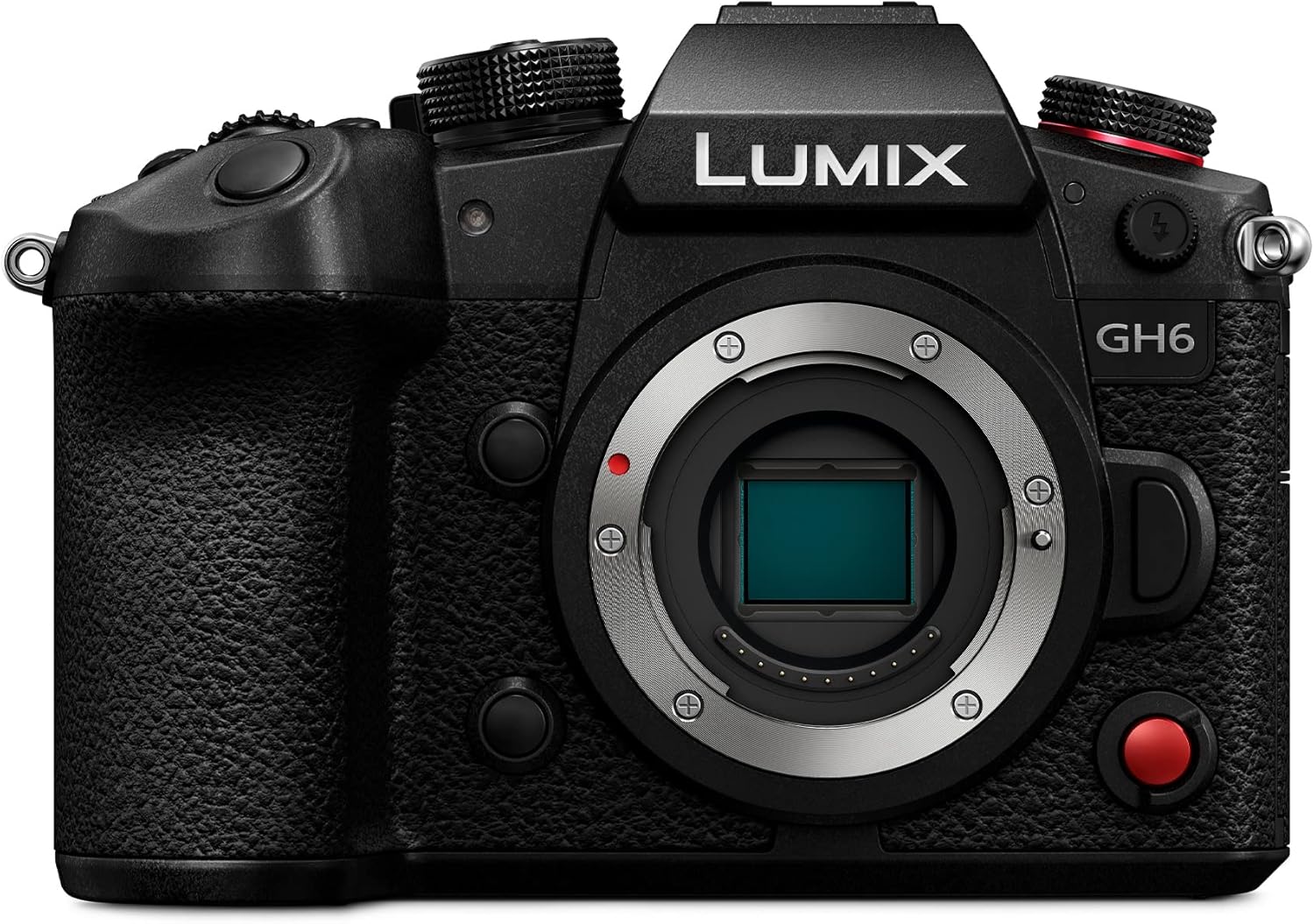
What You Get With the Panasonic Lumix GH6

The Panasonic Lumix GH6 package centers on a robust, feature-packed camera body designed for demanding video capture straight out of the box, though lenses and specialized storage media must be sourced separately.
- Panasonic Lumix GH6 mirrorless camera body in black
- 25.2-megapixel Live MOS Micro Four Thirds sensor without an optical low-pass filter
- Advanced Venus Engine image processor with New Intelligent Detail Processing
- Built-in 5-axis Dual I.S. 2 image stabilization system offering up to 7.5 stops of correction
- Pre-installed full V-Log and V-Gamut color profiles
- Internal recording capabilities for Apple ProRes 422 HQ and ProRes 422
- High-resolution hand-held multi-shot mode capable of generating 100-megapixel images
- Tilt-and-swivel 3-inch monitor for flexible monitoring angles
Key Specifications
| Specification | Detail |
|---|---|
| Sensor Type and Size | 25.2 MP Live MOS, Micro Four Thirds (no low-pass filter) |
| Lens Mount | Micro Four Thirds |
| Image Stabilization | 5-axis Dual I.S. 2 sensor-shift (up to 7.5 stops) |
| Internal Video Codecs | Apple ProRes 422 HQ, Apple ProRes 422, MOV |
| Maximum Video Resolution | 5.7K at 60p, C4K/4K at 120p, Full HD up to 300fps |
| Color Sampling and Depth | 4:2:2 10-bit (C4K/4K 60p), 4:2:0 10-bit (4K 120p) |
| Dynamic Range Profile | Pre-installed V-Log/V-Gamut with 13+ stops via Dynamic Range Boost |
| Shutter Speed Range | 1/8000 to 1/250 seconds (mechanical shutter), Bulb mode, Time mode |
| ISO Sensitivity | Expanded minimum ISO 80 |
| Display Screen | 3-inch articulating monitor |
Internal ProRes Recording and Codec Efficiency
Integrating internal panasonic gh6 prores recording transforms the post-production workflow for solo video editors by eliminating the tedious step of transcoding compressed H.264 or H.265 footage into editing-friendly intermediate formats. The camera natively writes Apple ProRes 422 and ProRes 422 HQ directly to internal media, ensuring that high-bitrate data flows seamlessly into desktop non-linear editing software without stuttering during scrubbing or color manipulation. This level of low compression preserves pristine chromatic gradations and fine edge details, allowing video professionals to cut commercial deliverables or interview footage immediately after wrapping a shoot.
For operators managing extensive shooting schedules, the unrestricted recording duration across all formats—including Cinema 4K and standard 4K 10-bit 4:2:2 at 60p—completely removes thermal shutdown anxieties. Unlike compact point-and-shoot alternatives like the panasonic lumix tx3 that favor casual travel over sustained multi-hour takes, this machine houses active internal cooling that lets operators record extended conferences, long-form interviews, or theatrical performances without artificial timer cutoffs.
While the data demands of ProRes necessitate investment in fast, high-capacity CFexpress Type B media, the payoff in timeline responsiveness and color precision is immediate. Having reliable, broadcast-ready 10-bit color straight off the storage card significantly reduces turnaround times on tight commercial deadlines, proving that the panasonic lumix gh6 for video is purpose-built to eliminate common desktop bottlenecks.
Sensor Architecture and Dynamic Range Performance
At the center of the imaging pipeline sits a 25.2-megapixel Live MOS sensor engineered without an optical low-pass filter to extract maximum optical clarity from matched optics. Operating on the mature panasonic lumix gh6 micro four thirds lens mount, the sensor achieves high-speed signal readout that minimizes rolling shutter distortion across fast pans. The accompanying Venus Engine employs intelligent detail processing, high-precision 3D noise reduction for video, and refined two-dimensional noise reduction for stills, resulting in exceptionally clean textures across varied lighting scenarios.
The standout imaging innovation is the panasonic gh6 dynamic range boost mode, which blends two independent readout circuits simultaneously to extend dynamic latitude to more than 13 stops. When filming high-contrast exteriors or mixed-lighting indoor events with the pre-installed V-Log and V-Gamut profiles, this dual-gain approach prevents clipped highlight detail while simultaneously safeguarding shadow information from aggressive noise degradation. Operating this mode elevates baseline sensitivity, making precise exposure control and natural lighting balance vital steps on set.
Beyond motion capture, the camera functions as a capable hybrid tool by utilizing its sensor-shift mechanism to capture eight consecutive frames into a singular 100-megapixel handheld composite image. This mode enables commercial creators to capture ultra-high-resolution promotional stills, architecture shots, and product plates without packing a secondary dedicated medium-format or high-resolution full-frame camera body.
High Frame Rate Flexibility and Slow-Motion Capture
Fluid slow-motion rendering is essential in modern commercial, sports, and documentary filmmaking, and the gh6 4k 120p recording setting provides creators with high-fidelity temporal manipulation in crisp 10-bit 4:2:0 color. Unlike older hybrid platforms that forced heavy cropping or downscaled soft resolutions to reach elevated refresh rates, the GH6 records full-frame readout 4K footage at 120 frames per second without overheating or dropping frames, granting crisp playback at quarter-speed on a standard 30p timeline.
For extreme action and detailed scientific or athletic breakdowns, the Variable Frame Rate modes ramp performance up to 300 frames per second in Full HD, delivering up to a 12.5x slow-motion effect. Additionally, the camera supports 10-bit 4:2:2 Full HD recording at 240p in High Frame Rate mode with full audio capture, permitting editors to retain natural synchronized sound while maintaining smooth motion cadence during real-time timeline placement.
The combination of these diverse capture speeds equips independent operators to cover fast-moving documentary subjects, music video performances, and dynamic B-roll sequences without swapping bodies. Having instant access to various slow-motion modes directly on the mode dial ensures that spontaneous creative opportunities are captured immediately without navigating dense system submenus.
Stabilization Performance and Field Handling
Handheld operation is where the lumix gh6 image stabilization provides tangible production value for single-operator crews. The 5-axis Dual I.S. 2 mechanism combines in-body sensor shift with lens-based optical stabilization to deliver up to 7.5 stops of shake compensation. In practice, this stabilization capability enables smooth walking pans, static tripod-like locks, and dynamic tracking shots entirely handheld, allowing filmmakers to leave cumbersome motorized gimbals and heavy support rigs behind.
When considering lumix gh6 vlogging applications, the camera presents a deliberate set of trade-offs between stability and physical dimensions. While the fully articulating 3-inch screen flips forward cleanly to monitor framing, the substantial chassis and internal thermal hardware result in a noticeably heavier setup compared to beginner-oriented bodies like the panasonic lumix g97 mirrorless camera with 12-60mm lens black. Creators holding the GH6 at arm’s length for continuous self-recording will notice the physical heft, meaning the camera functions best when mounted on a tabletop tripod, handheld grip, or chest rig for mobile presenting.
The external physical interface prioritizes direct tactile access, offering dedicated video start-and-stop buttons, comprehensive exposure dials, and customizable function keys that withstand fast-paced location filming. The deep handgrip provides a reassuring hold during extended run-and-gun shoots, while the rugged, weather-sealed exterior gives solo operators complete confidence when capturing content in adverse weather or humid environments.
Check Panasonic Lumix GH6 on Amazon
Is the Panasonic Lumix GH6 Worth It
Determining whether the is panasonic lumix gh6 worth it question falls in your favor comes down to whether your filming demands prioritize bulletproof workflow reliability, wide codec options, and deep color science over ultra-compact dimensions. For independent documentary directors, corporate video producers, and commercial creators who routinely record for hours at a time, the combination of internal Apple ProRes, 13+ stops of dynamic range, and unlimited recording modes resolves the most punishing technical challenges encountered on location.
Conversely, creators seeking an ultra-compact pocket companion for casual photography or casual street snapshots would likely find the GH6 over-engineered and excessively bulky for casual carry. For those specialized, everyday photographic scenarios, traditional fixed-lens compact cameras like the panasonic lx100 ii provide far greater portability without the heavy video hardware overhead required by continuous cinema production.
For working video professionals and serious content creators, the GH6 represents an exceptional investment that consistently delivers professional production outcomes. By uniting class-leading handheld stabilization with uncompressed recording pipelines in a durable form factor, it stands out as an indispensable production workhorse that simplifies both shooting in the field and editing in the suite.
FAQ
Does the Panasonic Lumix GH6 have recording time limits on 4K video?
No, the camera features unlimited video recording across all modes, including C4K/4K 4:2:2 10-bit capture. Thanks to an internal active cooling fan system, it can record continuously without encountering the thermal shutoffs common in other mirrorless cameras, provided power and memory card space remain available.
What is Dynamic Range Boost on the Lumix GH6?
Dynamic Range Boost is an operational mode that uses two independent analog circuit gains at the pixel level to output combined high and low saturation data. This process expands overall latitude to 13+ stops when using the pre-installed V-Log profile, resulting in smoother highlight roll-off and significantly lower shadow noise in high-contrast lighting.
Can the Panasonic Lumix GH6 record Apple ProRes internally?
Yes, the camera natively records Apple ProRes 422 HQ and ProRes 422 internally without requiring an external HDMI monitor-recorder. Writing these high-bitrate codecs requires inserting a high-speed CFexpress Type B card into the camera’s primary media slot.
How many stops of stabilization does the Dual I.S. system provide?
The 5-axis Dual I.S. 2 system delivers up to 7.5 stops of correction when paired with compatible optically stabilized Lumix lenses. This provides stable handheld video footage, minimizing camera shake and frequently removing the need for a handheld mechanical gimbal on moving shots.
What are the primary Panasonic Lumix GH6 specs for slow-motion recording?
The key panasonic lumix gh6 specs for motion capture include 4K 120p recording in 10-bit 4:2:0 for clean quarter-speed slow motion, as well as Full HD at 240p in 10-bit 4:2:2 with audio. For extreme high-speed capture, Variable Frame Rate mode allows up to 300fps in Full HD, providing up to a 12.5x slow-motion reduction.


