As Amazon Associates, we earn from qualifying purchases. This means we may receive a small commission at no extra cost to you if you click through and make a purchase.
Content creators, video editors, and power users moving high-bitrate media files need dependable PCIe Gen4 storage that will not choke under sustained operational pressure. The XPG GAMMIX S70 Blade 2TB is engineered to address these data pipelines directly, offering rated sequential read speeds reaching up to 7400MB/s and media write speeds climbing up to 6800MB/s. If you are deciding whether this 2TB NVMe internal drive can handle demanding 4K video capture dumps, multitrack timeline scrubbing, and real-time project exports without suffering from severe speed drops, the short answer is that it delivers the necessary hardware muscle when supported by proper system cooling and dynamic SLC caching mechanics.
This review evaluates the solid state drive through a practical production lens, focusing on sustained data stability, passive thermal regulation, and cross-platform installation versatility. We examine how its high-performance controller handles heavy write queues, how its slim aluminum heatsink manages heat dissipation during prolonged file transfers, and how it compares in everyday usability to alternatives like the samsung 980 pro 2tb. The following breakdown covers what comes in the package, verified performance metrics, real-world creative workflow suitability, and direct answers to common user questions.
What You Get With the XPG GAMMIX S70 Blade 2TB
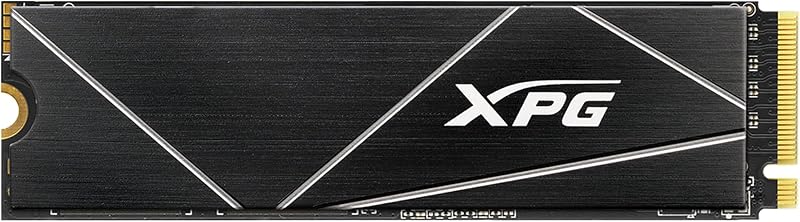
The product package supplies the internal solid state drive hardware along with dedicated passive cooling hardware designed for broad installation clearance across compact computing bays and modern video game consoles.
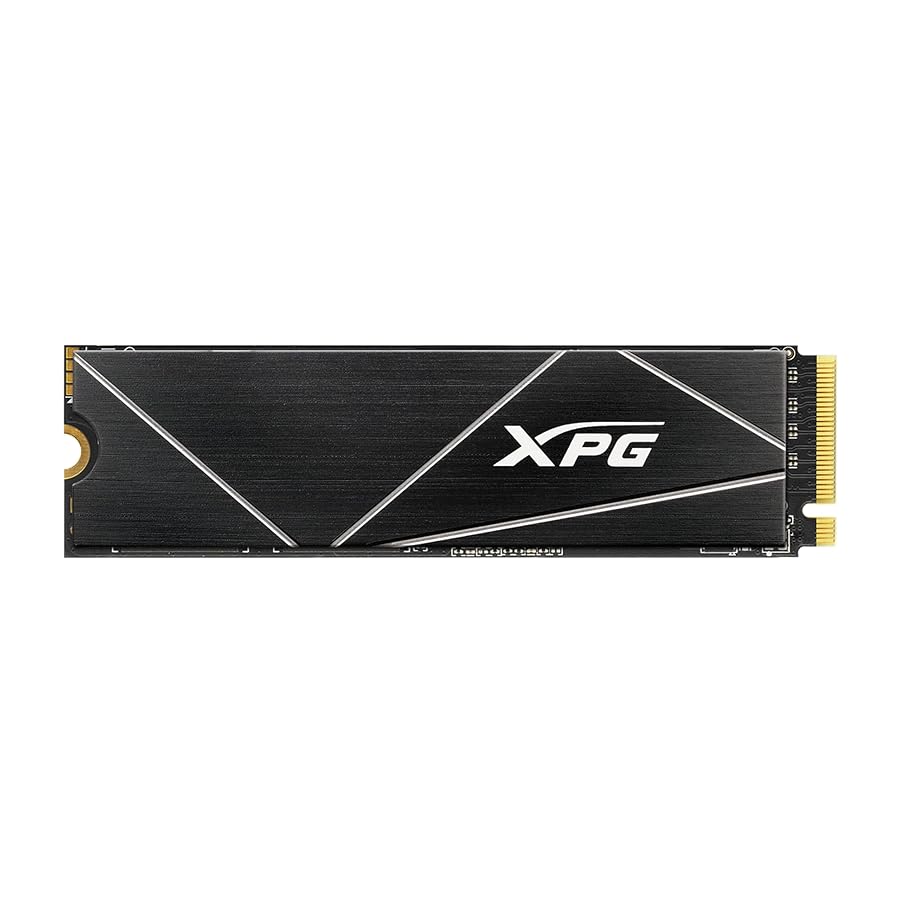
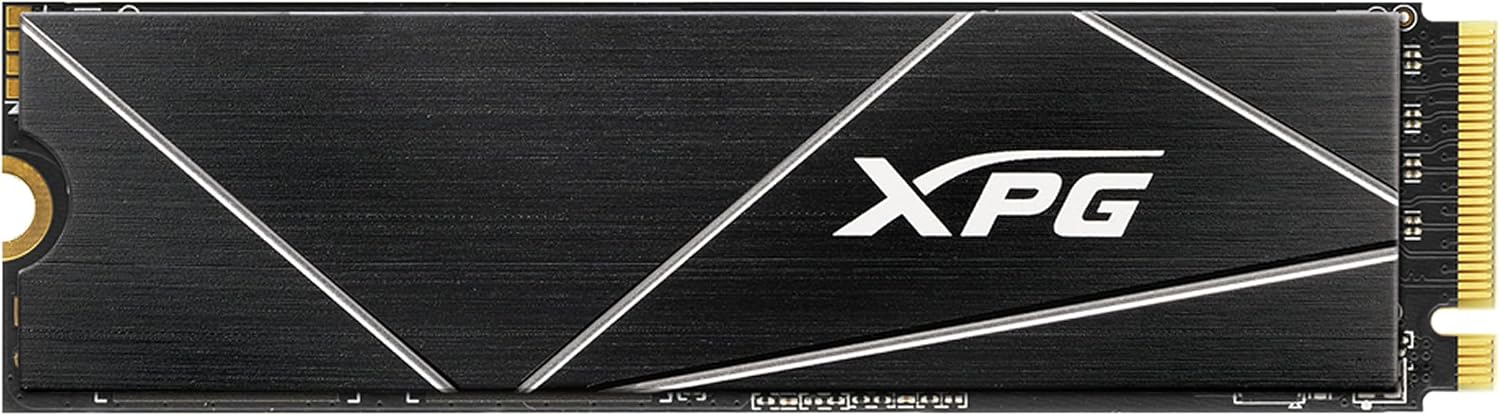
- XPG GAMMIX S70 Blade 2TB SSD: A standard M.2 2280 internal drive utilizing PCIe Gen4 connectivity and NVMe protocol architecture to achieve rapid read and write bandwidth.
- High-Temperature Resistant Aluminum Heatsink: A slim, thermally conductive aluminum heat spreader designed to lower operating temperatures across cramped enclosures without blocking adjacent hardware.
- Integrated SLC Cache Technology: Onboard caching architecture managed by a high-performance controller to accelerate burst read and write tasks.
- End-to-End (E2E) Data Protection: Built-in data security algorithms to preserve transmission integrity and minimize file errors across complex workflows.
- Cross-Platform Hardware Support: Engineering validated for direct installation into desktop workstations, laptop internal storage slots, and the Sony PlayStation 5 console.
Key Specifications
| Attribute | Detail |
|---|---|
| Digital Storage Capacity | 2 TB |
| Hardware Interface | NVMe (PCIe Gen4) |
| Form Factor | M.2 2280 |
| Sequential Read Speed | Up to 7400 MB/s |
| Sequential Media Write Speed | Up to 6800 MB/s |
| Caching Architecture | SLC Cache Technology |
| Thermal Dissipation | High-temperature resistant aluminum heatsink |
| Data Integrity Features | End-to-End (E2E) Data Protection |
| System Compatibility | Desktop PC, Laptop, Sony PlayStation 5 |
| Intended Workloads | Gaming, Multimedia, Personal Computing |
Sustained Write Performance and High-Bandwidth Transfers
Video editors frequently offload hundreds of gigabytes of raw production footage from memory cards, making raw data ingestion rates a vital practical consideration. The XPG GAMMIX S70 Blade 2TB transfer speed operates at the upper boundary of the PCIe 4.0 interface, providing maximum sequential read speeds up to 7400MB/s and media write speeds up to 6800MB/s. These metrics translate to near-instantaneous transfers when offloading large single-file video takes, backing up camera directories, or moving high-resolution media libraries between internal partitions.
To sustain these high bandwidth levels, the drive relies on an onboard performance controller combined with dynamic SLC cache technology. When handling standard file movements, the drive ingests writes within this high-speed single-level cell buffer at full speed. However, during continuous multi-gigabyte or terabyte-scale data dumps, the SLC cache eventually saturates. Once the buffer is full, the XPG S70 Blade sustained write speed adjusts downward to native TLC block writing levels as the controller handles incoming data while clearing cache blocks. For everyday video clip organization and short render dumps, users remain inside the burst window, but continuous multi-hour transfers will experience this standard operational dip.
When evaluated alongside other modern Gen4 drives such as the crucial t500 2tb pcie gen4 nvme m.2 ssd, this drive balances immediate burst responsiveness with consistent general media throughput. Media editors moving standard documentary or commercial projects will rarely encounter bottlenecks, provided their host system interfaces and source storage media can keep pace with the drive’s internal processing rate.
Thermal Management and Heatsink Behavior Under Load
High-speed Gen4 controllers generate notable heat during prolonged read and write passes, making passive heat dissipation an essential requirement for stable performance. To combat excessive heat buildup, the drive includes a high-temperature resistant aluminum heatsink designed to pull thermal energy directly away from the controller and memory modules. The XPG GAMMIX S70 Blade heatsink performance is engineered specifically around tight spaces, using a low-profile geometric design rather than massive cooling fins so that it fits effortlessly into tight system bays.
In standard desktop chassis environments with steady front-to-back system airflow, this low-profile aluminum spreader manages operating temperatures effectively during typical rendering and file management tasks. Maintaining reasonable thermals is critical because sustained heat can cause the controller to trigger safety protocols, leading to XPG GAMMIX S70 Blade thermal throttling. When throttling engages, internal clock speeds drop automatically to protect internal circuitry, which slows down sequential transfers. The included heatsink provides enough thermal buffer to keep the drive out of dangerous temperature brackets during standard project delivery cycles.
For builders integrating high-density configurations or compact small-form-factor setups such as the bosgame m5 mini pc amd ryzen ai max 395 128gb ram 2tb ssd wifi 7, internal air movement must be considered. While the low-profile design avoids mechanical clearance conflicts with neighboring expansion cards, enclosed installations with minimal ambient airflow will experience elevated steady-state temperatures under long, unbuffered sequential writes. Ensuring consistent chassis air intake will allow the aluminum spreader to perform as intended without requiring oversized aftermarket cooling gear.
Video Production Workflow and Timeline Playback Responsiveness
Editing uncompressed or high-bitrate video formats requires reliable sequential read throughput and rapid random access to prevent frame drops across demanding non-linear editing timelines. Utilizing the XPG GAMMIX S70 Blade for video editing allows applications like DaVinci Resolve, Adobe Premiere Pro, and Final Cut Pro to access large media pools, multitrack video cuts, and audio layers with zero lag. Scrubbing through 4K or 8K timelines remains completely smooth because the drive can stream data off its storage cells at rates up to 7400MB/s, minimizing playback buffering and preview generation latency.
Exporting complex video sequences places simultaneous demands on storage by reading source assets from one directory while writing newly generated visual effects, intermediate caches, and final master files. Operating as a dedicated PCIe Gen4 M.2 SSD for video rendering, this 2TB storage module prevents storage input/output bottlenecks from throttling modern multi-core processors and graphic accelerators. Furthermore, the inclusion of end-to-end data protection ensures that sensitive render caches and critical master deliverables remain free from data transmission errors during export passes.
The 2TB capacity point provides practical utility for active project storage. Video editors can dedicate this unit as a primary scratch drive or working project repository, holding multiple active documentary timelines, intermediate proxy folders, and media asset libraries simultaneously without running out of operational headroom. This eliminates the need to constantly cycle older project directories onto secondary external hard drives mid-edit.
Installation Compatibility Across Desktops Laptops and Consoles
Physical compatibility across diverse computing hardware represents a major operational advantage for this model. Many competing Gen4 storage drives ship with permanently affixed, oversized cooling structures that prevent installation inside compact compartments. In contrast, the low-profile form factor of this drive ensures that the unit complies with strict height limits across a wide range of hardware platforms, making it an adaptable solution for desktop builders, laptop owners, and console users alike.
Console integration is a significant highlight, with the Adata XPG S70 Blade 2TB PS5 compatibility meeting and exceeding manufacturer requirements. The PlayStation 5 requires an M.2 NVMe SSD operating over PCIe Gen4 with high read bandwidth and a compact thermal solution that clears the interior expansion slot cover. Because this drive features sequential read speeds reaching up to 7400MB/s alongside an ultra-slim aluminum heatsink, it installs directly into the console expansion bay without requiring third-party brackets or cover modifications, providing smooth game loading and fast asset capture.
For mobile workstation users, the drive serves as an internal laptop upgrade, provided the target notebook houses an M.2 2280 slot with adequate physical clearance for the aluminum spreader. In desktop environments, installation is straightforward: the drive slots into any standard PCIe 4.0 M.2 slot and works natively without requiring auxiliary power connections or dedicated software drivers. Its backward-compatible design also ensures functional operation on older PCIe 3.0 motherboards, though operational speeds will naturally be limited to the ceiling of the older bus standard.
Check XPG GAMMIX S70 Blade 2TB on Amazon
Is the XPG GAMMIX S70 Blade 2TB Worth It
Determining whether this drive represents the right upgrade comes down to your workload demands and thermal environment. If you are asking is XPG GAMMIX S70 Blade worth it for a creative workstation, video editing suite, or modern gaming console, the drive offers top-bracket read performance up to 7400MB/s and media write speeds up to 6800MB/s paired with a massive 2TB capacity. This combination provides ample speed and space to handle 4K video timelines, high-resolution media ingest, and rapid project rendering without introducing system bottlenecks.
The drive is particularly well suited for content creators and hybrid users who need a high-performance M.2 drive that fits seamlessly into compact enclosures like the PlayStation 5 or space-constrained desktop motherboard slots. Its low-profile aluminum heatsink resolves clearance issues that plague thicker heatsink designs, while the SLC caching system handles typical project export and media ingest workloads with immediate responsiveness.
On the other hand, production houses running 24/7 uncompressed 8K render farms with continuous, multi-hour sequential write dumps may eventually saturate the dynamic SLC cache, causing write throughput to normalize down to native levels. For typical creator workflows, multimedia editing, and gaming, however, the drive delivers dependable performance, versatile installation options, and robust data protection across modern computing platforms.
FAQ
What are the official XPG GAMMIX S70 Blade 2TB specs?
The listing outlines a 2TB capacity, an internal M.2 2280 form factor, and an NVMe PCIe Gen4 interface. It delivers sequential read speeds up to 7400MB/s and media write speeds up to 6800MB/s, supported by dynamic SLC cache technology, end-to-end data protection, and a low-profile aluminum heatsink.
Can I install the XPG GAMMIX S70 Blade 2TB in a PlayStation 5?
Yes, the drive is fully compatible with the Sony PlayStation 5 console storage expansion slot. Its read speed rating of up to 7400MB/s exceeds the console manufacturer’s speed recommendations, and the included low-profile aluminum heatsink fits beneath the internal slot cover without structural interference.
Does the XPG GAMMIX S70 Blade experience thermal throttling under sustained load?
In computer cases with standard internal airflow, the included high-temperature resistant aluminum heatsink prevents the drive from reaching thermal throttling thresholds during typical editing and rendering workloads. In unventilated or ultra-compact chassis environments with continuous heavy write queues, maintaining case airflow is advised to avoid thermal throttling.
How does the dynamic SLC cache behave during large file transfers?
The drive uses SLC cache technology to maximize transfer rates for incoming write operations up to 6800MB/s. When transferring typical video assets, tasks finish entirely inside this high-speed cache. If a transfer is large enough to exhaust the cache buffer, write speeds will moderate to baseline native speeds until the controller clears the cache.
Is this solid state drive compatible with older PCIe Gen3 systems?
Yes, the drive features backward compatibility with PCIe 3.0 motherboards. When installed in an older generation slot, the drive functions reliably, but maximum sequential read and write speeds will be capped by the theoretical bandwidth limits of the PCIe 3.0 interface.