
As Amazon Associates, we earn from qualifying purchases. This means we may receive a small commission at no extra cost to you if you click through and make a purchase.
If you are exploring whether to invest in an enduring full-frame DSLR, the Canon EOS 5D Mark IV represents one of the most thoroughly proven imaging systems available. Built around a 30.4-megapixel full-frame CMOS sensor and an expansive EF lens ecosystem, this camera was crafted for commercial photographers, wedding shooters, and studio practitioners who need uncompromising reliability. Even as mirrorless cameras dominate headlines, this workhorse appeals to creators who favor optical viewfinders, comfortable grip depth, and an operational feel that requires zero digital screen activation for viewfinder composition.
Choosing this camera today requires understanding how its classic physical form factor aligns with modern creative demands. In this guide, we analyze the official canon d5 mark specs, evaluate the capabilities and file requirements of its video engine, break down live view focusing, and determine where this robust camera fits into modern multimedia productions.
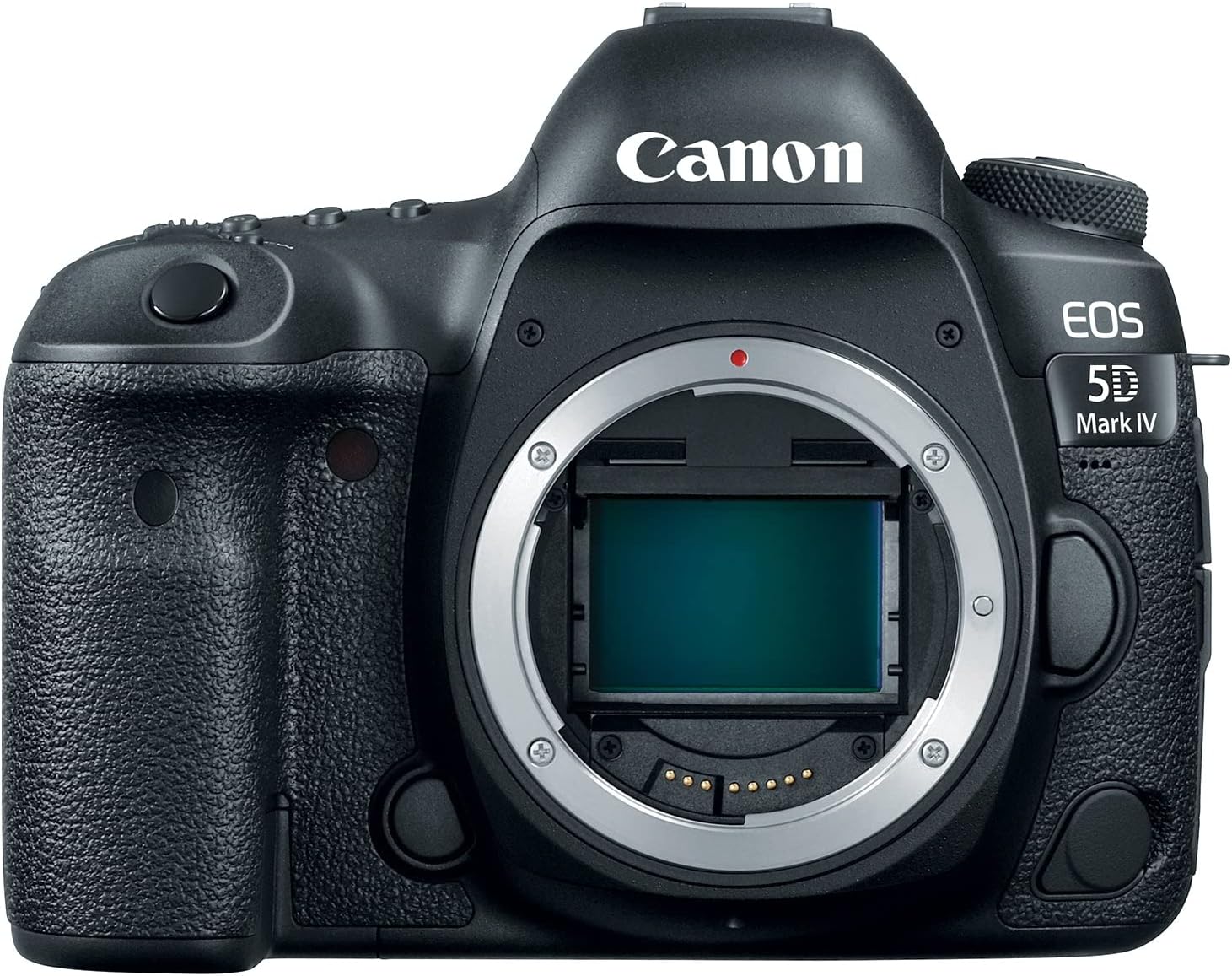
What You Get With the Canon EOS 5D Mark IV

Purchasing the body-only edition provides a pro-grade platform ready to interface with Canon EF lenses and studio accessories straight from the package.
- 30.4 megapixel full-frame CMOS image sensor
- DIGIC 6+ image processor offering up to 7.0 fps continuous shooting speed
- Dual Pixel CMOS AF system paired with a 61-point viewfinder autofocus array
- 4K video recording at 24 and 30 frames per second in Motion JPEG format
- High-frame-rate recording options including Full HD up to 60 fps and HD up to 120 fps
- 3.2-inch Clear View touchscreen LCD monitor with intuitive touch focus area selection
- Built-in Wi-Fi connectivity for wireless file browsing and Canon Camera Connect pairing
- Compatibility with Canon EF and Canon EF-S lens mountings
- Built-in interval recording timer and mirror lock-up features
Key Specifications
| Feature | Listing Specification |
|---|---|
| Sensor Resolution | 30.4 Megapixels |
| Sensor Size and Type | Full Frame (35mm) CMOS (1.50:1 Aspect Ratio) |
| Image Processing Engine | DIGIC 6+ |
| Continuous Burst Speed | Up to 7.0 fps |
| Native ISO Range | 100–32000 (Expandable to 50–102400) |
| Video Capture Resolutions | 4K (24/30 fps), Full HD (up to 60 fps), HD (up to 120 fps) |
| Autofocus System | 61-Point Viewfinder AF and Dual Pixel CMOS AF |
| Monitor Display | 3.2-Inch Touchscreen Interface |
| Mounting Compatibility | Canon EF and Canon EF-S |
| Special Capabilities | Interval Recording and Mirror Lock-Up |
Physical Durability and Long Shooting Workflows
The physical presence of a pro DSLR remains one of its greatest operational assets. Unlike smaller bodies that can feel unbalanced when paired with substantial telephoto or ultra-wide zoom lenses, the deep grip and balanced chassis of this camera provide exceptional balance during long event shoots. The weather-resistant construction gives outdoor photographers confidence when shooting under shifting environmental conditions, shielding critical internal electronics from dust and moisture. For creators migrating from smaller models like the canon eos 6d mark ii, the sturdier feel and dedicated tactical buttons streamline adjustments without requiring menu diving.
Power management represents another significant operational advantage during all-day shoots. While the listing does not specify the exact shot rating per charge, DSLR optical viewfinders draw zero power during composition, allowing canon eos 5d mark iv battery life to stretch across hours of intensive field work. When shooting events or documentary portraits through the viewfinder, photographers frequently capture thousands of stills on standard battery packs before needing a recharge, a standard that electronic viewfinders struggle to match.
Physical handling also extends to field workflow and connectivity. The inclusion of built-in Wi-Fi allows shooters to interface directly with smart devices via the Canon Camera Connect app for rapid file browsing and remote camera triggering. This feature simplifies client review sessions in studio environments, enabling instant image transmission to tablets for real-time proofing without tethered cabling.
Video Performance and Capture Demands
When assessing the Canon 5D Mark IV for video production, the camera provides distinctive imaging strengths alongside rigorous data requirements. The camera incorporates 4K video recording at 24 and 30 frames per second, alongside Full HD recording up to 60 frames per second and high-speed HD recording at 120 frames per second. Video captured through this sensor delivers lush color rendering and fine tonal gradations, making it an attractive platform for cinematic B-roll and narrative interview setups.
However, the technical implementation of Canon 5D Mark IV 4K recording warrants careful planning. The camera records 4K video utilizing the Motion JPEG compression format, which extracts individual JPEG frames for every frame of footage. This architecture ensures immaculate frame integrity and easy still-frame extraction, but it also creates massive file sizes that require high-speed, high-capacity memory cards. Post-production editors working within a dedicated canon mac 5d camera setup must account for the computing bandwidth needed to process these uncompressed intraframe video streams efficiently.
For creators considering the Canon 5D Mark IV for vlogging, the hardware footprint introduces distinct trade-offs. The 3.2-inch touchscreen display provides intuitive touch-to-focus capabilities, but the monitor is fixed flush against the camera rear rather than articulating out to face the user. Combined with the substantial weight of a full-frame DSLR body and glass, solo creators will find handheld walk-and-talk vlogging challenging unless using an external field monitor on a dedicated rig.
Autofocus Performance Across Viewfinder and Live View
Autofocus performance on this body functions through two distinct subsystems depending on how you compose your shot. When shooting through the optical viewfinder, the camera deploys an advanced 61-point autofocus matrix that rapidly locks onto moving subjects, sports action, and studio models. This optical phase-detection system works in tandem with the DIGIC 6+ processor to support continuous shooting bursts at up to 7.0 fps, ensuring sharp tracking across predictable motion paths.
The true turning point for hybrid creators occurs when activating the rear monitor. The Canon EOS 5D Mark IV Dual Pixel AF system transforms the sensor into an array of phase-detection pixels, delivering remarkably smooth and decisive focus transitions. Canon 5D Mark IV live view autofocus eliminates the hunting and micro-jitter that plagued earlier DSLR video systems, allowing solo operators to pull clean focus by simply tapping the 3.2-inch touchscreen LCD.
This Dual Pixel autofocus behavior is especially valuable for commercial videographers capturing interviews, product demos, or corporate presentations. While cutting-edge mirrorless flagship cameras like the canon r5 mark ii have introduced deep-learning subject detection algorithms, the core Dual Pixel architecture in this DSLR remains remarkably responsive for keeping human subjects crisp during live video production.
Full-Frame Sensor Quality and Dynamic Range
At the center of this camera’s enduring reputation is the Canon 5D Mark IV full frame sensor. With 30.4 megapixels of effective resolution, the CMOS imager hits an ideal balance between resolving fine texture and maintaining excellent pixel pitch for clean low-light performance. Landscape shooters capture expansive vistas with intricate foreground foliage, while portrait photographers retain the subtle nuances of skin textures and fabric weaves without pushing storage requirements to unmanageable limits.
In challenging high-contrast lighting scenarios, the Canon 5D Mark IV dynamic range gives photographers substantial latitude during RAW post-processing. While the listing does not specify exact decibel or stop metrics, the sensor’s architecture enables clean recovery of deep shadow information and balanced highlight retention. Photographers shooting outdoor weddings or backlighted architectural interiors can confidently expose for bright skies knowing the RAW file retains sufficient data in the darker zones to balance the scene seamlessly.
Low-light performance is supported by a native ISO sensitivity range of 100 to 32000, which can be expanded from ISO 50 up to 102400 for extreme shooting conditions. The DIGIC 6+ image processor applies sophisticated noise reduction algorithms that preserve edge sharpness while suppressing chromatic noise, allowing event and reception photographers to capture usable imagery under dim ambient illumination without relying heavily on speedlights.
Check Canon EOS 5D Mark IV on Amazon
Is the Canon EOS 5D Mark IV Worth It
Determining whether the Canon EOS 5D Mark IV is worth it depends entirely on your primary shooting discipline and current lens collection. For still photographers, studio artists, and event shooters who already own an array of EF lenses, this DSLR represents an exceptional value proposition. Its 30.4-megapixel resolution provides plenty of cropping headroom, the dual AF systems handle both studio portraiture and live view video effortlessly, and the bulletproof magnesium chassis delivers reliable operation through years of rigorous daily use.
Conversely, for creators whose output consists primarily of solo YouTube videos, travel vlogs, or fast-paced mobile content, the camera’s physical bulk and video constraints may present friction. The fixed rear LCD display makes self-monitoring awkward without external accessories, and the storage-intensive Motion JPEG 4K codec demands significant memory card capacity and storage arrays. Modern hybrid shooters focused entirely on video may find modern mirrorless alternatives more ergonomically accommodating for gimbal and handheld shooting.
Ultimately, if you prioritize optical viewfinder responsiveness, ergonomic stability with large lenses, and dependable full-frame image quality that has anchored professional commercial shoots for years, this camera remains a formidable tool. It bridges the gap between traditional mechanical camera handling and modern digital autofocus performance with remarkable poise.
Frequently Asked Questions
Does the Canon EOS 5D Mark IV have an articulating screen?
No, the 3.2-inch touchscreen LCD monitor is fixed directly into the rear body of the camera. While it offers responsive touch control for selecting autofocus points and navigating menus, it does not tilt or flip out for front-facing monitoring.
What frame rates are available for video recording?
The camera supports 4K video recording at 24 and 30 frames per second. For high-speed motion capture, you can record Full HD video at up to 60 frames per second, or drop down to HD resolution for 120 frames per second slow-motion capture.
Can you use Canon EF-S lenses on the Canon EOS 5D Mark IV?
The product listing specifies compatibility with both Canon EF and Canon EF-S mountings. Users can mount standard full-frame EF lenses to take full advantage of the 35mm sensor coverage or utilize compatible glass as indicated in the product specifications.
How fast is continuous burst shooting on this body?
Powered by the DIGIC 6+ image processor, the camera can capture continuous still images at up to 7.0 frames per second, making it capable of tracking action during sports, events, and wildlife photography.
Does the camera offer built-in wireless file transfer?
Yes, the camera includes built-in Wi-Fi capability. Creators can connect the camera to mobile devices using the Canon Camera Connect app to browse files, transfer images for rapid sharing, or trigger the camera remotely.


