As Amazon Associates, we earn from qualifying purchases. This means we may receive a small commission at no extra cost to you if you click through and make a purchase.
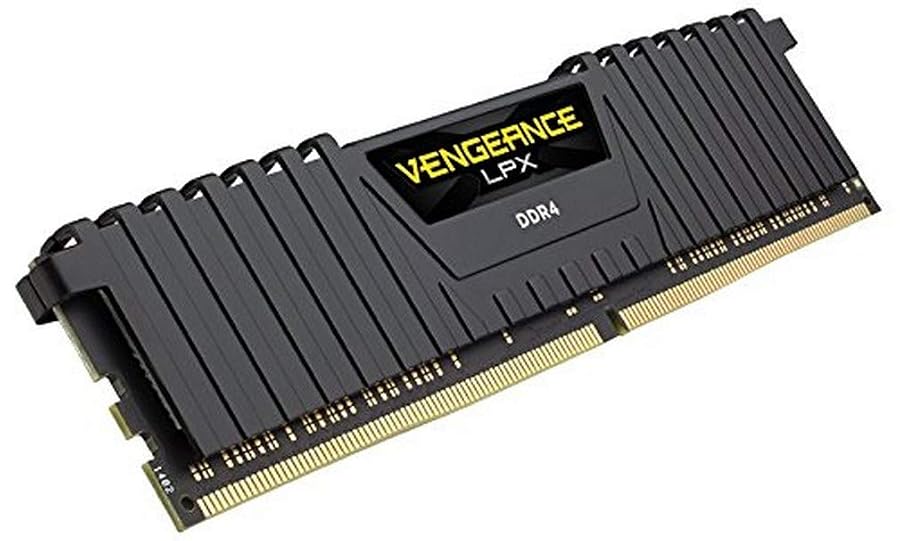
When assembling or upgrading a compact content creation workstation, memory clearance and responsive bus speeds take priority over flashy aesthetics. The Corsair Vengeance LPX DDR4 kit targets creators who require dependable performance without compromising space inside tightly packed computer chassis. Featuring a rated clock frequency of 3600 MHz alongside Column Address Strobe 16 timings, this dual-channel memory kit delivers the low-latency responsiveness necessary for fluid timeline scrub speeds, responsive photo manipulation, and multi-track audio playback. Whether you are assembling a portable production rig or optimizing a desktop editing station, this module pair provides a balanced foundation of throughput and thermal management.
In this focused hardware review, we examine the physical dimensions, memory architecture, thermal heatspreader construction, and system compatibility of the kit. We evaluate how the 34mm low-profile build suits dense mini-ITX layouts, outline the simple Intel XMP 2.0 configuration process, and assess whether this dual-channel kit meets the rigorous demands of sustained video rendering sessions. By analyzing its core specifications and real-world assembly practicalities, you will discover whether this hardware matches your production workflow or if alternative capacities better fit your creative projects.

What You Get With the Corsair Vengeance LPX 16GB DDR4-3600
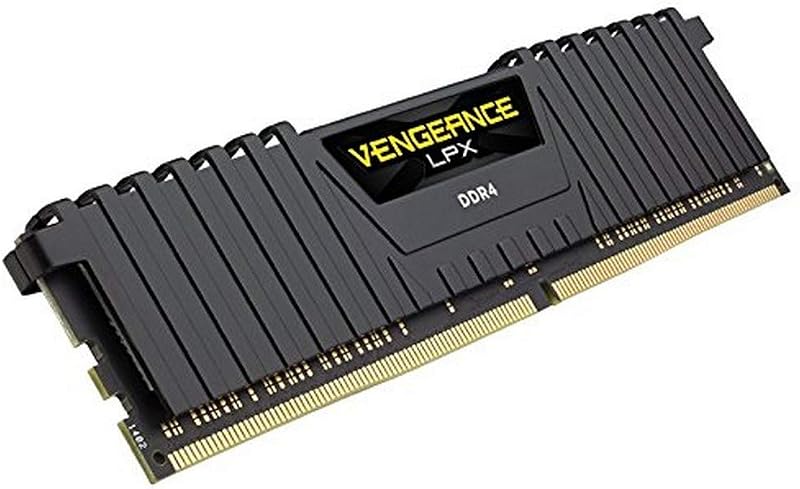
The Corsair Vengeance LPX kit is packaged as a matched dual-module desktop memory set designed to operate together seamlessly right out of the packaging. Each component inside the kit is engineered around stability and compact installation requirements:
- Two matched 8GB DDR4 memory modules, establishing a dual-channel 16GB configuration.
- Hand-sorted memory chips that are individually screened to provide strong operational headroom and reliable signal processing.
- A low-profile pure aluminum heatspreader standing just 34mm in total height to guarantee broad cooler clearance.
- A custom high-performance PCB designed to preserve signal integrity and maintain stability under demanding memory loads.
- Integrated support for Intel XMP 2.0, providing automated frequency setup on compatible motherboards.
- Manufacturer coverage backed by a limited lifetime warranty for long-term operational reliability.
Key Specifications
| Attribute | Detail |
|---|---|
| Brand | Corsair |
| Model Name | CORSAIR VENGEANCE LPX |
| Model Number | CMK16GX4M2D3600C16 |
| Total Memory Size | 16 GB (2 x 8 GB kit) |
| Memory Technology | DDR4 DIMM |
| Tested Memory Speed | 3600 MHz |
| CAS Latency | 16 |
| Operating Voltage | 1.35 Volts |
| Module Height | 34 mm |
| Data Transfer Rate | 12 gigabits_per_second |
Physical Clearance in Small Form Factor Creator Rigs
For independent video editors and streaming hobbyists working from compact studio desks, space management inside the PC chassis is an ongoing challenge. The primary engineering triumph of this module design is the strictly controlled physical footprint. Measuring a vertical profile of only 34mm, this corsair vengeance lpx 3600mhz low profile solution easily tucks beneath oversized dual-tower air coolers and inside tightly confined mini-ITX enclosures. Traditional enthusiast RAM frequently features towering decorative fins that collide with CPU heatsinks, forcing builders to either reposition cooler fans or compromise on cooling capacity entirely.
Maintaining proper vengeance lpx 16gb height clearance ensures that airflow paths within cramped enclosures remain unobstructed. In tiny desktop cases where every millimeter counts, tall heat sinks impede airflow over the motherboard power delivery components and storage drives. By keeping the modules level with typical component baselines, this memory allows creators to maximize their cooling layouts without worrying about component collisions. Those who evaluate ultra-compact systems, such as the pre-configured kamrui pinova p1 mini pc computer, amd ryzen 4300u processor, 16gb ddr4 ram 256gb m.2 ssd, mini desk setups, understand how critical physical volume is to overall desk ergonomics, and the Vengeance LPX brings that same spatial efficiency to custom desktop assemblies.
Furthermore, the corsair vengeance lpx small form factor design prevents strain on the DIMM slots during assembly. In dense multi-component builds where routing cables and liquid cooling tubes can be cumbersome, low-profile modules minimize clearance friction. This leaves ample room for hands and tools during initial assembly or subsequent storage upgrades, simplifying the maintenance routine for busy content creators.
High-Frequency Bandwidth and Timeline Scrubbing Responsiveness
Creative applications depend heavily on memory bandwidth and prompt data retrieval. Examining the corsair vengeance lpx 16gb ddr4 3600 specs reveals a fast 3600 MHz operational frequency paired with a tight Column Address Strobe latency of 16. For timeline scrubbing in nonlinear video editing software, this combination reduces interface hesitation when moving playheads across heavily edited sequences, high-bitrate B-roll clips, and color-graded clips.
When selecting memory for production workstations, latency numbers matter just as much as raw clock speed. Evaluating corsair vengeance lpx c16 vs c18 modules illustrates this distinction clearly: a C16 module responds in fewer clock cycles than a C18 alternative running at the identical frequency. This lower latency translates directly into snappier response times when switching between design applications or loading project assets into active memory caches. Choosing corsair vengeance lpx ddr4 3600 c16 ram gives creative workstations the responsiveness needed to handle large audio waveform rendering, multi-layer vector compositing, and complex photo batch processing without annoying input delays.
Deploying corsair vengeance lpx for video editing workflows provides a noticeably smooth editing experience, particularly when handling 1080p timelines or optimized 4K proxy footage. The 12 gigabits_per_second transfer rate ensures that data streams from your project drives through the processor without encountering memory-induced bottlenecks. While heavy 8K raw workflows or multi-camera broadcast sequences will eventually demand larger aggregate capacity, this dual-channel setup handles everyday creator tasks with unwavering responsiveness.
Thermal Dissipation Under Sustained Render Workloads
Long rendering exports place continuous, unrelenting stress on workstation components. While CPUs and GPUs generate the bulk of system heat, memory modules under heavy load also experience elevated thermal conditions. Corsair addresses this challenge by wrapping each module in a solid pure aluminum heatspreader. Pure aluminum features superior thermal conductivity compared to blended alloys or cosmetic plastic covers, allowing it to pull heat away from the sensitive hand-sorted memory chips rapidly.
The passive heatspreader relies on directional fins that utilize the natural airflow generated by intake and exhaust case fans. Even under continuous memory-intensive rendering passes in export queues, the heatspreader keeps operating temperatures within safe operational thresholds. Because high temperatures can induce memory errors and crash project rendering midway through an export, consistent thermal control protects hours of creative work from sudden software drops.
Signal stability is further reinforced by Corsair’s custom performance PCB. Unlike generic memory designs that route traces haphazardly, this board isolates data lanes to prevent electrical crosstalk and signal degradation. While modern DDR5 platforms, such as those highlighted in our corsair vengeance ddr5 amd expo guide, generate higher localized heat requiring on-die power regulation, this DDR4 kit operates comfortably at 1.35 volts, achieving thermal equilibrium without demanding specialized chassis venting.
Platform Compatibility and Simple Profile Setup
System stability is useless if memory fails to reach its advertised parameters effortlessly. The corsair vengeance lpx xmp 2 0 setup simplifies configuration down to a single BIOS option. Upon physical installation, standard memory often boots at conservative baseline JEDEC frequencies. By entering the motherboard BIOS and enabling the Intel Extreme Memory Profile, the system automatically applies the correct 3600 MHz clock rate, C16 primary timings, and 1.35V operating voltage without manual calibration.
Platform versatility is equally impressive. Although XMP is an Intel-developed specification, corsair vengeance lpx 2x8gb amd compatibility is well established across modern DDR4 motherboards. AMD systems utilizing AM4 chipsets readily recognize and engage XMP profiles through motherboard features like DOCP or direct XMP translation, bringing the memory to its full rated bandwidth smoothly. This makes the kit equally suitable for creators building around AMD Ryzen or Intel Core processor architectures.
For builders who prefer custom configurations over commercial prebuilts like the cyberpowerpc gamer master gaming desktop, amd ryzen 5 8400f, nvidia geforce rtx 5060 8gb, 16gb ddr5, tower, getting memory settings dialed in quickly is essential. The Vengeance LPX modules undergo extensive compatibility testing across major motherboard manufacturers, eliminating boot-loop troubleshooting and allowing creators to focus on generating content rather than diagnosing hardware faults.
Check Corsair Vengeance LPX 16GB DDR4-3600 on Amazon
Is the Corsair Vengeance LPX 16GB DDR4-3600 Worth It
When asking is corsair vengeance lpx 16gb worth it, the answer depends entirely on your project complexity and physical build constraints. For creators operating in 1080p, producing weekly video blogs, editing high-resolution RAW images, or handling digital audio workstation arrangements, this 16GB kit represents a dependable and balanced choice. The combination of 3600 MHz frequency and low C16 latency delivers responsive playback without unnecessary overhead, making it an excellent match for mid-tier production desktops.
Small-form-factor enthusiasts stand to gain the most from this specific kit. If your workstation resides in a compact living room studio or a portable travel case, the 34mm module height eliminates clearance headaches associated with low-profile CPU air coolers. You receive enthusiast-grade memory throughput and reliable aluminum cooling without having to accommodate oversized ornamental heat spreaders.
However, creators who regularly edit complex uncompressed 4K multi-cam timelines, composit intricate 3D motion graphics, or utilize extensive virtual instrument sample libraries may find 16GB constraining. In those data-heavy environments, total capacity takes precedence over ultra-tight timings, meaning a 32GB or 64GB kit would be the smarter long-term workstation investment. Yet for targeted creator tasks within standard desktop budgets, this Corsair kit remains an exceptionally well-engineered memory solution.
FAQ
Does this memory kit fit beneath large dual-tower CPU air coolers?
Yes. The modules feature a vertical profile of just 34mm, making them significantly shorter than standard enthusiast memory. This low clearance allows them to slide comfortably beneath virtually all major dual-tower air coolers and inside tight mini-ITX small-form-factor chassis without interference.
Can I use this DDR4 kit on an AMD Ryzen motherboard?
Yes. The memory is optimized and tested for wide compatibility across both Intel and AMD DDR4 motherboards. On AMD systems, you can activate the rated 3600 MHz speed and C16 timings by enabling the profile through your motherboard BIOS using DOCP or direct profile settings.
What is the functional difference between C16 and C18 latency?
Column Address Strobe latency represents the number of clock cycles it takes for the memory to deliver requested data to the processor. A C16 kit operates with lower latency than a C18 kit at the same 3600 MHz frequency, resulting in faster data access and snappier performance during editing timeline scrubbing and preview generation.
How do I make the RAM run at its full 3600 MHz speed?
When first installed, the modules boot at standard default speeds. To reach 3600 MHz, enter your computer BIOS during startup and enable the Intel XMP 2.0 profile. The motherboard will automatically apply the tested 3600 MHz frequency, C16 latency, and 1.35V operational voltage in one step.
Is 16GB of system memory adequate for video editing workflows?
A 16GB dual-channel kit is well suited for 1080p timeline editing, YouTube vlog production, digital audio recording, and photo editing. However, if your projects frequently involve heavy uncompressed 4K multi-camera sequences, intensive after-effects rendering, or massive sample libraries, upgrading to a higher total capacity is recommended.