
As Amazon Associates, we earn from qualifying purchases. This means we may receive a small commission at no extra cost to you if you click through and make a purchase.
Creators, vloggers, and multimedia editors shopping for a desktop processor upgrade often face a difficult trade-off between thermal manageability, multi-threaded export speeds, and long-term platform viability. The Intel Core Ultra 5 250K Plus enters the market targeting creators who demand high-tier throughput for video rendering, real-time timeline scrubbing, and multi-app multitasking without stepping up to top-tier enterprise pricing. Built on Intel’s new LGA1851 platform and designed around a hybrid core architecture pairing 6 Performance cores with 12 Efficient cores, this processor promises modern connectivity through PCIe 5.0 and high-speed DDR5 memory up to 7200 MT/s. If you are debating whether this desktop chip provides the necessary horsepower for heavy editing pipelines, this review breaks down its architecture, actual capability, and system requirements.
Choosing the right processor requires looking past theoretical benchmarks to see how architectural choices affect real render queues, timeline responsiveness, and thermal stability under prolonged loads. In this guide, we evaluate the processor’s key hardware specifications, platform requirements across Intel 800 series chipsets, export scaling in creative software, cooling demands, and overall daily value. Whether you are assembling a dedicated video workstation, a hybrid gaming-and-streaming rig, or transitioning from an older desktop generation, we explore how this mid-tier chip fits into modern creator workflows.

What You Get With the Intel Core Ultra 5 250K Plus
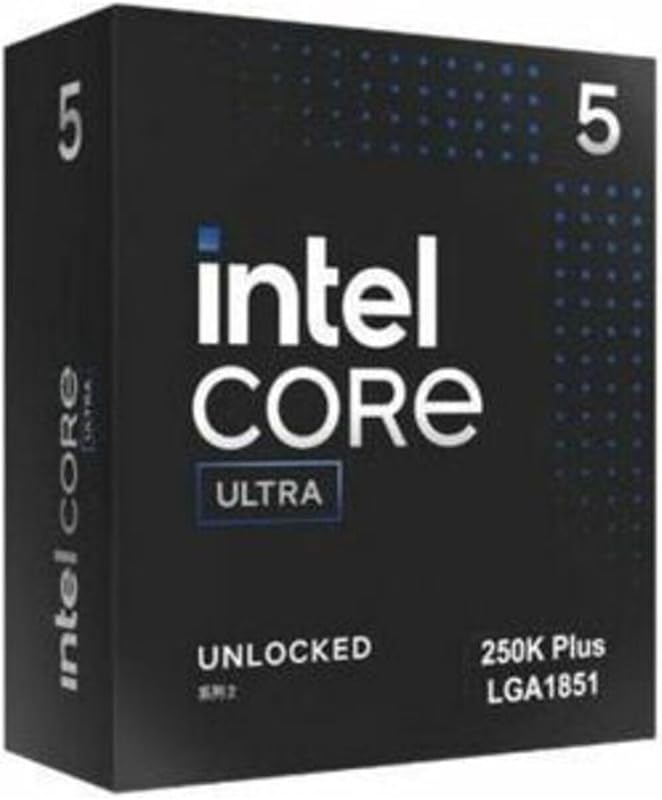
When you purchase the Intel Core Ultra 5 250K Plus, the retail package delivers the bare desktop processor engineered specifically for motherboards featuring the desktop LGA1851 socket. The listing specifies the standalone processor unit, requiring builders to pair it with an appropriate thermal solution, thermal paste, and an Intel 800-series motherboard to assemble an operational system. Because this is an unlocked enthusiast component, system builders receive the raw silicon ready for performance tuning rather than a locked commercial package with a bundled low-profile cooler.
- Intel Core Ultra 5 250K Plus desktop processor unit
- Hybrid 18-core architecture configured with 6 Performance cores and 12 Efficient cores
- LGA1851 socket interface built for Intel 800 Series chipset motherboards
- Native high-speed DDR5 memory support rated up to 7200 MT/s
- PCIe 5.0 and PCIe 4.0 lane architecture for high-bandwidth storage and graphics connectivity
- Unlocked multiplier designed for performance tuning when paired with Intel Z-series chipsets
- 30 MB secondary cache memory allocation for reduced memory latency
Key Specifications
| Attribute | Detail |
|---|---|
| Processor Series | Intel Core Ultra 5 |
| Model Number | ULTRA 5 250K |
| Socket Compatibility | LGA 1851 |
| Processor Core Architecture | 18 Cores (6 P-cores + 12 E-cores) |
| Concurrent Threads | 36 Threads |
| Base Clock Frequency | 3.3 GHz |
| Maximum Turbo Frequency | Up to 5.5 GHz (5.3 GHz listed base boost) |
| Secondary Cache Memory | 30 MB |
| Processor Base Power | 125 Watts |
| Maximum Turbo Power | 250 Watts |
Processing Muscle for Video Editing and Timeline Scrubbing
For digital content producers, evaluating the Intel Core Ultra 5 250K Plus for video editing comes down to how well its core distribution balances active user interface responsiveness with heavy background compute jobs. Featuring a total of 18 cores split into 6 Performance cores and 12 Efficient cores alongside 36 concurrent threads, the processor assigns priority foreground tasks to the high-clocked P-cores while directing long-running export queues, transcode passes, and audio render tasks to the secondary cluster. This division prevents the stuttering and dropped frames that often plague creative software when an export run monopolizes computing resources during simultaneous timeline trimming or color grading passes.
In everyday video editing suites such as Premiere Pro, DaVinci Resolve, and Final Cut, working with high-bitrate 4K footage demands rapid decoding, color look-up operations, and seamless timeline scrubbing. The 30 MB secondary cache plays a vital role here by keeping essential transform matrices and frame buffers close to the execution pipelines, noticeably reducing playback latency. While massive multi-camera 8K RAW projects might benefit from moving up the stack toward an intel ultra 9, the Core Ultra 5 tier provides sufficient computational density to keep standard commercial 4K projects responsive and fluid.
The processor also proves capable when orchestrating multi-layer composite renders and motion graphics generation in tools like After Effects. The 3.3 GHz base frequency quickly elevates up to 5.5 GHz maximum turbo frequency during single-threaded burst tasks, such as rasterizing vector shapes or processing procedural expressions. This dynamic frequency range allows Core Ultra 5 250K Plus creators to jump smoothly between timeline editing, real-time effects previewing, and asset batch exporting without encountering the sudden bottlenecks common to strictly low-power chips.
Platform Longevity and Memory Throughput on LGA 1851
Transitioning to a new generation brings significant hardware platform considerations, and adopting the Core Ultra 5 250K Plus LGA 1851 infrastructure requires upgrading to an Intel 800 Series chipset motherboard. Unlike older generation boards, this updated socket design establishes a fresh foundation specifically wired to maximize modern I/O protocols and system bus speeds. For editors who rely on high-capacity NVMe scratch disks and multi-gigabyte project files, native PCIe 5.0 and 4.0 lane support ensures that storage read and write operations never stall while importing massive media bins or dumping raw camera cards.
Memory bandwidth is equally critical for heavy creative multitasking, and Core Ultra 5 250K Plus DDR5 support reaching speeds up to 7200 MT/s provides a substantial pipeline for streaming video frames directly into active memory. When managing complex projects across multiple creative suites at the same time, high-frequency DDR5 memory minimizes memory bus saturation, allowing faster scrub response and seamless asset transfers between applications. For editors accustomed to mobile setups like the dell pro 16 plus pb16250, stepping into a full desktop platform with expansive memory channels unlocks far greater headroom for uncompressed video caches and dense timeline buffers.
The shift to the LGA1851 platform also represents an investment in system longevity. While compact micro-workstations such as an msi cubi nuc offer unbeatable physical portability for light field recording, a dedicated desktop motherboard with the 800-series chipset gives creators full access to modular component expansion. As software demands grow over the coming years, having an unlocked platform with full PCIe 5.0 lanes and ultra-fast DDR5 throughput provides an upgrade path that keeps your workstation viable across multiple production cycles.
Thermal Performance and Cooling Requirements Under Sustained Load
Balancing power draw against thermal output is a critical design factor when assembling a production PC, and understanding Intel Core Ultra 5 250K Plus thermal performance is essential for long-term hardware health. The processor is engineered around a 125-watt base power rating that ramps up to a 250-watt maximum turbo power envelope during peak operational loads. While light tasks like browsing media bins or sequencing audio tracks will keep the chip near its baseline consumption, engaging a full-timeline multi-threaded video render draws substantial power to maintain top boost frequencies across all active cores.
Although the product specifications note air cooling as a supported method, managing a 250-watt turbo spike requires a substantial thermal solution. Enthusiasts opting for air cooling will need a premium dual-tower heat sink equipped with high-pressure static fans and multiple heat pipes to prevent thermal throttling during continuous multi-hour render sessions. Alternatively, creators working in warm production studios or sound-dampened editing suites will achieve quieter operation and lower peak temperatures by pairing the processor with a 280mm or 360mm all-in-one liquid cooling loop.
Thermal management directly impacts export times because modern processors automatically scale their operating frequencies based on available thermal headroom. When cooling performance is inadequate, the CPU quickly backs down from its 5.3 GHz to 5.5 GHz turbo ceiling to protect the silicon, stretching render queues noticeably longer. By investing in a well-ventilated chassis and matching the processor with a robust cooling solution, editors can sustain maximum clock speeds across lengthy export queues without worrying about thermal degradation or system instability.
Handling Hybrid Creative Workloads and Gaming
Many independent creators operate workstations that pull double duty as both creative production studios and high-performance gaming rigs. Evaluating the Intel Core Ultra 5 250K Plus gaming capability demonstrates that high single-core clock speeds benefit more than just video timelines. Reaching boost frequencies up to 5.5 GHz, this chip delivers rapid frame processing and ultra-low frame latency in modern graphics engines, making it fully capable of driving high-refresh-rate gaming displays when paired with a contemporary dedicated graphics card.
For vloggers and streamers who capture gameplay footage while broadcasting live to Twitch or YouTube, the 18-core architecture provides distinct advantages. The 6 Performance cores easily manage real-time game simulation, input processing, and audio synthesis, while the 12 Efficient cores can take charge of background software encoding, chat capture bots, and streaming overlays. This architectural separation prevents the annoying micro-stutters and input lag that often occur when a single gaming cluster is overwhelmed by concurrent background broadcast encoding software.
Furthermore, the unlocked multiplier on this processor gives enthusiast gamers and hobbyist overclockers the flexibility to fine-tune voltage curves and core multipliers when installed on an Intel Z-series chipset motherboard. Whether you want to optimize single-core frequencies for competitive esports titles or tune energy efficiency profiles for quieter late-night rendering sessions, the platform grants complete tuning flexibility. This versatile profile makes the chip a compelling centerpiece for builders who require robust professional performance during the day and elite entertainment capability at night.
Check Intel Core Ultra 5 250K Plus on Amazon
Is the Intel Core Ultra 5 250K Plus Worth It
Deciding whether the Intel Core Ultra 5 250K Plus is worth it depends largely on your current hardware baseline, production workload complexity, and willingness to adopt a brand-new motherboard standard. For solo video editors, YouTube creators, and independent animators upgrading from an older platform with DDR4 memory or low core counts, this chip represents a substantial leap forward. The combination of 18 total cores, 36 threads, snappy DDR5 bandwidth, and PCIe 5.0 readiness provides a noticeable improvement in timeline fluidity and project export speeds.
For hybrid users who balance heavy multimedia editing with competitive gaming or live streaming, the value proposition is particularly strong. The 5.5 GHz maximum turbo frequency ensures high responsiveness in latency-sensitive tasks, while the generous 30 MB secondary cache and expansive multi-threaded core pool effortlessly manage background encoding and resource-heavy multi-app workflows. Enthusiasts who enjoy tuning their hardware will also appreciate the unlocked multiplier when pairing the processor with an Intel Z-series motherboard.
On the other hand, commercial post-production houses handling uncompressed 8K multi-camera timelines, complex 3D VFX simulations, or massive node-based compositing may find themselves pushing this mid-tier configuration to its upper limits. In those demanding professional production environments, stepping up to top-tier enterprise silicon provides the broader memory channels and larger core pools necessary for ultra-heavy data sets. However, for the vast majority of mainstream creators, vloggers, and multimedia hobbyists, this processor hits an exceptional sweet spot between cutting-edge platform architecture and robust real-world production performance.
FAQ
Does the Intel Core Ultra 5 250K Plus fit into older LGA1700 motherboards?
No, the Intel Core Ultra 5 250K Plus requires a motherboard equipped with the newer LGA1851 socket. It is designed to operate with Intel 800 Series chipset motherboards and is physically incompatible with previous generation LGA1700 boards, meaning builders must upgrade their motherboard to use this processor.
What kind of memory does the Intel Core Ultra 5 250K Plus support?
The processor supports high-speed DDR5 memory modules with transfer rates reaching up to 7200 MT/s. The platform is engineered specifically around DDR5 architecture, providing the high memory bandwidth necessary to feed its 18 cores during intensive video editing and rendering tasks.
Does this processor come with a stock cooler in the retail box?
The listing does not specify a bundled stock cooler in the package, which is standard practice for enthusiast unlocked processors in this category. Because the processor features a 125-watt base power rating and can draw up to 250 watts during peak turbo boost, builders must purchase a capable aftermarket air cooler or liquid AIO cooler.
Can the Intel Core Ultra 5 250K Plus be overclocked?
Yes, the processor is unlocked for performance tuning when paired with an Intel Z-series chipset motherboard. Users with adequate power delivery and cooling can adjust clock multipliers and voltage settings to extract higher sustained frequencies.
How does the 18-core architecture help video editing software?
The processor features 6 Performance cores optimized for high-frequency active tasks like timeline scrubbing and interactive playback, alongside 12 Efficient cores dedicated to managing background export queues, file compression, and system multitasking. With 36 concurrent threads, the chip maintains smooth software responsiveness even during demanding rendering jobs.


