As Amazon Associates, we earn from qualifying purchases. This means we may receive a small commission at no extra cost to you if you click through and make a purchase.
Shoppers searching for the rey neo air pro 4 are usually hunting for an ultra-portable wearable display that can replace a physical monitor or elevate mobile gaming on the go. The RayNeo Air 4 Pro is designed specifically for this role, presenting a massive 201-inch virtual screen backed by HDR10 color rendering and an ultra-smooth 120Hz refresh rate. By eliminating internal batteries and discarding finicky wireless software apps, this headset delivers an immediate, hardwired visual workspace for video editors, digital nomads, and handheld console players who need a secondary display without adding bulk to their everyday carry.
Determining whether this wearable monitor fits your daily workflow requires looking at how its optical architecture, power consumption, and physical design perform outside the marketing brochure. While carrying an expansive virtual screen in your jacket pocket sounds ideal, real-world factors like listed resolution parameters, host device battery drain, acoustic privacy, and physical comfort dictate whether it can genuinely replace a conventional external screen. This editorial guide breaks down the packaged hardware, analyzes the key technical specifications, examines computing and gaming viability, and answers whether the headset is worth your investment.

What You Get With the RayNeo Air 4 Pro

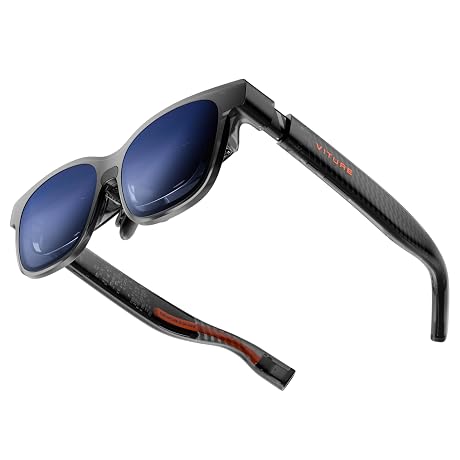
The RayNeo Air 4 Pro arrives as a streamlined visual wearable intended for instant hardware-level connection straight out of the packaging. The hardware package focuses on delivering an immediate external display link via standard DisplayPort over Type-C, omitting complex accessories in favor of a nimble, direct-tethered layout.
- RayNeo Air 4 Pro AR glasses chassis weighing a nimble 2.88 ounces
- Virtual display optical projection system simulating a 201-inch screen with over 10 billion colors
- Vision 4000 processor co-developed with Pixelworks featuring real-time AI SDR-to-HDR upscaling
- Integrated 3D movie playback engine capable of native 3D viewing and real-time 2D-to-3D visual conversion
- Quad-speaker sound setup engineered by Bang & Olufsen featuring 360-degree spatial audio and Whisper Mode
- Direct USB Type-C interface cable supporting instant plug-and-play operation across computers and consoles
Key Specifications
| Specification Attribute | Listing Detail |
|---|---|
| Brand and Manufacturer | RayNeo / RayNeo Co., Ltd. |
| Model Number | XRGF39-1 |
| Virtual Screen Size | 201 inches |
| Display Maximum Resolution | 819 x 461 |
| Display Refresh Rate | 120Hz |
| Image Processing Chip | Vision 4000 with AI SDR-to-HDR upscaling |
| Color Profile | HDR10 with over 10 billion colors |
| Audio System | Four precision speakers by Bang & Olufsen with Whisper Mode |
| Hardware Weight | 2.88 ounces |
| Platform Compatibility | Android XR, PlayStation VR, SteamVR, Console VR, PC VR |
| Connectivity Port | USB Type-C (bus-powered, no internal battery) |
Display Quality and Visual Processing
The primary attraction of this wearable monitor is its projected image size, which simulates a floating 201-inch screen centered directly in your optical path. Driving the visual engine is the Vision 4000 chip, a dedicated display processor co-developed with Pixelworks that executes real-time AI SDR-to-HDR upscaling. This processor monitors incoming video signals continuously, boosting shadow detail, lifting peak highlights, and expanding color gradations into 10-bit depth. For multimedia playback and video editing timelines, the rayneo air 4 pro hdr10 display delivers rich contrast and vivid tone separation that standard portable LCD panels struggle to produce.
Motion fluidity represents another major operational strength, particularly for fast-paced video production and entertainment. With full support for rayneo air 4 pro 120hz visual throughput, moving UI elements, fast camera pans, and gaming environments glide across your field of view without the jarring motion judder or ghosting artifacts common to 60Hz mobile displays. In addition to high-speed dynamic rendering, the optical engine provides native support for 3D film playback and incorporates an AI-driven depth synthesis feature that converts flat 2D content into stereoscopic video on demand.
Prospective buyers evaluating the rayneo air 4 pro specs must consider the listed maximum display resolution of 819 x 461. While the simulated scale provides expansive immersion for streaming media and console games, this resolution ceiling means tiny typography, dense timeline indices, and fine data tables will display noticeable softening compared to high-density 1080p micro-OLED wearables like the air 3 pro ar glasses. For streaming cinema, full-screen playback monitoring, and casual gaming, the punchy color and wide virtual projection remain compelling, but users should calibrate their expectations regarding razor-sharp desktop text rendering.
Mobile Productivity and Computing Workflows
Integrating a wearable screen into a portable workstation fundamentally alters how you manage screen real estate when away from a traditional desk. Setting up a rayneo air 4 pro macbook workflow allows digital creators and mobile vloggers to maintain an expansive secondary display while working in transit. Instead of straining your neck over a 13-inch or 14-inch laptop screen on an airline tray table, you can lean back in an ergonomically neutral posture while monitoring full-screen video previews or browser references floating in the space directly before you.
When evaluated as a rayneo air 4 pro portable monitor, the glasses completely circumvent the physical headaches that accompany traditional flat travel screens. A standard portable monitor requires dedicated backpack space, a sturdy tabletop surface, and a kickstand that can easily tip over during train vibrations or sudden flight turbulence. By contrast, these glasses fold down into an ultra-compact footprint that slides into any pocket or tech pouch. Weighing only 2.88 ounces, the glasses eliminate physical desk clutter while giving remote professionals a private, expansive display footprint anywhere they sit down to work.
The comparative experience of the rayneo air 4 pro vs external display panels highlights a definitive trade-off between absolute visual privacy and collaborative viewing. Traditional external monitors allow colleagues sitting next to you to review edits or discuss visual assets simultaneously. The wearable display, however, acts as an entirely private viewport that prevents neighboring passengers from observing confidential client projects or personal media. Creative professionals familiar with alternative hardware like the xreal air 2 pro ar glasses will appreciate that this display operates with instantaneous plug-and-play simplicity, bypassing the background utility software crashes that can disrupt mobile operating systems.
Gaming Console and Handheld Integration
Handheld gaming represents one of the strongest practical applications for this wearable screen design. Configuring the rayneo air 4 pro for steam deck gaming relieves the physical strain of holding a heavy mobile PC at eye level during marathon sessions. With video signals transmitted straight over USB-C, you can rest the console comfortably in your lap or detach wireless controllers while your head stays upright. The combination of high-refresh 120Hz motion clarity and the expanded 201-inch virtual screen elevates indie titles and triple-A campaigns into a miniature theater experience.
The listing highlights expansive hardware synergy across modern home and mobile gaming hardware. The glasses support direct video feeds from the PlayStation 5, Nintendo Switch 2, and gaming PCs, alongside compatibility profiles for Android XR, PlayStation VR, and SteamVR platforms. Because display transmission relies on hardware-level DisplayPort protocols rather than complex software translation, frame pacing remains remarkably uniform, preserving responsive button inputs during competitive action sequences and fast driving titles.
Universal rayneo air 4 pro usb-c compatibility also ensures seamless connectivity across modern consumer devices, including iPhone 15, 16, and 17 models, contemporary Android smartphones, and iPad Pro tablets without requiring proprietary adapters. However, because the chassis contains no internal battery, the glasses draw operating current entirely from the connected host device. While this keeps the headset remarkably light on your face, it noticeably accelerates battery consumption on handheld consoles and mobile phones during extended high-refresh gaming sessions unless an external power-delivery splitter is introduced into the cable path.
Audio Architecture and Acoustic Ergonomics
Wearable displays require sound systems that match visual scale without imposing unwieldy physical bulk, and the rayneo air 4 pro audio system achieves this through acoustic tuning by Bang & Olufsen. The glasses feature four precision-engineered micro-speakers integrated along the temple stems. These drivers create an immersive 360-degree spatial soundstage that places speech dialog squarely in front of the listener while scattering environmental effects across the stereo perimeter, delivering an engaging media experience without forcing you to wear separate earbuds.
Using open-ear acoustic drivers in shared environments requires a balance between listening presence and noise leakage. RayNeo includes a specialized Whisper Mode that alters acoustic phase dispersion to minimize sound bleed toward people sitting nearby. In standard environments like offices, hotel lounges, and airport gates, Whisper Mode keeps dialog and audio effects reasonably contained at moderate volumes. For situations requiring louder output, the listing notes that an optional Sound Tube accessory is available to boost volume by up to 15dB, though this accessory is sold separately.
From an ergonomic standpoint, the decision to eliminate an internal lithium-ion battery pays massive dividends in physical comfort. At just 2.88 ounces, the frame exerts minimal downward force across the bridge of your nose and causes none of the temporal squeezing that plagues heavier, battery-laden smart headsets like the rayneo x3 pro smart glasses. For video editors scrubbing through b-roll clips or travelers settling in for a two-hour movie, the featherweight balance ensures that physical fatigue does not cut your viewing session short.
Check RayNeo Air 4 Pro on Amazon
Is the RayNeo Air 4 Pro Worth It
Deciding if the is rayneo air 4 pro worth it question aligns with your setup depends entirely on your primary workflow priorities. If you are a mobile video creator, frequent flyer, or handheld gamer looking for a personal cinema display that packs down to the size of standard sunglasses, this headset is an outstanding tool. The seamless USB-C plug-and-play architecture, high-refresh 120Hz responsiveness, immersive Bang & Olufsen audio, and featherweight 2.88-ounce comfort combine to deliver an exceptionally frictionless media consumption and viewing experience.
Conversely, digital professionals who require a wearable monitor primarily for reading micro-typography, managing complex multi-column spreadsheets, or performing fine pixel-level photo retouching should carefully weigh the listed 819 x 461 maximum display resolution. While video content and games scale gracefully across the 201-inch virtual projection, small interface fonts will lack the crisp definition delivered by native 1080p micro-OLED panels or standard desktop monitors. Buyers who want an untethered, standalone device must also remember that these glasses require a constant cable connection to a compatible host machine.
For mobile vloggers who want a secondary video monitor, transit commuters wanting theater-style movie immersion, and Steam Deck enthusiasts looking to relieve wrist strain, the RayNeo Air 4 Pro provides a highly capable, comfortable wearable display. By focusing on pure plug-and-play visual output without bloated software overhead, it provides an innovative display solution that untethers your mobile workstation from conventional physical screens.
FAQ
Does the RayNeo Air 4 Pro have an internal battery?
No, the RayNeo Air 4 Pro does not contain an internal battery. It draws power directly from the connected smartphone, tablet, computer, or gaming console through its USB-C cable, which keeps the total headset weight down to a light 2.88 ounces.
Which mobile phones work with the RayNeo Air 4 Pro?
The glasses are compatible with USB-C smartphones that support video output over DisplayPort Alt Mode. This includes Apple iPhone 15, iPhone 16, and iPhone 17 series models, alongside compatible Android smartphones, allowing direct plug-and-play screen mirroring without third-party apps.
How does the 120Hz refresh rate benefit gaming on the Steam Deck?
The 120Hz refresh rate delivers fluid motion rendering and reduces visual stuttering during fast camera movements. Handheld players using the Steam Deck enjoy responsive frame pacing and reduced motion blur across action titles, making the virtual 201-inch projection feel exceptionally smooth.
Can you watch 3D movies with the RayNeo Air 4 Pro?
Yes, the glasses support native 3D video content for stereoscopic viewing. They also feature an onboard visual processing engine with AI depth enhancement that can convert standard 2D video into a simulated 3D viewing format on the fly.
How does the Whisper Mode audio feature work in public?
Whisper Mode adjusts the acoustic dispersion from the four Bang & Olufsen temple speakers to reduce sound leakage into your immediate environment. It allows private listening in moderately quiet public settings like trains or coffee shops, though extreme volumes can still cause faint sound bleed due to the open-ear design.