As Amazon Associates, we earn from qualifying purchases. This means we may receive a small commission at no extra cost to you if you click through and make a purchase.
Finding the right balance between structural support and physical portability is one of the toughest challenges when outfitting a modern virtual reality setup. The official Meta Quest 3 Elite Head Strap established the standard for rigid, dial-adjusted stabilization, but its stiff plastic rear housing and bulky frame create noticeable friction for mobile creators, videographers, and frequent travelers. If you routinely review spatial video, edit immersive media on location, or use your headset while leaning back in bed or transit seating, rigid straps can become an ergonomic hindrance. The KIWI design K4 Flex enters the market as a focused Meta Quest 3 elite head strap alternative engineered specifically for flexible deployment, packability, and relaxed viewing postures.
Rather than relying on heavy mechanical ratchet gears and stiff lateral arms, this strap reimagines headset mounting through an elasticized tension network paired with an enlarged, flat-profile rear cradle. In this detailed KIWI design K4 Flex review, we examine the design architecture, materials, packability, and day-to-day usability of this accessory to help you decide whether it serves as the ultimate Quest 3 elite strap replacement. We will break down its technical specifications, evaluate how it handles creator workflows during travel, analyze its unique rear cushion layout for reclining sessions, and determine where it outperforms traditional rigid headstraps.

What You Get With the KIWI design K4 Flex

The KIWI design K4 Flex Comfort Lite arrives as a streamlined accessory package designed to replace the stock fabric harness of your headset while avoiding the excessive bulk typical of rigid third-party alternatives. KIWI design built this system around a flexible, roll-up form factor that prioritizes intuitive handling and rapid adjustments directly out of the box.
- Dedicated Headset Mounting: Purpose-built mounting interface designed for direct compatibility with both Meta Quest 3 and Quest 3S headsets.
- Larger Snug-Fit TPU Headrest: A broad rear support cradle constructed from self-adapting PU material lined with soft foam padding to distribute pressure across the occipital bone.
- Woven Elastic Strapping: High-tensile woven elastic bands providing an adjustable circumference range from 17.7 inches up to 27 inches.
- Dial-Free Tension System: A streamlined pull-and-release fitting layout that eliminates mechanical gears and adjustment wheels entirely.
- Foldable Roll-Up Architecture: Compact structural layout allowing the entire assembly to flex and roll down into tight travel pockets.
- Lab-Tested Resilience: Materials certified to maintain 86 percent of initial structural integrity after 5,000 mechanical stretch test cycles.
Key Specifications
| Attribute | Specification Detail |
|---|---|
| Supported Hardware | Meta Quest 3 and Meta Quest 3S |
| Operating Environment | Meta Horizon OS (META QUEST) |
| Physical Weight | 170 g |
| Dimensions | 9.06 inches D x 5.51 inches W x 2.17 inches H |
| Head Circumference Range | 17.7 inches to 27 inches |
| Rear Cradle Construction | Self-adapting PU material with integrated soft foam padding |
| Strap Architecture | Woven adjustable elastic band system |
| Hardware Interface | USB Type C connector alignment |
| Strap Durability Benchmark | Retains 86% elasticity after 5,000 lab stretch tests |
| Primary Color Finish | Black |
Travel Portability and Packability for Creators on the Move
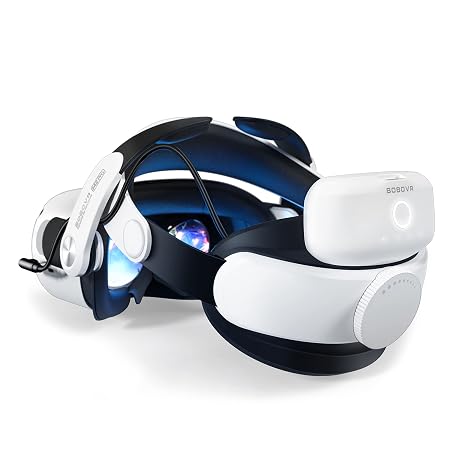
For digital creators, videographers, and XR developers, travel gear selection is dictated by volume and packing efficiency. Traditional rigid accessories, such as the official elite frame or halo-style units like the bobovr m3 pro, demand dedicated hard-shell cases that consume considerable room inside a camera bag or carry-on suitcase. The KIWI design K4 Flex for travel addresses this precise friction point by weighing only 170 grams and incorporating a fully flexible, roll-up structure that folds flat against the headset body.
Because the side tension members are constructed from resilient woven elastic rather than molded plastic struts, the entire headset assembly can slip into compact backpack compartments, sling bags, or soft camera cubes without risk of snapping structural side rails. Creators frequently moving between film shoots, client presentations, and studio environments need hardware that can withstand rapid packing without requiring disassembly. The K4 Flex eliminates the need to unclip side brackets when stowing your gear, preserving your setup speed when arriving on location.
Durability while in transit is reinforced by the manufacturer’s lab testing, which demonstrates an 86 percent structural performance retention across 5,000 continuous stretch cycles. This level of material endurance ensures that repeatedly compressing the strap into cramped gear bags will not warp the mounting clips or stretch the elastic webbing beyond usable limits. For traveling creators who prioritize lightweight mobility over bulky mechanical frames, this roll-up design fundamentally streamlines mobile production workflows.
Comfort Mechanics and Lying Down Usability
Standard elite straps utilize a protruding rear ratchet wheel to regulate cranial clamping pressure, which presents a significant ergonomic barrier when attempting to recline. Leaning back against an airplane seat, train headrest, sofa, or pillow forces a hard plastic dial directly into the base of the skull, causing neck strain and displacing the headset’s focal sweet spot. The K4 Flex functions specifically as a specialized Quest 3 head strap for lying down by deploying a completely flat rear profile that rests flush against supporting surfaces.
The core of this comfort architecture is the enlarged rear headrest fabricated from self-adapting PU material backed with dense, soft foam padding. Rather than creating a single concentrated pressure zone, the pliable headrest conforms around the curve of the occipital region, providing passive stability that holds the headset firmly in place without requiring aggressive forward clamping force. When streaming media, reviewing spatial video dailies, or utilizing productivity environments while resting in bed, the headset remains steady even when your head shifts position against a pillow.
This flat-back engineering expands the practical use cases of your headset beyond active, standing room-scale room games into casual media consumption and sedentary spatial tasks. While earlier solutions like the meta quest 2 elite strap locked users into an upright posture, the K4 Flex allows creators and hobbyists to comfortably monitor 180-degree or 360-degree footage from a fully reclined position. The combination of compliant foam and a smooth exterior shell ensures that contact friction against fabrics is minimized, eliminating intrusive pinching during extended viewing sessions.
Elastic Fit and Tension Management Without Dial Wheels
Operating a mechanical dial mechanism while wearing a virtual reality headset can be clumsy, particularly when passing hardware back and forth among production team members, clients, or family participants. The KIWI design K4 Flex replaces complex ratcheting assemblies with a streamlined pull-and-release elastic fit system. Users simply slip the headset over their eyes and pull the woven elastic bands to achieve balanced facial interface tension in seconds, bypassing the need to adjust knobs while blindfolded.
The adjustment band accommodates an expansive sizing spectrum ranging from 17.7 inches to 27 inches, covering adult, youth, and child cranial circumferences with equal consistency. The woven elastic maintains continuous dynamic tension that naturally flexes as facial muscles move during speech or expressive spatial capture. This dynamic accommodation prevents the rigid, headache-inducing pinch that often manifests when rigid plastic straps are tightened down for high-mobility gaming or intense active tracking.
While power users who engage in multi-hour continuous rendering sessions might miss the integrated counterbalancing battery modules found on advanced counterweight options like the kiwi h4 boost quest 3, the dial-free design of the K4 Flex delivers unmatched simplicity. The lack of internal mechanical gears means there are fewer moving components susceptible to stripping, cracking, or collecting debris over long-term ownership. For shared multi-user workflows where quick adjustments are paramount, this elastic format provides rapid, fuss-free adaptability.
Setup and Headset Compatibility
Installing the KIWI design K4 Flex onto your headset requires minimal mechanical effort and preserves the integrity of your hardware. The strap is fully compatible with both the standard Meta Quest 3 and the Meta Quest 3S, utilizing reinforced lateral slide connectors that snap directly onto the headset’s factory side struts. The alignment leaves physical access points entirely unobstructed, ensuring that the USB Type C port remains fully accessible for external data tethering, high-speed media transfers, or off-board battery connections.
Because the physical dimensions of the K4 Flex measure 9.06 inches deep by 5.51 inches wide and 2.17 inches high, the unit retains an exceptionally low profile along the sides of the user’s face. This close-to-chassis geometry ensures that proximity sensors, external tracking cameras, and peripheral boundary detection systems integrated into Meta Horizon OS operate without optical occlusion or mechanical interference. The lack of bulky overhead halo bars makes it effortless to integrate external monitoring headphones or lavalier recording gear around the strap.
Once secured, the top woven band balances the vertical mass of the front optical assembly, preventing the visor from sliding downward onto the bridge of the nose. The self-adapting rear PU cup securely anchors beneath the cranial ridge, creating an ergonomic triangle of support that stabilizes the 1832 x 1920 per-eye visual sweet spot. Swapping between the factory cloth strap and the K4 Flex takes under two minutes, making it an accessible structural upgrade that requires no specialized tools or permanent headset modifications.
Check KIWI design K4 Flex on Amazon
Is the KIWI design K4 Flex Worth It
Evaluating whether this accessory fits your workflow depends entirely on your usage priorities, environmental demands, and physical mobility needs. If you are seeking the best Quest 3 head strap for creators who travel frequently, work across diverse filming environments, or prefer reclining during media consumption, the K4 Flex is an exceptional, purpose-built asset. It completely eliminates the packability penalties and rigid rear-dial discomfort inherent to traditional elite-style hardware while delivering superior stability compared to stock fabric straps.
Conversely, users who spend hours playing competitive, high-velocity physical titles or those seeking built-in counterbalancing power packs might find an all-in-one battery headstrap better aligned with their needs. The K4 Flex relies on dynamic elastic tension rather than rigid leverage, which prioritizes compact flexibility and lying-down comfort over heavyweight counterbalancing. However, for mobile production teams who value lightweight speed, resilience, and rapid multi-user fitting, its design directly solves real-world operational friction.
Ultimately, the KIWI design K4 Flex establishes itself as an indispensable ergonomic alternative for users frustrated by the stiff, non-collapsible frames of traditional elite straps. By combining a 170-gram roll-up form factor, a flat-back pillow-friendly headrest, and an intuitive elastic tension range of 17.7 to 27 inches, this upgrade provides dependable comfort across varied real-world scenarios. It represents a practical, durable, and travel-ready solution for modern spatial media enthusiasts.
FAQ
Can I use the KIWI design K4 Flex while lying down in bed?
Yes. The KIWI design K4 Flex is specifically engineered with a flat-back rear cradle that lacks protruding adjustment knobs or bulky dials. This design allows the back of your head to rest flush and comfortably against pillows, mattresses, or sofa cushions without creating painful cranial pressure points or knocking your headset out of visual alignment.
Does the KIWI design K4 Flex feature an integrated battery pack?
No, the listing does not specify an integrated battery pack for this model. The K4 Flex is designed primarily for lightweight mobility, packability, and lying-down comfort, weighing just 170 grams. If you require extended power, you must connect an external battery source via the headset’s unobstructed USB Type C connector.
How do you adjust the fit without an adjustment knob?
The strap utilizes high-tensile woven elastic bands featuring a simple pull-and-release tension system. Instead of turning a mechanical wheel behind your head, you adjust the band tension using the lateral elastic sliders, which accommodate head circumferences ranging from 17.7 inches to 27 inches across adult, youth, and child sizes.
Is the KIWI design K4 Flex compatible with the Meta Quest 3S?
Yes. The mounting connectors on the KIWI design K4 Flex are designed to interface seamlessly with both the Meta Quest 3 and the Meta Quest 3S headsets, providing a secure and stable snap-on attachment for both hardware versions.
How well does the strap hold up to repeated stretching?
The strap is built from safety-certified elastic materials and self-adapting PU that have undergone rigorous testing. Laboratory benchmarks verify that the strap retains 86 percent of its initial operational performance even after enduring 5,000 continuous stretch cycles, ensuring long-term structural resilience during daily travel and shared use.