
As Amazon Associates, we earn from qualifying purchases. This means we may receive a small commission at no extra cost to you if you click through and make a purchase.
When planning a dedicated video production or photography setup, choosing the right hybrid mirrorless body dictates your entire shooting workflow. The Sony Alpha a6400 is built specifically to address the challenges faced by independent creators, solo vloggers, and documentarians who need dependable focus tracking without hiring a dedicated camera operator. Built around an APS-C CMOS sensor and Sony E mount system, this compact mirrorless camera balances fast burst shooting, high-resolution recording, and automated exposure features in a portable form factor weighing just 10.3 ounces. Whether you are upgrading from a mobile device or transitioning between studio video capture and field photography, understanding how this specific body handles daily production tasks helps determine if it matches your recording routine.
Our evaluation examines how the core hardware and software capabilities of the Sony Alpha a6400 camera translate into real-world production value. Throughout this review, we break down the 425-point autofocus detection array, the functionality of the 180-degree flip screen, in-camera movie modes, continuous shooting rates, and overall environmental durability. We also analyze lens compatibility, low light sensitivity, included package components, and workflow considerations to clarify exactly where this camera excels and where its physical configuration introduces creative trade-offs for working content creators.
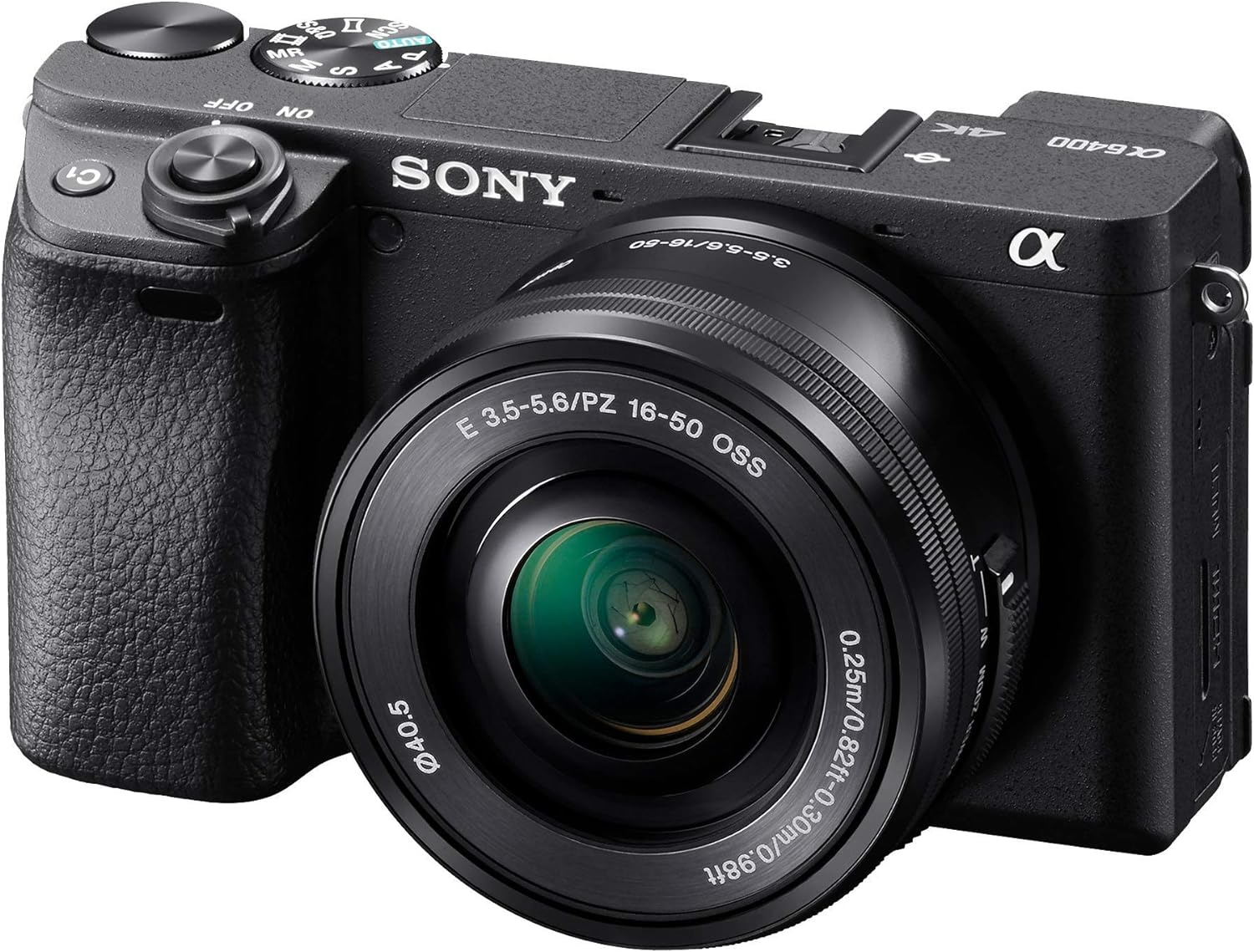
What You Get With the Sony Alpha a6400

Opening the retail package provides the core hardware components necessary to mount a lens, power the camera, and begin shooting immediately in the field or studio.
- Sony Alpha a6400 mirrorless camera body in black finish
- Sony 16-50mm retractable zoom lens with f/3.5 maximum aperture
- NP-FW50 rechargeable lithium-ion battery pack
- AC adaptor model ac-uud12 with micro USB charging cable
- Eyepiece cup for the integrated electronic viewfinder
- Camera shoulder strap for handheld carry
- Body cap and accessory shoe protective cap
Key Specifications
| Specification | Manufacturer Detail |
|---|---|
| Sensor Format and Type | APS-C CMOS sensor (20.1 MP to 24.2 MP raw resolution) |
| Autofocus Detection | 425 phase-detection and 425 contrast-detection points |
| Autofocus Frame Coverage | 84 percent of total image sensor area |
| Continuous Burst Rate | Up to 11 fps continuous shooting at 24.2 MP raw |
| Display Monitor | 3-inch tiltable LCD screen with 180-degree upward articulation |
| Lens Mount Compatibility | Sony E mount (NEX mirrorless compatible) |
| Included Lens | 16-50mm zoom lens with f/3.5 maximum aperture |
| Exposure Metering | 1200-zone evaluative metering system |
| Shutter Speed Range | 1/4000 second maximum to 1/4000 second minimum listing rating |
| Camera Body Weight | 10.3 ounces |
| Environmental Tolerance | Operating range between 32 and 104 degrees Fahrenheit |
Autofocus Tracking and Subject Detection Performance
The primary strength of the camera centers on the sony a6400 autofocus tracking architecture, which incorporates 425 phase-detection points paired directly alongside 425 contrast-detection points. This dense autofocus grid blankets approximately 84 percent of the entire imaging sensor, providing wide coverage that follows moving subjects near the extreme borders of the frame. For solo creators who present directly to the camera while demonstrating products or moving around a studio space, the integrated Real-Time Eye Auto Focus locks onto human faces and eyes with immediate precision. This automated accuracy eliminates the micro-jitter and persistent hunting that often ruin unassisted video presentations.
In dynamic shooting environments, the contrast and phase detection sensors work simultaneously through 1200-zone evaluative metering to balance focus acquisition against changing light levels. The camera continuously calculates subject trajectory, ensuring that rapid movements toward or away from the lens do not throw the focal plane out of alignment. If you are stepping up from older entry-level bodies such as the Sony Alpha a5100, the step up in tracking persistence and eye-detection reliability transforms how confidently you can present without needing an external monitor or assistant checking your focus.
Still photographers benefit equally from this tracking engine during high-speed action sequences. The system supports burst continuous shooting at up to 11 frames per second while maintaining autofocus tracking across 24.2 MP raw files. Natural color reproduction remains uniform across continuous bursts, allowing wedding, wildlife, and event photographers to freeze fast action cleanly. Because the autofocus points cover 84 percent of the sensor area, off-center subjects stay razor-sharp without requiring you to focus and recompose between exposures.
Flip Screen and Solo Creator Usability
Solo video creators frequently evaluate monitor ergonomics, and the sony a6400 flip screen is explicitly tailored for self-taped content. The 3-inch tiltable LCD screen swings upward 180 degrees, perching directly above the top plate of the camera so you can monitor composition, facial positioning, and exposure markers in real time. For content creators filming seated tutorials, talking head presentations, or standing desk updates, this upward-facing screen makes front-facing framing effortless and reduces setup time significantly.
However, the mechanical design of this flip-up screen creates specific physical considerations when configuring a sony alpha a6400 creator setup. Because the screen articulates vertically over the center of the camera body, mounting a traditional shotgun microphone or video light directly onto the top accessory shoe will obstruct your direct line of sight to the display. Solving this requires mounting accessories to external cold-shoe relocation brackets, cages, or side-mounting plates. Understanding this layout is critical for vloggers who need simultaneous top-mounted directional audio and a clear view of their video feed.
Beyond standard front-facing operation, the tiltable monitor angles downward as well, facilitating high-angle and low-angle framing without requiring uncomfortable body contortions. While shooting street photography or overhead table demonstrations, tilting the 3-inch screen lets you monitor focus cleanly while keeping the camera stabilized at waist level. For anyone choosing the sony a6400 for vlogging, the articulation offers sufficient flexibility for handheld arm’s-length recording, especially when paired with a compact handheld grip.
4K Video and Creative Production Workflow
Video capture represents a fundamental component of the sony a6400 video workflow, led by internal sony a6400 4k video capture that outputs rich, high-resolution footage. The camera captures footage using its native APS-C CMOS sensor, delivering detailed textures and realistic skin tones directly to standard SD memory media. Creators producing documentary shorts, social media reels, or online instructional modules gain access to pristine high-definition and ultra-high-definition imaging straight out of the box. Readers comparing dedicated 4K options can see our detailed breakdown in our camara sony a6400 4k coverage.
In addition to standard continuous filming, the camera integrates multiple movie functions designed to bypass complex editing software. Users can generate in-camera time lapse movies directly through interval recording modes, capturing moving clouds, sunset transitions, or bustling cityscapes without assembling thousands of still photos manually in an external suite. Furthermore, integrated slow and quick motion modes allow creators to record frame rates tailored for cinematic slow-motion b-roll or rapid high-speed sequences directly in the field, speeding up client delivery and editing turnaround.
Managing recording sessions in diverse climates is supported by the camera’s broad operating temperature rating between 32 and 104 degrees Fahrenheit (0 to 40 degrees Celsius). The camera body listing features ratings for shock resistance, temperature extremes, water resistance, and X-ray resistance, providing extra reassurance when packing gear through airports or filming outdoor travel documentaries. While high-end cinema tools like the Sony FX30 include active cooling fans for prolonged production days, this compact mirrorless frame handles structured shooting blocks efficiently when managed properly.
Low Light Exposure and Lens Versatility
Low light performance relies heavily on how the imaging sensor interacts with available optical glass. The sony a6400 low light performance begins with an expanded ISO minimum of 100, paired with 1200-zone evaluative exposure metering that measures ambient luminance accurately across challenging lighting environments. The APS-C CMOS sensor captures clean tonal gradients across both bright highlights and deep shadows, rendering natural colors indoors or during twilight shoots without heavy chromatic noise artifacts.
The system benefits directly from its status as a sony alpha a6400 interchangeable lens camera. Utilizing the proven Sony E mount (NEX compatible), the camera accepts an extensive ecosystem of lenses, from wide-angle vlogging primes to long telephoto zooms. The included 16-50mm kit lens features a maximum aperture of f/3.5 and built-in optical image stabilization, which assists in dampening small hand vibrations during handheld operation. For low-light evening capture, expanding your kit with fast prime lenses unlocks dramatic shallow depth of field and sharper nighttime footage.
Photographers weighing the sony a6400 specs against larger sensor platforms should consider their ultimate physical footprint and mobility needs. While full-frame options such as the Sony Alpha 7C offer larger light gathering surfaces, the compact 10.3-ounce chassis of this APS-C body keeps your overall kit weight dramatically lighter. For creators traveling light or hiking long distances, the combination of a 10.3-ounce body and compact E-mount glass yields an agile production rig that does not cause physical fatigue during all-day shoots.
Check Sony Alpha a6400 on Amazon
Is the Sony Alpha a6400 Worth It
Determining whether is the sony a6400 worth it comes down to your production priorities and shooting environment. For solo content creators, YouTube producers, and hybrid shooters who require pinpoint autofocus tracking, the 425-point phase-detection system alone justifies adding this body to your workflow. It practically eliminates missed focus on solo talking-head shots, allowing you to focus on performance and presentation rather than technical camera monitoring.
For still photographers and hybrid documentarians, the up to 11 fps burst shooting speed and 24.2 MP raw resolution provide ample speed and clarity for fast-moving subjects, sports, and family events. The rugged durability specs, including resistance to temperature extremes and shockproof construction, make it a dependable companion for outdoor field work. The 10.3-ounce mirrorless form factor also ensures it fits easily into everyday carry bags without requiring dedicated luggage.
However, if your primary workflow demands modern USB-C charging on the go or an unobstructed top shoe for audio gear without using mounting brackets, you will need to plan around the micro USB connection and top-flipping screen layout. Buyers comfortable with using cold-shoe brackets and keeping a spare NP-FW50 battery on hand will find this camera an exceptionally capable production workhorse that continues to deliver top-tier imaging reliability.
FAQ
Does the Sony Alpha a6400 have an interchangeable lens mount?
Yes, the camera utilizes the Sony E mount system (compatible with NEX mirrorless mounts). This allows you to attach any Sony E-mount lens, including the included 16-50mm zoom lens or third-party prime and zoom lenses designed for APS-C mirrorless cameras.
How does the flip screen function for vlogging on the Sony Alpha a6400?
The camera features a 3-inch LCD screen that tilts upward 180 degrees. This positioning lets you view yourself in real time to check framing, focus tracking, and exposure while standing or sitting in front of the lens.
What accessories come inside the Sony Alpha a6400 box?
The package includes the Sony Alpha a6400 body, the 16-50mm lens, an NP-FW50 rechargeable battery, an AC adaptor (ac-uud12), a micro USB cable, a shoulder strap, an eyepiece cup, a body cap, and an accessory shoe cap.
Can the Sony Alpha a6400 capture slow motion and time lapse in-camera?
Yes, the camera includes dedicated movie functions that record interval time lapse movies and slow/quick motion video sequences internally without requiring manual stitching or post-processing on a computer.
What is the weight and operating temperature range of the camera?
The camera body weighs approximately 10.3 ounces. It is specified to operate within a temperature range of 32 to 104 degrees Fahrenheit (0 to 40 degrees Celsius).


