
As Amazon Associates, we earn from qualifying purchases. This means we may receive a small commission at no extra cost to you if you click through and make a purchase.
Solo video creators seeking dependable autofocus and continuous high-definition recording frequently evaluate whether the Sony a6400 remains a practical centerpiece for modern content production. When assessing a camara sony a6400 4k setup, the primary concern is whether this mirrorless camera delivers the subject-tracking precision, reliable resolution, and straightforward exposure management necessary for producing solo vlogs, YouTube demonstrations, and studio talking-head recordings without constant manual intervention. The bundled package featuring the retractable 16-50mm power zoom lens offers a lightweight, ready-to-deploy kit that fits standard tabletop tripods, mobile gimbals, and desktop rigs right out of the packaging.
Creators can expect rapid real-time eye tracking, comprehensive exposure metering, and a compact chassis engineered to perform across diverse operational environments. Rather than overwhelming operators with excessive physical bulk, this body balances portable interchangeable-lens flexibility with specialized video tools like built-in interval shooting and high-speed motion capture. In this guide, we examine the confirmed hardware specifications, assess real-world production workflow implications like flip-screen ergonomics and kit-lens versatility, and analyze long-take thermal and power demands to determine whether this camera fits your production routine. For creators comparing how this APS-C setup contrasts with other bodies in the ecosystem, our review of the sony alpha a6400 camera provides broader context on general platform handling.
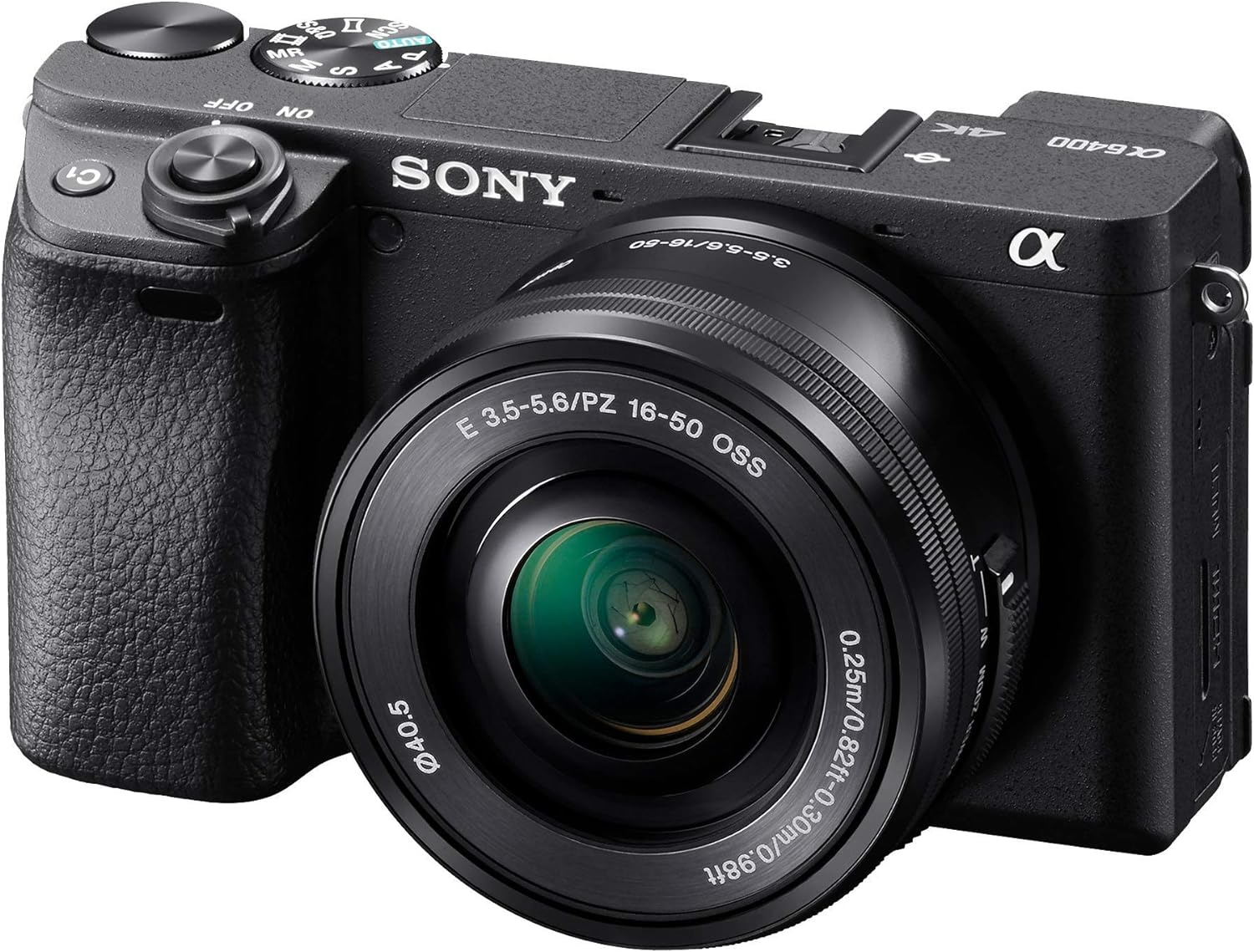
What You Get With the Sony a6400

The standard retail configuration ships with the fundamental hardware elements required to begin recording, providing immediate optical coverage, power delivery, and protective gear.
- Sony a6400 interchangeable lens mirrorless camera body in black finish
- Sony 16-50mm f/3.5 zoom kit lens with optical stabilization
- Rechargeable NP-FW50 lithium-ion battery pack
- AC-UUD12 AC power adaptor for in-camera charging
- Micro USB connection and power interface cable
- Shoulder strap for handheld transport
- Eyepiece cup and camera body cap
- Accessory multi-interface shoe cap
- Integrated 1200-zone evaluative metering system
- Internal creative video features including interval shooting for time lapses and slow or quick motion frame rates
Key Specifications
| Feature | Specification Detail |
|---|---|
| Camera Body Type | Mirrorless interchangeable lens camera |
| Lens Mount | Sony E-mount (NEX compatible) |
| Image Sensor Format | APS-C CMOS sensor |
| Autofocus Coverage | 425 phase-detection and 425 contrast-detection points across 84 percent of sensor |
| Continuous Drive Burst | Up to 11 fps continuous shooting at 24.2 MP raw |
| Image Aspect Ratios | 16:9 and 3:2 formats |
| Expanded Sensitivity | ISO minimum 100 |
| Shutter Speed Range | 1/4000 second maximum to 1/4000 second minimum shutter speed |
| Built-In Monitor | 3-inch tiltable LCD screen |
| Physical Chassis Weight | 10.3 ounces (body only) |
| Environmental Tolerance | Shockproof, temperature extreme resistant, waterproof, and x-ray proof |
| Operating Temperatures | 32 to 104 degrees Fahrenheit (0 to 40 degrees Celsius) |
Autofocus Performance and Tracking for Solo Video
For independent content creators who record without a dedicated camera operator, autofocus reliability is often the single most critical factor in choosing a camera. The sony a6400 autofocus performance relies on an extensive hybrid array featuring 425 phase-detection points paired with 425 contrast-detection points, blanketing approximately 84 percent of the image sensor area. This dense grid allows the camera to instantly identify and lock onto subjects moving across the frame, preventing the distracting focus hunting or background pulsing that frequently compromises dialogue videos and product demonstrations.
A core strength of this system during sony a6400 4k recording is the implementation of Real-Time Eye Auto Focus. When recording presentation-style footage, tutorial segments, or instructional videos, the processing system continuously tracks the presenter’s eyes even when shifting head angles, looking down at notes, or momentarily turning away from the lens. Because the focus acquisition is automatic and persistent, solo shooters can focus entirely on delivering their script or demonstrating a task rather than repeatedly glancing back at a monitor to confirm sharpness.
While the tracking engine locks subjects down decisively, operators should note that optical stabilization is handled by compatible lenses rather than an in-body sensor shift mechanism. The included kit zoom provides optical stabilization to counteract minor handheld jitter, but dynamic walking shots will still show motion transfer unless paired with a physical gimbal or stabilized rig. Creators evaluating whether they need advanced in-body stabilization options may want to examine newer flagship APS-C models like the sony a6700 camera to assess how active stabilization systems impact solo run-and-gun workflows.
Vlogging Ergonomics and Flip Screen Workflow
Designing a streamlined mobile video rig requires clear monitoring and manageable physical balance. The inclusion of a 3-inch tiltable monitor makes the sony a6400 for vlogging an attractive option, as the display articulates upward by a full 180 degrees to face forward toward the talent. This allows creators to frame their shots, verify eye contact, and inspect composition in real time without needing an external HDMI monitor attached to a cage. The 16:9 and 3:2 native aspect ratio options let you easily compose footage intended for widescreen video platforms or horizontal photography.
However, the mechanical implementation of the sony a6400 flip screen introduces an ergonomic trade-off that creators must manage. Because the monitor hinges upward directly over the top plate of the camera, sliding a standard shotgun microphone or wireless receiver into the multi-interface accessory shoe will completely obstruct your view of the display. Content creators relying on on-camera shotgun microphones must plan to use an offset cold shoe bracket or an external camera cage to relocate the microphone off to the side, maintaining an unobstructed line of sight to the flip-up screen.
The companion sony a6400 16-50mm kit lens complements this setup with its remarkably compact, retractable pancake design. At a total body weight of just 10.3 ounces, the assembled package remains light enough to hold at arm’s length on a handheld grip for extended walking segments without causing wrist strain. The power zoom rocker on the lens barrel allows smooth focal transitions between wide framing and tighter headshots, though the maximum aperture of f/3.5 at the wide end requires mindful attention to ambient lighting.
Low Light Filming and Image Quality
Lighting control plays a massive role in solo production environments, where creators often record in domestic rooms, office studios, or changing outdoor lighting. The sony a6400 low light capabilities are anchored by an APS-C CMOS sensor format and an expanded minimum ISO of 100, supported by 1200-zone evaluative metering for balanced exposure calculation. When paired with proper three-point lighting or bright natural daylight, the sensor produces clean 4K footage with rich textures, crisp edge definition, and accurate skin tones.
Pushing this camera into dim interior spaces or evening street recording reveals the boundaries of the standard kit setup. Because the included 16-50mm lens features a maximum aperture of f/3.5 that narrows down to smaller apertures as you zoom toward 50mm, the camera must increase its electronic ISO amplification to maintain exposure, which introduces luminance noise in deep shadows. Solo shooters who frequently film in dim spaces will eventually benefit from pairing the body with wider-aperture E-mount prime lenses to let in more physical light and produce deeper background separation.
Color rendition and picture dynamics benefit from the camera’s flexible shooting modes. For specialized creative productions, the body includes built-in slow and quick motion functions alongside interval shooting for time-lapse movies, allowing creators to produce creative B-roll directly in-camera without relying on external post-processing software. Those curious about alternative fixed-lens video options across the broader brand lineup can compare these interchangeable capabilities in our guide covering the sony rx10 camera.
Durability and Power Management in the Field
Outdoor creators and traveling documentarians require equipment that holds up against changing environmental elements. According to the manufacturer specifications, the sony a6400 mirrorless camera features rugged build standards designated as shockproof, waterproof, x-ray proof, and resistant to temperature extremes. With an operational temperature rating spanning 32 to 104 degrees Fahrenheit (0 to 40 degrees Celsius), the camera handles cold winter field days and sunny outdoor shoots within rated limits.
Power management is an essential logistical consideration when taking this body on full-day video assignments. The camera utilizes the classic NP-FW50 rechargeable battery pack, which keeps the overall body footprint exceptionally light at 10.3 ounces but offers finite operating capacity during extended high-resolution video capture. While the included AC-UUD12 adaptor and micro USB cable support in-camera charging and power delivery, heavy video workflows typically require carrying multiple spare batteries or connecting an external USB power bank during lengthy interviews.
For studio setups where the camera functions as a desktop streaming camera or continuous recording unit, powering via micro USB prevents workflow interruptions. Operators should make sure to adjust internal power-off temperature thresholds when shooting continuous 4K video clips in warm indoor rooms to maximize recording endurance. If you want to dive deeper into practical studio configurations and alternative mounting options, our dedicated look at the sony ax 6400 workflow offers additional hardware setups.
Is the Sony a6400 Worth It
Determining whether the sony a6400 specs translate into a smart investment comes down to your primary production format and production requirements. For solo creators, desktop streamers, and educators who produce talking-head videos, software tutorials, or product demonstrations, the camera offers class-leading tracking reliability. The hybrid 425-point autofocus system virtually eliminates the frustration of missed focus, allowing you to operate as a self-sufficient production team without worrying about blurry footage.
On the other hand, creators who need an all-in-one vlogging setup straight out of the box must weigh the mechanical limitations of the upward-tilting screen and the modest maximum aperture of the included kit lens. If you intend to mount a top-mounted microphone directly to the hot shoe while simultaneously monitoring yourself on the flip screen, you will need to purchase an offset bracket or cage. Additionally, handheld run-and-gun filmmakers without a gimbal will find the optical stabilization dependent on the attached lens rather than an internal sensor-shift system.
Ultimately, is sony a6400 worth it for content creators? Yes, provided you prioritize rapid, dependable autofocus and compact interchangeable-lens flexibility over built-in headphone monitoring or modern USB-C interfaces. It delivers the essential imaging foundation needed for clean 4K production, making it a reliable workhorse for anyone building a focused, scalable video setup.
FAQ
Does the Sony a6400 screen flip completely forward for self-recording?
Yes, the 3-inch LCD monitor tilts upward by 180 degrees, allowing solo creators to view their framing and monitor exposure while standing in front of the lens. However, placing a microphone or transmitter in the camera hot shoe will block the screen unless an offset bracket is used.
What lenses are compatible with the Sony a6400 body?
The camera uses the Sony E-mount system, making it compatible with all Sony E-mount and NEX lenses. It functions natively with APS-C lenses like the included 16-50mm zoom as well as full-frame FE lenses.
Does the Sony a6400 have built-in optical image stabilization?
The camera relies on optical image stabilization provided by compatible lenses, such as the included 16-50mm kit lens. The camera body itself does not contain in-body sensor-shift stabilization.
Can the Sony a6400 create slow motion video without post-processing?
Yes, the camera includes dedicated slow and quick motion movie modes that allow you to capture slow-motion or fast-motion footage internally, producing finished clips ready for playback without requiring editing software.
What charging connection does the Sony a6400 use?
The camera recharges its NP-FW50 battery internally via a micro USB port using the included AC-UUD12 AC adaptor and micro USB cable. The listing does not specify support for modern USB-C connections.
After long shoots and demanding edit sessions with the a6400, proper recovery is essential for maintaining creative output. Pairing efficient production workflows with better sleep hygiene helps prevent creator burnout, making our Weighted Blanket Guide a practical resource for optimizing your post-production downtime. Prioritizing physical rest ensures you stay focused and energized for your next solo filming project.


