As Amazon Associates, we earn from qualifying purchases. This means we may receive a small commission at no extra cost to you if you click through and make a purchase.
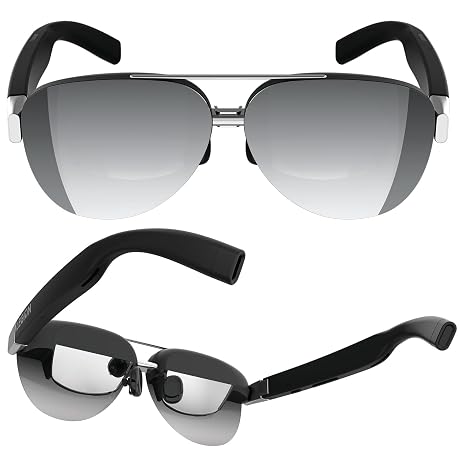
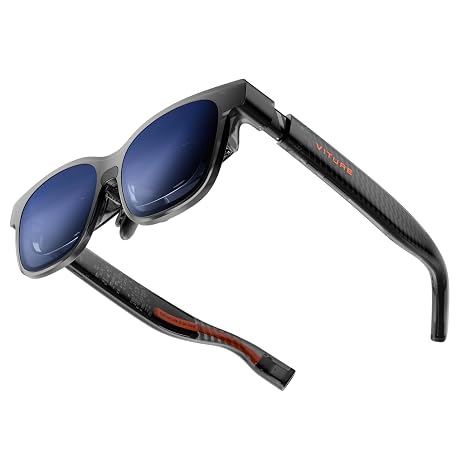
Traveling video editors, mobile creators, and handheld gaming enthusiasts frequently face the physical limits of small laptop displays and cramped portable screens. If you want to know whether the RayNeo Air 4 Pro can realistically serve as an expansive wearable monitor for creative work or mobile entertainment, the short answer is that it delivers an ultralight, plug-and-play visual setup engineered for life on the move. Instead of packing heavy internal batteries or requiring complex background software, these smart glasses rely on a direct USB Type-C connection with DisplayPort Alt Mode to project a massive 201-inch virtual screen directly before your eyes.
In this review, we examine everything traveling creators need to know about the rayneo air 4 pro ar glasses before investing. We evaluate the imaging capabilities driven by the Vision 4000 processor and HDR10 display architecture, assess the acoustic performance of the quad-speaker array tuned by Bang & Olufsen, and review real-world compatibility across MacBooks, iPads, iPhones, and PC gaming handhelds. We also compare its focus and execution to earlier hardware like the air 3 pro ar glasses, giving you an honest assessment of its strengths and workflow limitations.

What You Get With the RayNeo Air 4 Pro

The RayNeo Air 4 Pro is built for immediate plug-and-play operation straight out of the box, avoiding the need for proprietary adapter hubs or mandatory mobile utility apps. By drawing operational power directly from your host device, the physical package focuses on minimal facial pressure and high visual clarity. Based on the manufacturer listing, here are the key features and hardware capabilities included with the product:
- Virtual 201-inch personal cinema display utilizing an HDR10 AR glasses display panel capable of rendering over 10 billion colors.
- Vision 4000 dedicated co-processor co-developed with Pixelworks, delivering real-time AI SDR-to-HDR upscaling and intelligent frame smoothing.
- High-speed 120Hz refresh rate support designed for responsive console gaming, PC handhelds, and stutter-free video playback.
- Integrated 3D media support featuring native 3D video playback alongside real-time AI depth conversion for standard 2D video files.
- Cinematic audio system engineered by Bang & Olufsen with four precision speakers, 360-degree spatial audio, and an acoustic whisper mode.
- Universal USB Type-C connectivity offering seamless plug-and-play compatibility across iPhone 15 through iPhone 17, Android, MacBooks, iPads, and gaming consoles.
- Ultralight 2.88-ounce wearable frame engineered without internal batteries to reduce nose-bridge fatigue during marathon editing or gaming sessions.
Key Specifications
| Specification Category | Listing Detail |
|---|---|
| Model Number | XRGF39-1 |
| Virtual Display Size | 201 inches |
| Display Technology | AR Glasses Display with HDR10 support |
| Color Reproduction | Over 10 billion colors |
| Refresh Rate | 120 Hz |
| Display Maximum Resolution | 819 x 461 |
| Integrated Processor | Vision 4000 Chip (co-developed with Pixelworks) |
| Built-In Audio | 4 precision speakers tuned by Bang & Olufsen with whisper mode |
| Connection Interface | USB Type-C (DP Alt Mode) |
| Product Weight | 2.88 ounces |
| Platform Compatibility | Android XR, PlayStation VR, SteamVR, Console VR, PC VR, Smartphone VR |
Visual Performance and the HDR10 Display
The centerpiece of this wearable monitor is the rayneo air 4 pro hdr10 display, engineered to simulate a sprawling 201-inch screen floating in front of the viewer. Unlike conventional entry-level smart glasses that utilize standard LCD panels with flat contrast, this display engine integrates HDR10 decoding capable of reproducing over 10 billion individual colors. The result is an expansive dynamic range where deep shadows retain detail and bright practical light sources pop with realistic luminance. For video creators screening color-rich footage or streaming HDR films, the contrast depth provides an engaging cinematic presentation that standard travel monitors struggle to match.
Driving this visual output is the onboard Vision 4000 processor, an advanced image-processing chip co-developed with Pixelworks. This chipset actively analyzes incoming video frames to perform real-time AI SDR-to-HDR upscaling, boosting color saturation, edge sharpness, and tonal separation on the fly. When watching standard dynamic range content or streaming compressed video on public Wi-Fi, the processor cleans up visual noise and optimizes motion clarity without requiring manual software adjustments. Compared to competing wearable glasses like the xreal air 2 pro ar glasses, having dedicated silicon on board ensures that image upscaling occurs natively on the glasses without burdening the host device central processor.
When inspecting the rayneo air 4 pro specs, prospective buyers should take note of the maximum display resolution listed at 819 x 461 alongside its smooth 120Hz refresh rate. The 120Hz refresh rate ensures that cursor tracking, video timeline scrubbing, and high-framerate action sequences remain fluid and devoid of motion judder. While the listed resolution means micro-scale text and dense technical spreadsheets may lack the pinpoint pixel density of high-resolution desktop monitors, the display handles video playback, UI navigation, and timeline trimming with smooth, colorful rendering across an enormous virtual canvas.
Audio Engineering and Bang & Olufsen Acoustics
Audio is often an afterthought on wearable displays, but the rayneo air 4 pro bang and olufsen audio integration represents a significant acoustic upgrade. RayNeo partnered with Bang & Olufsen to tune four precision speakers embedded directly into the temples of the frame. Rather than outputting tinny, localized audio near the hinges, these four speakers create an immersive 360-degree spatial soundscape. Dialogue stays locked to the center of the virtual screen, while ambient environmental sound effects and directional panning cues spread naturally across your hearing field, delivering a convincing private theater environment without requiring external headphones.
Operating wearable audio in shared or quiet spaces always raises concerns about acoustic leakage, but the glasses mitigate this via a dedicated whisper mode. This feature uses targeted phase cancellation and focused directional acoustic ports to channel sound waves straight into the wearer ear canals while significantly diminishing ambient bleed. Whether you are reviewing video footage on a commuter train or editing an interview in a quiet coffee shop, whisper mode allows you to hear dialogue clearly without broadcasting your audio track to the people sitting around you.
For noisier environments where ambient rumble threatens to overwhelm open-ear acoustics, the product listing notes support for an optional Sound Tube accessory. This modular add-on, which is sold separately, attaches to the frame to boost audio output by up to 15dB for improved volume penetration. Even without this optional accessory, the factory Bang & Olufsen tuning delivers crisp voice reproduction, respectable dynamic range, and clean frequency separation for movies, podcasts, and casual listening sessions.
Device Compatibility and Creator Workflow Ergonomics
Seamless hardware connectivity is critical for traveling professionals, and using the rayneo air 4 pro for macbook tasks offers a frictionless secondary screen setup. Because the glasses use standard DisplayPort over USB Type-C, plugging them into a MacBook immediately triggers display mirroring or desktop extension without requiring background utility software, custom drivers, or complex wireless pairing. Traveling editors can project a massive primary monitor while keeping their physical keyboard, trackpad, and desk surface unobstructed, turning a cramped hotel desk or airline tray table into a spacious editing suite.
Mobile device support is equally straightforward, with rayneo air 4 pro iphone compatibility extending across modern USB-C equipped devices including the iPhone 15, iPhone 16, and iPhone 17 families, as well as DisplayPort-compatible Android phones and iPad models. Because the frame contains no internal battery, it pulls operating current directly from the host device through the single tethered USB-C cable. While this deliberate design choice keeps the overall headset featherlight at just 2.88 ounces, creators planning multi-hour editing marathons should consider pairing their host phone with a power-passthrough adapter to prevent rapid battery depletion.
For creators performing rayneo air 4 pro video editing on the road, the glasses offer an effective way to isolate yourself from visual distractions and focus on timeline construction. While precise mastering should still be verified on a calibrated physical studio monitor, assembling rough cuts, arranging multi-camera sequences, and monitoring playback across a virtual 201-inch canvas feels surprisingly liberating. For creators familiar with standalone smart eyewear like the rayneo x3 pro smart glasses, the Air 4 Pro takes a different approach by focusing strictly on high-performance tethered display output rather than standalone computing.
Handheld Gaming and Console Integration
Handheld gamers represent a major segment of wearable display users, and setting up the rayneo air 4 pro for steam deck gaming transforms the portable gaming experience. Instead of hunching forward over a small handheld screen, players can sit back in a natural, neutral posture while the game mirrors onto a virtual 201-inch screen hovering in their visual field. The display 120Hz refresh rate works seamlessly with the Steam Deck, eliminating ghosting and visual lag during fast-paced roguelikes, racing titles, and indie platformers, while the ultralight frame eliminates nose-bridge discomfort during long gaming sessions.
Stationary console setups are equally accessible, as rayneo air 4 pro gaming extends across modern hardware including the PlayStation 5, Switch 2, and PC VR environments. When paired directly with USB-C enabled outputs or compatible console video adapters, the glasses transform small spaces like dorm rooms, bedrooms, or hotel suites into personal entertainment lounges. The Vision 4000 processor keeps frame pacing steady and motion clear, ensuring that fast camera pans and competitive gameplay remain sharp without inducing the motion blur often experienced on basic portable panels.
Entertainment capabilities are further expanded by built-in 3D support, allowing the glasses to display native 3D stereoscopic files or convert standard 2D games and video feeds into simulated 3D depth using onboard AI algorithms. While native 3D content delivers the cleanest depth separation, the AI upscaler provides an entertaining stereoscopic layer to standard video that enhances immersion. Paired with the Bang & Olufsen spatial sound system, gaming on the Air 4 Pro feels far more like playing in a private IMAX theater than viewing a conventional mobile display.
Check RayNeo Air 4 Pro on Amazon
Is the RayNeo Air 4 Pro Worth It
Deciding whether the is rayneo air 4 pro worth it question aligns with your workflow comes down to how much you value physical mobility and screen size over traditional stationary monitors. If you are a travel vlogger, remote digital creator, or commuter who spends extensive hours on trains or flights, the ability to pull a private 201-inch virtual display from your coat pocket is exceptionally convenient. The ultra-lightweight 2.88-ounce chassis eliminates facial fatigue, and instant USB-C plug-and-play capability means you spend zero time fiddling with wireless settings or proprietary desktop applications.
For handheld gamers who play on a Steam Deck, Switch 2, or mobile devices, the ergonomic advantages alone provide compelling value. Shifting your gaze upward from a heavy handheld to a crisp, high-framerate 120Hz display with punchy HDR10 color science dramatically improves gaming comfort on long trips. However, if your daily workflow demands ultra-dense micro-typography for coding, extensive multi-window virtual spatial computing, or completely wireless operation with an onboard operating system, a dedicated desktop monitor or standalone AR headset will better match your technical requirements.
Ultimately, the RayNeo Air 4 Pro succeeds by keeping its feature set streamlined and functional: high dynamic range visuals, rich spatial acoustics tuned by Bang & Olufsen, and seamless cross-platform connectivity without the bulk of built-in batteries. For traveling creators and mobile gamers seeking an immersive secondary display that travels anywhere without friction, the Air 4 Pro delivers an outstanding blend of convenience, visual scale, and audio immersion.
FAQ
Does the RayNeo Air 4 Pro have an internal battery that needs charging?
No, the RayNeo Air 4 Pro does not contain an internal battery. It draws power directly from the connected laptop, phone, or console through the USB Type-C cable, keeping the headset lightweight at 2.88 ounces and eliminating the need to track separate battery levels.
Is the RayNeo Air 4 Pro compatible with iPhone models?
Yes, the glasses offer plug-and-play compatibility with modern USB Type-C iPhone models, including the iPhone 15, iPhone 16, and iPhone 17 series. It mirrors video output via DisplayPort Alt Mode without requiring any external conversion hardware or companion apps.
How does the 3D viewing mode work on the RayNeo Air 4 Pro?
The glasses can play native 3D stereoscopic media and also feature an onboard AI depth enhancement engine. This system can convert standard 2D video feeds into simulated 3D visuals on the fly, adding realistic depth separation to movies and games.
What does the Vision 4000 processor do?
Co-developed with Pixelworks, the Vision 4000 chip handles real-time AI SDR-to-HDR upscaling, enhances color depth and contrast, and optimizes motion clarity to deliver smooth 120Hz visual performance across connected devices.
Can you use Bluetooth earbuds instead of the built-in Bang & Olufsen audio?
Yes, while the glasses feature four precision speakers tuned by Bang & Olufsen with whisper mode, you can easily connect your favorite wireless earbuds or headphones directly to your host device for personal audio playback.